Army promotion regulation governs the advancement of military personnel, shaping careers and defining leadership paths. It’s a complex system that balances experience, performance, and potential, ensuring the army maintains a skilled and motivated force. This guide explores the intricate workings of promotion regulations, from eligibility criteria to the selection process, shedding light on the pathways to success within the ranks.
Understanding army promotion regulations is crucial for any soldier aiming to climb the ladder of responsibility. From the initial enlistment to achieving high-ranking positions, the system provides a framework for recognizing merit and developing future leaders. It’s a process that requires dedication, perseverance, and a commitment to professional development.
Overview of Army Promotion Regulations
Army promotion regulations are essential for maintaining a strong and efficient military force. They ensure that qualified individuals are recognized and advanced based on their merit, experience, and potential. This ensures that the army has the right people in the right positions to meet its operational needs and to uphold its core values.
Historical Evolution of Army Promotion Regulations
The history of army promotion regulations is a reflection of the evolving needs and structures of the military. Early promotion systems were often based on lineage, patronage, or social standing. However, as the modern army emerged, merit-based systems gained prominence.
- The American Civil War saw the introduction of a more formal promotion system based on battlefield performance and leadership skills.
- The 20th century witnessed the development of comprehensive promotion regulations that emphasized education, training, and professional development.
- The current army promotion system reflects a combination of these historical influences, aiming to balance merit, experience, and the needs of the service.
Current Army Promotion System
The current army promotion system is a complex and multifaceted process designed to ensure that the most qualified individuals are promoted to higher ranks. The system considers a wide range of factors, including:
- Performance: This includes an individual’s performance in their current position, as evaluated by their superiors.
- Education and Training: Formal education and specialized training are crucial for career advancement.
- Leadership Potential: Demonstrated leadership skills and the ability to inspire and motivate others are key for promotion.
- Physical Fitness: The army demands physical fitness for all ranks, and this is a factor in promotion decisions.
- Time in Service: A certain amount of time in service is generally required for promotion to higher ranks.
- Vacancies: Promotion opportunities are often dependent on the availability of vacancies in higher ranks.
The army promotion system also incorporates a number of mechanisms to ensure fairness and transparency. These include:
- Promotion Boards: These boards are composed of senior officers who review the records of eligible candidates and make promotion recommendations.
- Appeals Process: Individuals who believe they have been unfairly denied promotion have the right to appeal the decision.
- Regular Reviews: The army promotion system is regularly reviewed and updated to ensure it remains relevant and effective.
Eligibility Criteria for Promotion
Promotion within the organization is a testament to individual growth and commitment. It signifies recognition of an individual’s contributions, leadership qualities, and dedication to organizational goals. This section Artikels the eligibility criteria for promotion, providing a comprehensive understanding of the factors considered in the promotion process.
Rank-Specific Criteria
The eligibility criteria for promotion are determined by the specific rank within the organization. Each rank has its own set of requirements, reflecting the increasing responsibilities and expectations associated with higher levels. The following table Artikels the specific criteria for promotion at each rank:
| Rank | Years of Service | Performance Evaluation | Certifications |
|---|---|---|---|
| Junior Associate | 2 years | 3 consecutive “Exceeds Expectations” ratings | N/A |
| Senior Associate | 4 years | 2 consecutive “Exceeds Expectations” ratings | Relevant industry certification |
| Manager | 6 years | 1 consecutive “Exceeds Expectations” rating | Relevant industry certification and leadership training |
General Eligibility Criteria
Beyond rank-specific criteria, there are general eligibility criteria that apply to all promotion candidates, regardless of their current rank. These criteria reflect the fundamental qualities and skills essential for success in any leadership role within the organization.
- Demonstrated leadership skills: The ability to inspire, motivate, and guide others towards achieving common goals is paramount for promotion.
- Strong communication and interpersonal skills: Effective communication is crucial for building relationships, fostering collaboration, and ensuring clear understanding across all levels of the organization.
- Commitment to company values: Adhering to the organization’s core values is essential for maintaining a positive and ethical work environment.
- Ability to work effectively in a team environment: Collaboration and teamwork are essential for achieving organizational goals and fostering a positive work culture.
- Positive attitude and willingness to learn: A positive attitude and a commitment to continuous learning are crucial for adapting to change, embracing new challenges, and driving innovation.
Role of Time in Service
Time in service is a significant factor in the promotion process, reflecting the experience and knowledge gained over time. The minimum time in service requirement for promotion varies depending on the rank. For example, a Junior Associate may need two years of service before being considered for promotion to Senior Associate, while a Senior Associate may need four years of service before being considered for promotion to Manager.
Time in service provides candidates with opportunities to:
- Develop technical expertise: Through hands-on experience, individuals gain a deep understanding of their field, allowing them to handle complex tasks and solve problems effectively.
- Build relationships and networks: Over time, individuals develop strong relationships with colleagues, clients, and stakeholders, creating a network of support and collaboration.
- Demonstrate leadership potential: As individuals progress in their careers, they often take on more responsibilities, providing opportunities to showcase their leadership skills and decision-making abilities.
Performance Evaluations, Army promotion regulation
Performance evaluations play a critical role in the promotion process, providing a structured assessment of an individual’s contributions and progress. Performance evaluations typically consider factors such as:
- Exceeding goals: Meeting or exceeding performance targets is a key indicator of an individual’s effectiveness and commitment.
- Innovation: Individuals who demonstrate creativity and innovation in their work are highly valued, as they contribute to the organization’s growth and competitiveness.
- Team contributions: Individuals who effectively collaborate with others, contribute to team success, and foster a positive work environment are essential for organizational effectiveness.
Performance evaluations are typically conducted on a regular basis, and recent performance is often given greater weight than historical performance. This reflects the importance of demonstrating continued growth and development.
Educational Qualifications
Educational qualifications are also considered in the promotion process, as they demonstrate an individual’s commitment to professional development and their ability to acquire new knowledge and skills. The specific educational requirements for promotion vary depending on the role and rank. For example, a Manager may need a bachelor’s degree or higher, while a Senior Associate may need a relevant industry certification.
Continuing education and professional development are highly valued, as they demonstrate an individual’s commitment to lifelong learning and their ability to stay ahead of industry trends.
Specific Requirements for Promotion to Different Leadership Positions
The organization offers a range of leadership positions, each with its own unique set of responsibilities and requirements for promotion. These requirements reflect the specific skills and experience needed to excel in each role.
- Team Lead: A Team Lead is responsible for overseeing a small team of individuals, providing guidance and support, and ensuring that team goals are met. Promotion to Team Lead typically requires demonstrated leadership skills, strong communication and interpersonal skills, and a proven ability to work effectively in a team environment.
- Project Manager: A Project Manager is responsible for planning, executing, and delivering projects on time and within budget. Promotion to Project Manager typically requires experience in project management methodologies, strong organizational and time management skills, and a proven ability to lead and motivate project teams.
- Department Manager: A Department Manager is responsible for overseeing the operations of an entire department, including setting goals, managing budgets, and ensuring the department’s overall success. Promotion to Department Manager typically requires significant experience in leadership roles, strong strategic planning skills, and a proven ability to manage budgets and resources effectively.
3. Promotion Boards and Selection Processes

Promotion boards are crucial to the army’s promotion system, ensuring that only the most qualified and deserving individuals are selected for advancement. They serve as a critical link between individual performance and organizational needs, contributing to the army’s overall effectiveness.
3.1 Structure and Function of Promotion Boards
Promotion boards are typically composed of senior officers from various branches and ranks, carefully chosen for their experience, expertise, and impartiality. Each member plays a distinct role in the board’s functioning.
- The President: The presiding officer, responsible for chairing the board meetings, ensuring orderly discussions, and leading the decision-making process.
- The Recorder: Responsible for maintaining accurate records of the board’s proceedings, including candidate evaluations, discussions, and final recommendations.
- Members: Senior officers representing different branches and ranks, who evaluate candidate files, participate in discussions, and contribute to the final selection decisions.
The primary purpose of a promotion board is to assess the suitability of candidates for promotion based on predetermined criteria. They aim to identify individuals who possess the necessary skills, knowledge, and leadership qualities to assume higher responsibilities. To ensure fairness and transparency, promotion boards adhere to strict guidelines and procedures. These include:
- Standardized Evaluation Criteria: All candidates are evaluated against the same set of criteria, ensuring consistency and objectivity in the assessment process.
- Confidential Evaluation: Evaluations are conducted in a confidential setting, preventing bias and ensuring that each candidate is assessed on their own merits.
- Review and Appeal Process: Candidates have the right to review their evaluations and appeal decisions they believe to be unfair or inaccurate.
3.2 Phases of the Promotion Selection Process
The promotion selection process is a multi-phased process, designed to provide a comprehensive evaluation of candidates. Each phase focuses on specific aspects of a candidate’s suitability for promotion.
- Application Submission: Candidates submit their applications, including their performance records, qualifications, and other relevant information.
- Initial Screening: The promotion board reviews applications, focusing on basic eligibility criteria and preliminary assessments of performance and qualifications.
- Interviews: Selected candidates are interviewed by the promotion board, allowing for a more in-depth assessment of their leadership potential, communication skills, and overall suitability for promotion.
- Final Selection: The board reviews all available information, including evaluations, interview feedback, and performance records, to make final recommendations for promotion.
These phases contribute to a comprehensive evaluation by providing a multi-dimensional view of a candidate’s capabilities and potential.
3.3 Factors Considered by Promotion Boards
Promotion boards consider various factors when evaluating candidates for promotion, including:
- Performance Records: Evaluation of a candidate’s performance in their current role, including accomplishments, strengths, and areas for improvement.
- Qualifications: Assessment of a candidate’s education, training, and experience relevant to the desired promotion.
- Leadership Skills: Evaluation of a candidate’s ability to lead, motivate, and inspire others, demonstrated through past experiences and leadership roles.
- Potential for Growth: Assessment of a candidate’s potential for future development and their ability to assume greater responsibilities.
The relative weight given to each factor varies depending on the specific role and level of promotion being considered. Promotion boards also assess intangible qualities, such as:
- Leadership Potential: The ability to inspire and motivate others, to make sound decisions, and to take initiative.
- Communication Skills: Effective communication with superiors, peers, and subordinates, both orally and in writing.
- Integrity and Ethics: Demonstrated adherence to ethical principles and a strong sense of personal responsibility.
These qualities are assessed through a combination of performance records, interview observations, and references.
3.4 Writing
“As a member of the promotion board for the position of [specific role], our primary objective is to select the most qualified candidate who possesses the skills, knowledge, and leadership qualities necessary to excel in this role. We utilize a multi-faceted evaluation process that includes reviewing candidate applications, conducting interviews, and assessing their performance records.The evaluation process focuses on several key criteria:* Technical Expertise: We assess the candidate’s proficiency in the technical aspects of the role, including [specific technical skills and knowledge].
Leadership and Communication Skills
We evaluate the candidate’s ability to lead teams, motivate others, and communicate effectively with diverse stakeholders.
Problem-Solving and Decision-Making
We assess the candidate’s ability to analyze complex situations, develop solutions, and make sound decisions under pressure.
Strategic Thinking
We evaluate the candidate’s ability to think strategically, anticipate future challenges, and contribute to the overall success of the organization.During the interview process, we aim to gain a deeper understanding of the candidate’s strengths, weaknesses, and their vision for the role. We also seek to assess their fit with the company culture and their ability to work effectively within a team environment.In making our final decision, we consider the candidate’s overall qualifications, performance record, and their potential for growth.
We prioritize candidates who demonstrate a strong combination of technical expertise, leadership qualities, and a commitment to continuous improvement. Our goal is to select the individual who will make the most significant contribution to the success of the team and the organization.”
4. Promotion Opportunities and Pathways
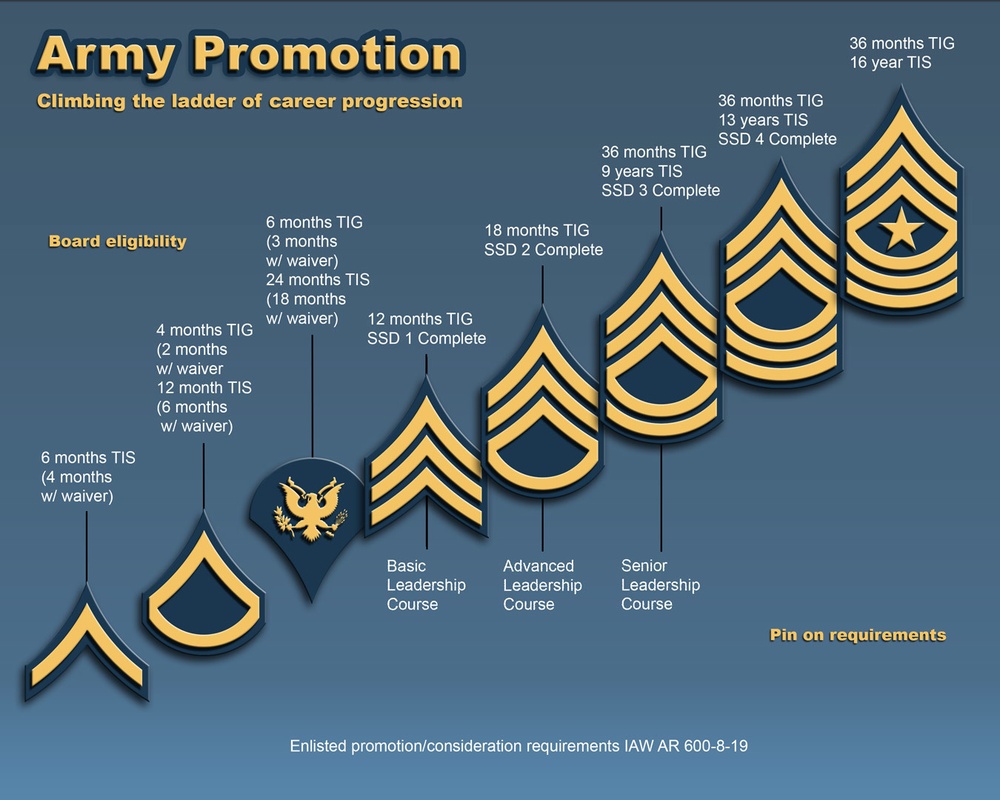
The Army offers various promotion pathways, each with unique criteria, processes, and timeframes. Understanding these pathways is crucial for soldiers aiming to advance their careers. This section provides a detailed overview of promotion opportunities for enlisted personnel, officers, and warrant officers, outlining their advantages, disadvantages, and real-life examples of successful journeys.
4.1. Promotion Pathways in the Army
The Army provides distinct promotion pathways for enlisted personnel, officers, and warrant officers, each with its own eligibility criteria, selection process, and typical timeframes.
4.1.1. Enlisted Promotion Pathways
- Promotion by Time in Service: This pathway is primarily for lower enlisted ranks (E1-E4). Soldiers automatically advance to the next rank after meeting the required time in service and fulfilling basic training requirements. This pathway emphasizes experience and time served, providing a foundation for further advancement.
- Promotion by Selection: For higher enlisted ranks (E5-E9), promotion is competitive, based on performance, leadership, and potential. Soldiers compete for limited promotion slots, often through a selection board process, where their performance records, evaluations, and awards are reviewed. This pathway emphasizes merit and recognizes exceptional contributions to the Army.
4.1.2. Officer Promotion Pathways
- Initial Entry: Officers enter the Army through various commissioning programs, such as Officer Candidate School (OCS), ROTC, or West Point. These programs provide initial training and commissioning into the Army as Second Lieutenants.
- Promotion by Selection: Promotion for officers (O1-O6) is highly competitive, based on performance, leadership, and potential. Officers compete for limited promotion slots through a selection board process, where their performance records, evaluations, and awards are reviewed.
- Promotion to Senior Ranks (O7-O10): Promotion to these ranks requires a combination of experience, leadership, and exceptional performance. Officers are typically nominated by their superiors and approved by a selection board.
4.1.3. Warrant Officer Promotion Pathways
- Initial Entry: Warrant officers enter the Army through Warrant Officer Candidate School (WOCS) or by direct commissioning. This pathway focuses on technical expertise and leadership in specific military occupational specialties (MOS).
- Promotion by Selection: Warrant officers advance through the ranks (W1-CW5) based on performance, experience, and technical proficiency. Promotions are competitive and often involve a selection board process.
4.2. Advantages and Disadvantages of Promotion Pathways
4.2.1. Enlisted Promotion Pathways
- Time in Service:
- Pros: Provides a structured progression for junior enlisted personnel, ensuring consistent advancement based on time served.
- Cons: May not reward exceptional performance or leadership, potentially leading to stagnation for highly motivated individuals.
- Selection:
- Pros: Rewards exceptional performance, leadership, and potential, motivating soldiers to strive for excellence.
- Cons: Can be highly competitive, potentially leading to frustration for soldiers who do not secure promotion slots.
4.2.2. Officer Promotion Pathways
- Initial Entry:
- Pros: Provides a structured path for entering the Army as an officer, offering specialized training and leadership development.
- Cons: The initial commissioning process can be demanding and require a significant commitment of time and effort.
- Promotion by Selection:
- Pros: Rewards exceptional performance, leadership, and potential, providing opportunities for career advancement and increased responsibilities.
- Cons: Highly competitive, requiring continuous effort to maintain a strong performance record and stand out among peers.
- Promotion to Senior Ranks:
- Pros: Recognizes exceptional experience, leadership, and contributions to the Army, providing opportunities for strategic decision-making and impactful leadership roles.
- Cons: Highly competitive, requiring sustained excellence over an extended period, often involving significant sacrifices and commitments.
4.2.3. Warrant Officer Promotion Pathways
- Initial Entry:
- Pros: Provides a specialized path for technical experts, offering opportunities for leadership and career growth within specific MOS.
- Cons: May require a shift in focus from operational duties to technical and leadership responsibilities, potentially impacting operational experience.
- Promotion by Selection:
- Pros: Rewards exceptional performance, technical proficiency, and leadership, providing opportunities for advancement within specific MOS.
- Cons: Can be competitive, requiring continuous effort to maintain technical proficiency and leadership skills.
4.3. Examples of Successful Promotion Journeys
- Enlisted: Sergeant Major John Smith, a highly decorated combat veteran, successfully advanced through the enlisted ranks by consistently exceeding expectations in his duties, demonstrating exceptional leadership, and actively seeking opportunities for professional development. He attributes his success to his unwavering dedication, strong work ethic, and commitment to serving his country.
- Officer: Lieutenant Colonel Jane Doe, a skilled logistics officer, rose through the officer ranks by consistently demonstrating exceptional performance in challenging assignments, actively seeking leadership opportunities, and pursuing advanced education. Her success is attributed to her strong leadership skills, strategic thinking, and commitment to continuous improvement.
- Warrant Officer: Chief Warrant Officer William Jones, a highly skilled helicopter pilot, achieved success through his technical expertise, leadership skills, and unwavering dedication to his craft. He attributes his advancement to his commitment to continuous learning, his ability to adapt to evolving technology, and his focus on mission accomplishment.
7. Challenges and Opportunities in Army Promotions: Army Promotion Regulation
:max_bytes(150000):strip_icc()/enlisted-promotions-made-simple-3332773_FINAL-5bbd0ee8c9e77c00513a439f.png "Ar regulation army personnel promotions reductions enlisted december general")
Army promotion regulations play a crucial role in shaping the career paths of military personnel. These regulations aim to ensure fairness, transparency, and efficiency in recognizing and rewarding talent, ultimately contributing to a well-functioning and effective military force. However, navigating the complexities of the promotion system can pose significant challenges for army personnel, while opportunities exist for improvement.
I. Challenges in Army Promotion Regulations
The current army promotion regulations face several challenges that can hinder the effectiveness and fairness of the system.
- Complexity: Army promotion regulations are often complex and difficult to understand. The intricate web of criteria, procedures, and timelines can make it challenging for personnel to navigate the system effectively. This complexity can lead to confusion, frustration, and a sense of unfairness, especially for those unfamiliar with the nuances of the regulations.
- Bias: Concerns about bias in the promotion system persist, with potential for unfair outcomes based on factors such as race, gender, or background. While efforts are made to ensure impartiality, inherent biases within the evaluation process or in the interpretation of criteria could lead to disparities in promotion opportunities.
- Subjectivity: Elements of subjectivity in the evaluation process can contribute to unfair outcomes. The subjective nature of performance evaluations, leadership assessments, and other factors can introduce biases and inconsistencies, making it difficult to ensure that promotions are based solely on merit.
- Lack of Transparency: A lack of transparency in the promotion process can erode trust and fairness. If personnel are unsure about the criteria, procedures, and decision-making processes involved, it can lead to a perception of favoritism or arbitrary decisions.
- Limited Opportunities: Insufficient promotion opportunities can create a bottleneck in career progression, leading to frustration and discouragement among qualified personnel. Limited opportunities can also discourage individuals from pursuing higher ranks, impacting the overall pool of talent within the army.
- Lack of Resources: Personnel may lack adequate resources and support to prepare for promotions. This can include insufficient training, limited access to mentorship, or inadequate funding for professional development. Without proper resources, individuals may find it difficult to meet the demanding requirements for promotion.
- Time Constraints: The promotion requirements may impose undue time constraints on personnel, hindering their ability to balance professional development with personal commitments. These constraints can lead to burnout and affect overall well-being, potentially impacting their performance and career trajectory.
- Impact on Morale: A perceived lack of fairness or transparency in the promotion system can negatively impact morale and motivation among personnel. If individuals feel that promotions are not based on merit, it can lead to a sense of disillusionment and a decline in their commitment to the army.
II. Opportunities for Improving the Promotion System
Despite the challenges, there are opportunities for improving the army promotion system to enhance its fairness, transparency, and efficiency.
- Streamlining Regulations: Simplifying and clarifying the promotion regulations can enhance understanding and reduce confusion. This can involve streamlining the criteria, procedures, and timelines, making the system more accessible and user-friendly.
- Improving Transparency: Increasing transparency in the promotion process can build trust and confidence among personnel. This can include providing clear and concise information about the criteria, procedures, and decision-making processes involved, as well as ensuring that feedback is provided to individuals regarding their performance and promotion status.
- Standardizing Evaluation Criteria: Standardizing evaluation criteria can promote fairness and objectivity in the promotion process. This can involve developing clear, measurable, and objective criteria that are applied consistently across all personnel, reducing the potential for bias and subjectivity.
- Promoting Diversity and Inclusion: The promotion system can be designed to promote diversity and inclusion, ensuring that all qualified personnel have equal opportunities for advancement. This can involve actively seeking out and promoting diverse talent, as well as addressing any systemic barriers that may hinder the progress of underrepresented groups.
- Providing More Opportunities: Creating more promotion opportunities can help to alleviate the bottleneck in career progression and ensure that all qualified personnel have a chance to advance. This can involve increasing the number of promotion slots, expanding the criteria for eligibility, or developing alternative pathways for advancement.
- Improving Training and Resources: Providing adequate training and resources to help personnel prepare for promotions can enhance their chances of success. This can include offering training programs on promotion procedures, leadership development, and performance evaluation techniques, as well as providing access to mentorship and professional development opportunities.
- Addressing Time Constraints: Adjusting the promotion requirements to reduce time constraints on personnel can improve their work-life balance and enhance their overall well-being. This can involve streamlining the requirements, providing more flexibility in meeting deadlines, or offering support services to help personnel manage their time effectively.
- Boosting Morale: Designing the promotion system to improve morale and motivation among personnel can foster a more positive and productive work environment. This can involve recognizing and rewarding achievements, providing opportunities for career growth, and creating a culture of fairness and transparency.
III. Recommendations for Enhancing Fairness, Transparency, and Efficiency
To address the challenges and capitalize on the opportunities for improvement, several recommendations can be implemented to enhance the fairness, transparency, and efficiency of the army promotion system.
- Conduct a comprehensive review of the promotion regulations: This review should involve all stakeholders, including personnel, leadership, and policymakers. The goal is to identify areas for simplification, clarification, and standardization, ensuring that the regulations are clear, concise, and accessible to all personnel.
- Develop and implement a standardized evaluation system: This system should be based on objective, measurable, and verifiable criteria that are applied consistently across all personnel. The evaluation process should be transparent and accountable, with clear guidelines for performance assessment and feedback.
- Establish a promotion appeals process: This process should provide a mechanism for personnel to appeal decisions that they believe are unfair or unjust. The appeals process should be independent, impartial, and transparent, ensuring that all personnel have access to a fair hearing.
- Implement diversity and inclusion initiatives: These initiatives should aim to create a more equitable and inclusive promotion system, ensuring that all qualified personnel, regardless of their race, gender, or background, have equal opportunities for advancement. This can involve targeted recruitment, mentorship programs, and leadership development initiatives.
- Increase promotion opportunities: This can involve increasing the number of promotion slots, expanding the criteria for eligibility, or developing alternative pathways for advancement. The goal is to ensure that there are sufficient opportunities for all qualified personnel to progress in their careers.
- Invest in training and resources: This includes providing training programs on promotion procedures, leadership development, and performance evaluation techniques. Access to mentorship, professional development opportunities, and career counseling should also be made available to all personnel.
- Conduct regular reviews and assessments of the promotion system: These reviews should be conducted to ensure that the system is functioning effectively and fairly. The results of these reviews should be used to identify areas for improvement and to make necessary adjustments to the system.
8. Promotion Regulations in the Context of Modern Warfare
:max_bytes(150000):strip_icc()/enlisted-promotions-made-simple-3331909_final3-5b9ffb81c9e77c002ce9c9cf-2e3ef94b1c12446a8caee76815d9b55b.jpg "Ssd promotions hrc concerning handy")
The evolving landscape of modern warfare necessitates a re-evaluation of army promotion regulations. The increased reliance on technology, the emergence of hybrid warfare, and the constant evolution of battlefield dynamics all demand that promotion criteria reflect the skills and qualities required for success in this new era of conflict.
Impact of Modern Warfare on Promotion Regulations
The modern battlefield is characterized by the increased use of technology, the blurring of lines between traditional warfare and non-military actors, and the rise of cyber threats. These changes demand a shift in promotion criteria to prioritize skills and knowledge that are relevant to this new environment.
- Cyber Warfare: The rise of cyber warfare has highlighted the importance of cybersecurity expertise. Promotion decisions should now consider the ability of individuals to defend against cyberattacks and leverage cyberspace for strategic advantage. For example, officers with demonstrated proficiency in network security, cryptography, and digital forensics would be highly valued in modern military operations.
- Hybrid Warfare: Hybrid warfare involves the blending of conventional military tactics with unconventional methods such as information warfare, propaganda, and economic coercion. This requires military leaders to possess a broader understanding of strategic communication, information operations, and the ability to counter disinformation campaigns. Promotion criteria should reflect these demands.
- Technological Proficiency: Modern warfare relies heavily on technology, ranging from advanced weaponry systems to sophisticated communication networks. Promotion decisions should consider an individual’s ability to operate and maintain these technologies effectively. For example, familiarity with unmanned aerial vehicles (UAVs), advanced sensor systems, and data analysis tools is crucial for success in contemporary military operations.
Technology in Promotion Considerations
The integration of technology into warfare has dramatically altered the skills and knowledge required for successful leadership. Promotion regulations must reflect this shift by incorporating criteria that assess technological proficiency, data analysis skills, and the ability to make informed decisions based on real-time data.
- Technological Proficiency: The level of technological proficiency required varies across different military roles. For example, a cyber warfare specialist needs a different set of technical skills than a field artillery officer. Promotion criteria should be tailored to the specific requirements of each role, ensuring that individuals possess the necessary technological expertise to excel in their assigned duties.
- Data Analysis and Decision Making: Modern warfare generates massive amounts of data, requiring leaders to be adept at analyzing this information and making informed decisions based on real-time insights. Promotion regulations should assess an individual’s ability to utilize data analysis tools, interpret complex information, and make sound judgments under pressure. This includes the ability to understand the implications of data-driven intelligence and make decisions that leverage this information effectively.
- Artificial Intelligence (AI): The increasing use of AI in military operations necessitates the development of promotion criteria that evaluate an individual’s understanding of AI-powered decision-making tools. While AI is unlikely to fully replace human judgment, it will play a growing role in military decision-making. Therefore, promotion decisions should consider an individual’s ability to collaborate effectively with AI systems, interpret their outputs, and make informed decisions based on AI-assisted analysis.
Impact of Evolving Battlefield Dynamics on Promotion Considerations
The changing nature of conflict, including the increased prevalence of urban warfare and asymmetric threats, requires a different set of skills and qualities for successful leadership. Promotion regulations must reflect these changes by prioritizing adaptability, flexibility, and the ability to operate effectively in complex and unpredictable environments.
- Urban Warfare: Urban warfare presents unique challenges for military leaders, requiring adaptability, cultural sensitivity, and the ability to operate in densely populated areas. Promotion decisions should favor individuals who have experience in peacekeeping operations, urban combat, or who have demonstrated a strong understanding of urban warfare doctrine. This includes the ability to navigate complex urban environments, manage civilian populations, and mitigate collateral damage.
- Asymmetric Warfare: Asymmetric warfare, characterized by the use of unconventional tactics and the blurring of lines between combatants and civilians, requires leaders who are adept at adapting to unpredictable situations. Promotion criteria should prioritize individuals who possess strong situational awareness, critical thinking skills, and the ability to make sound judgments under pressure. This includes the ability to identify and counter unconventional threats, assess the motives of non-state actors, and navigate the complex ethical considerations associated with asymmetric conflict.
- Adaptability and Flexibility: The rapid pace of technological advancements and the unpredictable nature of modern conflict necessitate leaders who are adaptable and flexible. Promotion decisions should favor individuals who demonstrate a willingness to embrace new technologies, learn new skills, and adapt to changing circumstances. This includes the ability to think critically, learn from experience, and adjust strategies in response to evolving threats.
Future of Army Promotion Regulations
The future of army promotion regulations will be shaped by the ongoing evolution of technology, new warfare doctrines, and the changing geopolitical landscape. To remain effective in this dynamic environment, promotion regulations must adapt to these changes by prioritizing the skills and qualities that will be most valuable in future conflicts.
- Emerging Technologies: The rise of autonomous weapons systems, artificial intelligence, and other emerging technologies will necessitate new promotion criteria related to ethical considerations and human-machine collaboration. Promotion decisions should consider an individual’s understanding of the ethical implications of these technologies, their ability to operate and manage autonomous systems, and their ability to collaborate effectively with AI-powered decision-making tools.
- New Warfare Doctrines: The development of new warfare doctrines, such as hybrid warfare and information warfare, will require military leaders to possess a broader understanding of strategic communication, information operations, and the ability to counter disinformation campaigns. Promotion criteria should reflect these changes by prioritizing individuals who have experience in these areas, or who have demonstrated a strong understanding of the principles and tactics of modern warfare.
- Changing Geopolitical Landscape: The changing geopolitical landscape, including the rise of new powers and the emergence of complex regional conflicts, will require military leaders to possess a deep understanding of international relations, cultural sensitivity, and the ability to operate in diverse and challenging environments. Promotion decisions should consider an individual’s ability to work effectively with allies, navigate complex political situations, and understand the cultural nuances of different regions.
International Perspectives on Army Promotion Regulations
Understanding the promotion systems of other armies around the world provides valuable insights into best practices, challenges, and the influence of international factors on military personnel management. Examining these systems allows for a comparative analysis of promotion regulations, revealing common principles and unique approaches adopted by different nations.
Comparative Analysis of Promotion Regulations
A comparative analysis of promotion regulations across various armies globally highlights both similarities and differences in their approaches. This analysis provides valuable insights into the factors that influence promotion systems and their impact on military effectiveness.
- Merit-Based Systems: Most armies prioritize merit-based promotion systems, emphasizing performance, competence, and leadership qualities. This approach aims to ensure that the most capable individuals advance within the ranks, contributing to a more effective and efficient military force.
- Seniority-Based Systems: Some armies, particularly those with a strong emphasis on tradition and hierarchy, incorporate seniority as a significant factor in promotions. This system, while ensuring experience, can sometimes hinder the advancement of highly skilled individuals who may lack sufficient time in service.
- Combined Systems: Many armies employ a combination of merit and seniority criteria in their promotion systems. This approach balances the importance of experience with the need for talent and competence, creating a more comprehensive and balanced approach to promotion decisions.
- Specialized Roles: Armies with specialized branches or roles often have unique promotion regulations tailored to the specific requirements of those areas. For example, technical or medical branches may have distinct criteria for promotion, emphasizing expertise in their respective fields.
Common Principles in Promotion Systems
Despite variations in their specific implementation, promotion systems across different armies share several common principles that underscore the importance of maintaining a well-functioning and effective military force.
- Fairness and Transparency: Armies strive to ensure that their promotion systems are fair and transparent, with clear criteria and processes for advancement. This principle fosters trust and confidence among personnel, promoting morale and a sense of equity within the ranks.
- Competence and Leadership: Promotion systems are designed to identify and reward individuals who demonstrate exceptional competence and leadership qualities. These qualities are essential for effective military operations and ensuring the successful command and control of troops.
- Professional Development: Promotion systems often encourage professional development and training, providing opportunities for personnel to enhance their skills and knowledge. This ongoing development is crucial for maintaining a highly competent and adaptable military force.
- Career Progression: Promotion systems offer a clear path for career progression, providing incentives for individuals to strive for advancement and contribute to the long-term success of the military.
Influence of International Best Practices
International best practices have a significant influence on army promotion regulations, shaping the evolution of these systems and encouraging the adoption of effective approaches.
- Global Collaboration: Military cooperation and exchanges between different countries foster the sharing of best practices in promotion systems, leading to improvements and adaptations in individual army regulations.
- International Standards: International organizations and treaties often set standards for military personnel management, including promotion practices. These standards promote consistency and best practices across different armies, enhancing the overall effectiveness of military forces.
- Modernization and Adaptability: As the nature of warfare evolves, armies are constantly adapting their promotion regulations to meet the changing demands of modern conflicts.
International best practices play a crucial role in this process, providing insights into the most effective approaches to personnel management in the 21st century.
The Role of Leadership in Promotion Processes
The role of leadership in army promotion processes is crucial. Leaders are not just responsible for guiding and supporting personnel in their careers, but also for ensuring fairness, transparency, and merit-based decisions. Effective leadership can significantly impact the morale and motivation of soldiers, fostering a culture of professional development and growth within the army.
Mentorship, Sponsorship, and Performance Feedback
Mentorship, sponsorship, and performance feedback are integral components of a successful promotion process. Mentors provide guidance and support to soldiers, helping them identify their strengths and weaknesses, set goals, and develop their skills. Sponsors advocate for the promotion of their mentees, highlighting their achievements and potential. Performance feedback, on the other hand, provides objective assessments of a soldier’s performance, helping them identify areas for improvement and demonstrating their suitability for promotion.
“Effective leaders are mentors, sponsors, and providers of constructive feedback, playing a vital role in the development and promotion of soldiers.”
- Mentorship: Mentors provide guidance and support to soldiers, helping them identify their strengths and weaknesses, set goals, and develop their skills. They act as trusted advisors, offering advice and encouragement throughout the promotion process.
- Sponsorship: Sponsors advocate for the promotion of their mentees, highlighting their achievements and potential. They use their influence to champion the soldier’s candidacy, ensuring their qualifications are recognized and considered by the promotion board.
- Performance Feedback: Performance feedback provides objective assessments of a soldier’s performance, helping them identify areas for improvement and demonstrating their suitability for promotion. This feedback should be regular, constructive, and tailored to the individual soldier’s needs.
Promoting a Culture of Professional Development and Growth
Leaders can promote a culture of professional development and growth by creating opportunities for soldiers to learn, grow, and advance their careers. This includes providing access to training and education, encouraging participation in professional development programs, and fostering a supportive and challenging environment.
- Providing Access to Training and Education: Leaders should ensure that soldiers have access to the training and education they need to succeed in their careers. This includes providing opportunities for professional development, technical training, and leadership development.
- Encouraging Participation in Professional Development Programs: Leaders should encourage soldiers to participate in professional development programs, such as conferences, workshops, and seminars. This helps soldiers stay current on the latest trends and developments in their field and expands their knowledge base.
- Fostering a Supportive and Challenging Environment: Leaders should create a supportive and challenging environment that encourages soldiers to strive for excellence. This includes providing opportunities for growth, recognition for achievements, and constructive feedback to help soldiers improve their performance.
Ethical Considerations in Army Promotions
Ethical considerations are paramount in army promotion decisions, as they ensure fairness, uphold integrity, and maintain public trust in the military. These considerations go beyond simply evaluating an individual’s competence and performance; they encompass a broader understanding of the impact of promotion decisions on the army’s reputation, morale, and effectiveness.
Identify Ethical Considerations
Ethical considerations are crucial in army promotions to guarantee a fair and impartial process. These considerations encompass various aspects, including:
| Ethical Consideration | Description | Example |
|---|---|---|
| Merit and Qualifications | Promotions should be based solely on an individual’s merit and qualifications, ensuring that the most competent and capable individuals are promoted. | A highly skilled soldier with exceptional performance records and leadership qualities should be considered for promotion over someone with lesser qualifications, even if the latter has stronger connections within the army. |
| Equal Opportunity | All eligible individuals should have an equal opportunity for promotion, regardless of their gender, race, ethnicity, religion, or other protected characteristics. | A promotion board should not discriminate against female soldiers or soldiers of a particular race or ethnicity, ensuring that all individuals have a fair chance based on their merit and qualifications. |
| Transparency and Accountability | The promotion process should be transparent and accountable, with clear criteria and procedures for selection. | Promotion boards should have publicly accessible criteria for selection, and the process should be open to scrutiny to ensure fairness and prevent favoritism. |
| Leadership and Character | Promotion decisions should consider an individual’s leadership qualities and character, including their integrity, honesty, and ethical behavior. | A soldier with a history of ethical breaches or misconduct should not be considered for promotion, even if they have strong technical skills. |
| Diversity and Inclusion | The army should strive for diversity and inclusion in its leadership ranks, ensuring that promotions reflect the diverse composition of the army and society. | A promotion board should actively seek out and promote individuals from diverse backgrounds and experiences to ensure that the army’s leadership reflects its diverse workforce. |
Fairness, Impartiality, and Integrity
Fairness, impartiality, and integrity are essential principles that underpin a just and effective army promotion system. They ensure that promotions are based on merit and qualifications, free from bias and favoritism.
“Fairness, impartiality, and integrity are the cornerstones of a just and effective army promotion system. These principles can be upheld through transparent selection processes, objective evaluation criteria, and rigorous oversight mechanisms.”
These principles can be upheld through various measures, including:* Transparent Selection Processes: Clear and publicly accessible criteria for promotion should be established, ensuring that all eligible individuals understand the requirements and expectations.
The intricate web of army promotion regulations, a testament to tradition and merit, outlines the criteria for advancement. A soldier deemed promotable demonstrates not only technical proficiency but also leadership qualities and unwavering commitment to duty, ensuring a seamless transition to higher ranks.
Objective Evaluation Criteria
Promotion decisions should be based on objective and measurable criteria, such as performance records, training achievements, and leadership evaluations.
Rigorous Oversight Mechanisms
Independent oversight bodies should be established to review promotion decisions and ensure that they are fair and impartial.Potential biases or unfair practices that could undermine these principles include:* Personal Relationships: Promotions based on personal relationships or favoritism, rather than merit, can undermine fairness and integrity.
Unconscious Bias
Unconscious biases can influence promotion decisions, leading to discrimination against individuals from certain backgrounds or groups.
Lack of Transparency
A lack of transparency in the promotion process can breed suspicion and mistrust, eroding public confidence in the army.
Ethical Dilemmas and Conflicts of Interest
Ethical dilemmas and conflicts of interest can arise in the context of army promotions, presenting challenges to decision-makers. These dilemmas often involve balancing competing interests and upholding ethical principles.
-
Dilemma 1: Promoting a Highly Skilled Soldier with a History of Ethical Breaches
- Stakeholders: The soldier, the promotion board, the army, the public.
- Ethical Principles: Merit and qualifications, integrity and character, transparency and accountability.
- Solutions:
- Thorough investigation of the ethical breaches and consideration of their severity and impact.
- Requirement for the soldier to demonstrate remorse and commitment to ethical behavior.
- Possible alternative promotion pathways or opportunities for professional development.
- Dilemma 2: Promoting a Soldier with Strong Connections but Limited Qualifications
- Stakeholders: The soldier, the promotion board, the army, the public.
- Ethical Principles: Merit and qualifications, fairness and impartiality, transparency and accountability.
- Solutions:
- Strict adherence to objective evaluation criteria and promotion standards.
- Emphasis on performance records and leadership evaluations, rather than connections.
- Independent oversight of the promotion process to prevent favoritism.
12. The Impact of Promotion Regulations on Army Readiness
Promotion regulations are a critical component of any army’s organizational structure, playing a significant role in shaping the overall readiness and effectiveness of the force. These regulations establish the framework for career progression, influencing the motivation, skills, and leadership capabilities of soldiers at all levels.
Impact of Promotion Criteria on Army Readiness
The criteria used for promotion directly impact the overall readiness of the army by shaping the skills and experience of its personnel.
- Time-in-service: While time-in-service provides a measure of experience, it may not always reflect the development of critical skills required for combat readiness. A focus solely on time-in-service could lead to a situation where individuals with limited operational experience are promoted to leadership roles, potentially hindering the effectiveness of the force.
- Performance evaluations: Performance evaluations provide a valuable assessment of an individual’s capabilities, offering a more nuanced picture of their readiness. However, the subjective nature of evaluations can lead to biases and inconsistencies, potentially affecting the promotion process.
- Educational qualifications: Educational qualifications, particularly those related to military strategy, tactics, and leadership, contribute to the development of a highly skilled and knowledgeable force. However, overemphasis on academic credentials might overlook individuals with exceptional practical skills and experience.
Influence of Promotions on Leadership Development and Organizational Effectiveness
Promotions play a crucial role in fostering a culture of leadership development within the army. They provide opportunities for individuals to advance their careers, motivating them to pursue leadership roles and acquire necessary skills.
- Leadership development: Promotions provide incentives for individuals to seek leadership training and development opportunities, ensuring a pool of qualified candidates for leadership roles.
- Organizational effectiveness: The promotion system can influence the effectiveness of organizational structures by shaping the quality of leadership at different levels. A well-designed promotion system that prioritizes skills, experience, and leadership qualities can contribute to a more effective and efficient organizational structure.
Role of Promotion Regulations in Maintaining a Highly Skilled and Motivated Force
Promotion regulations are instrumental in maintaining a highly skilled and motivated force by influencing retention, motivation, and overall morale.
- Retention and motivation: Fair and transparent promotion policies contribute to the retention of skilled personnel by providing a clear path for career advancement. A sense of fairness and opportunity can motivate individuals to remain in service and contribute to the army’s mission.
- Morale and motivation: The perception of fairness and transparency in the promotion system can significantly impact the overall morale and motivation of soldiers. When soldiers believe that the promotion system is fair and merit-based, they are more likely to be motivated and committed to their service.
The Future of Army Promotion Regulations
The landscape of warfare is rapidly evolving, driven by technological advancements, changing societal norms, and the emergence of new threats. This dynamic environment necessitates a constant reevaluation and adaptation of Army promotion regulations to ensure the force remains agile, effective, and capable of meeting future challenges.
The Impact of Emerging Technologies on Promotion Systems
The integration of artificial intelligence (AI), robotics, and autonomous systems is transforming the battlefield, presenting both opportunities and challenges for traditional promotion systems.
- AI-powered decision support systems can enhance the efficiency and objectivity of promotion boards, reducing human bias and subjectivity in the selection process. These systems can analyze vast datasets of performance data, training records, and leadership evaluations to identify candidates with the most promising potential.
- The increasing use of unmanned systems and cyberwarfare necessitates a shift in promotion criteria to prioritize expertise in these domains. Soldiers with proficiency in AI, cybersecurity, and data analytics will be increasingly valued in the future force.
- The emergence of cyberwarfare and the increasing importance of information warfare require a reassessment of promotion criteria to prioritize expertise in these domains. Soldiers with proficiency in cybersecurity, data analytics, and information operations will be increasingly valued in the future force.
Essential Questionnaire
What are the main benefits of being promoted in the army?
Promotion in the army comes with several benefits, including increased pay, greater responsibility, and enhanced leadership opportunities. It signifies recognition of your skills, dedication, and potential for growth within the military.
How often are promotions typically awarded in the army?
Promotion timelines vary depending on rank, branch, and individual performance. However, promotions are generally awarded on a regular basis, typically annually or semi-annually, with opportunities for faster advancement based on exceptional performance or specific needs within the army.
What are some common reasons for a promotion to be denied?
Promotions can be denied for various reasons, including failing to meet the minimum qualifications, receiving negative performance evaluations, or demonstrating a lack of leadership potential.

Whitney Morris is a renowned author with a passion for military history and strategic analysis. Born in Jakarta, Indonesia, Defense developed a deep fascination for warfare and national defense from a young age. His unwavering interest in military strategy, combined with his natural storytelling ability, has earned him a reputation as an engaging and insightful writer in the field.
