Army Land Nav PPT delves into the essential skill of land navigation, a crucial element for military operations and outdoor enthusiasts alike. This presentation explores the history, techniques, and tools necessary to navigate effectively using maps and compasses, empowering individuals to confidently traverse diverse terrains.
From understanding basic map reading and orientation to mastering advanced navigation techniques like dead reckoning and resection, this comprehensive guide covers all aspects of land navigation. It emphasizes the importance of terrain association, feature recognition, and utilizing GPS devices to enhance navigation accuracy and efficiency.
Introduction to Land Navigation
Land navigation is the ability to determine your location and move from one point to another using a map and compass. It is a fundamental skill for soldiers in the Army, as it enables them to operate effectively in any terrain and under any conditions.
Land navigation is essential for conducting missions, maintaining situational awareness, and ensuring the safety of troops.
History and Evolution of Land Navigation Techniques
Land navigation techniques have evolved over centuries, adapting to changing technology and warfare. Early methods relied on natural landmarks, celestial bodies, and rudimentary maps. The development of the compass in the 11th century revolutionized navigation, providing a more accurate means of determining direction.
Types of Maps Used in Land Navigation
Maps are essential tools for land navigation, providing a visual representation of the terrain and key features. The Army uses various types of maps, each designed for specific purposes.
- Topographic mapsare the most common type used in land navigation. They depict the terrain’s elevation, features, and geographic details with precise measurements. These maps are essential for planning routes, determining distances, and understanding the surrounding environment.
- Tactical mapsare specialized maps used for military operations. They contain additional information relevant to combat, such as enemy positions, troop movements, and logistical details.
- Road mapsare designed for navigating roads and highways. They provide information on routes, distances, and points of interest, but lack the detailed terrain information found in topographic maps.
The Compass and its Use in Land Navigation
The compass is an indispensable tool for land navigation, providing a reliable means of determining direction. It works by aligning itself with the Earth’s magnetic field, pointing towards magnetic north.
The compass is essential for orienting the map, determining azimuths, and navigating in the field.
- Orienting the mapinvolves aligning the map’s north arrow with the compass’s magnetic north. This ensures that the map accurately reflects the terrain and allows for precise navigation.
- Determining azimuthsinvolves using the compass to measure the angle between magnetic north and a specific point on the map. Azimuths are essential for navigating along specific routes and finding specific locations.
- Navigating in the fieldinvolves using the compass to maintain a constant bearing and ensure movement along the desired route. The compass is also used to verify location and correct for any navigational errors.
Basic Land Navigation Skills
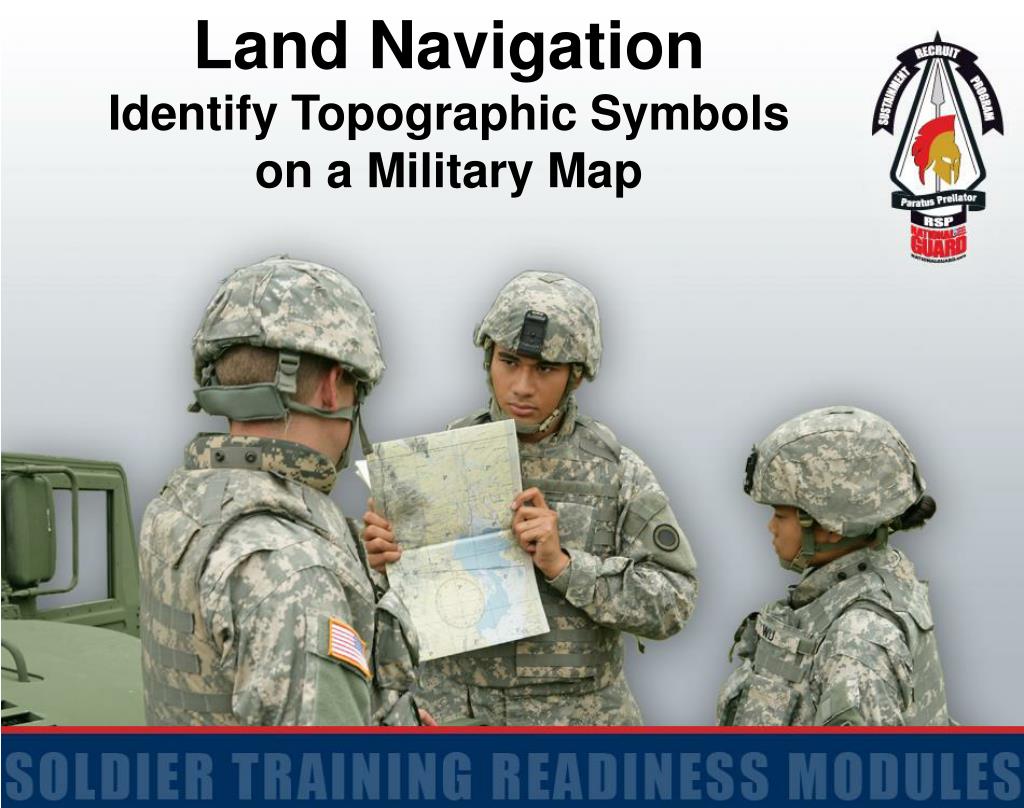
Land navigation is the ability to find your way around using a map and compass. It is a fundamental skill for anyone who spends time outdoors, whether you are hiking, camping, or simply exploring your local area. In this section, we will discuss the basic skills of land navigation, including map reading, orientation, and compass use.
Map Reading and Orientation
A map is a graphical representation of a particular area. It shows the location of features such as roads, rivers, mountains, and buildings. Map reading is the ability to understand and interpret the information on a map. Orientation is the process of aligning yourself with the map.
It involves understanding the relationship between your current location and the features shown on the map.
Map Symbols
Maps use a variety of symbols to represent different features. It is important to understand the meaning of these symbols before you can effectively use a map for navigation. Some common map symbols include:
- Roads:Roads are typically shown as lines, with different widths and colors representing different types of roads.
- Rivers:Rivers are shown as blue lines, with the width of the line representing the size of the river.
- Mountains:Mountains are shown as brown contours, with the height of the mountain represented by the number of contour lines.
- Buildings:Buildings are typically shown as small squares or rectangles.
Determining Grid Coordinates
Grid coordinates are a system of numbers and letters that are used to locate specific points on a map. They are essential for navigation, as they allow you to pinpoint your exact location and the location of your destination.
- Grid Lines:Grid lines are a series of horizontal and vertical lines that are printed on the map. The horizontal lines are called “latitude lines,” and the vertical lines are called “longitude lines.”
- Grid Squares:Grid lines intersect to form grid squares. Each grid square is identified by a unique combination of letters and numbers.
- Coordinate Location:The coordinates of a point are determined by finding the intersection of the grid lines that surround the point. For example, a point located at the intersection of the grid lines “A” and “1” would have the coordinates “A1.”
Using a Compass for Navigation
A compass is a device that uses the Earth’s magnetic field to determine direction. It is an essential tool for land navigation, as it allows you to maintain a consistent course and avoid getting lost.
- Identify North:The first step in using a compass is to identify north. This is done by holding the compass level and allowing the needle to settle. The needle will point towards magnetic north.
- Set Bearing:Once you have identified north, you can set a bearing. A bearing is the angle between north and your desired direction of travel.
- Follow Bearing:To follow a bearing, hold the compass level and align the needle with the desired bearing. Walk in the direction indicated by the compass needle.
- Check Bearing:It is important to check your bearing regularly, as you may drift off course due to wind or other factors.
Remember:Always use a map and compass together. A map will show you the features of the terrain, while a compass will help you maintain a consistent course.
Terrain Association and Feature Recognition: Army Land Nav Ppt
Terrain association is the ability to recognize and understand the relationship between features on a map and the corresponding terrain in the real world. It’s a crucial skill in land navigation because it allows you to orient yourself, estimate distances, and predict your route’s difficulty.
By recognizing key terrain features, you can accurately determine your location and make informed decisions about your navigation strategy.
Identifying and Explaining Key Terrain Features
Terrain features are the natural and man-made elements that shape the landscape. These features can be used as visual landmarks and can help you orient yourself and determine your location.
- Hills and Valleys:Hills and valleys are prominent features that significantly impact the landscape. They can be identified on maps by their contour lines. The closer the contour lines, the steeper the slope.
- Ridges and Spurs:Ridges are elongated elevated areas, often with a distinct crest line. Spurs are smaller, less prominent ridges that extend from a larger ridge.
- Streams and Rivers:Streams and rivers are natural drainage features that flow downhill. They are typically represented on maps as blue lines.
- Roads and Trails:Roads and trails are man-made features that provide access through the terrain. They are often represented on maps as black lines.
- Buildings and Structures:Buildings and structures are man-made features that can be used as landmarks. They are typically represented on maps with symbols.
Using Terrain Features to Determine Your Location
By recognizing and understanding terrain features, you can use them to determine your location.
- Finding a High Point:If you can find a high point, such as a hilltop or ridge, you can often get a good view of the surrounding terrain. This can help you identify other features and orient yourself.
- Following a Stream or River:Streams and rivers flow downhill, so following them can help you determine your direction of travel.
- Using Man-Made Features:Man-made features, such as roads, trails, and buildings, can also be used to determine your location.
Recognizing and Interpreting Natural and Man-Made Features on a Map
It is important to be able to recognize and interpret natural and man-made features on a map.
Army land nav ppt is a crucial tool for soldiers, providing them with the knowledge and skills to navigate terrain effectively. Mastering land navigation is essential for success in various military operations, and these presentations offer a comprehensive overview of the techniques and strategies involved.
For instance, one of the key aspects of land navigation is understanding the terrain, which can be complex and challenging. This is evident in the case of Jack Tedder Blakely, a soldier from Georgia who served in the Army , who had to navigate diverse environments during his deployment.
Ultimately, the knowledge and skills gained from army land nav ppt are invaluable for soldiers, enabling them to effectively navigate any terrain and accomplish their missions successfully.
- Natural Features:Natural features, such as hills, valleys, streams, and rivers, are often represented on maps using contour lines, symbols, and colors.
- Man-Made Features:Man-made features, such as roads, trails, buildings, and structures, are often represented on maps using symbols and lines.
Navigation Techniques

Navigating the terrain requires understanding and applying various techniques to determine your location and reach your destination. This section will explore three key navigation techniques: dead reckoning, resection, and intersection. Each technique offers distinct advantages and disadvantages, making them suitable for different scenarios.
Dead Reckoning
Dead reckoning involves using your compass and pace count to estimate your position relative to a known starting point. This technique is based on the principle of maintaining a consistent direction and distance.
- Steps to Perform Dead Reckoning:
- Establish a known starting point with a specific azimuth (compass bearing).
- Determine the distance to your destination using a map or other reliable source.
- Maintain a consistent azimuth and pace count throughout your journey.
- Periodically check your position using landmarks or terrain features.
Dead reckoning relies on maintaining a constant course and distance, making it susceptible to errors in estimation and environmental factors.
- Advantages of Dead Reckoning:
- Simplicity and ease of use, requiring only a compass and pace count.
- Effective in open terrain with minimal obstacles.
- Can be used in situations where other navigation techniques are unavailable.
- Disadvantages of Dead Reckoning:
- Susceptibility to errors in pace count and compass readings.
- Accuracy decreases over longer distances and in complex terrain.
- Not reliable in areas with poor visibility or magnetic disturbances.
- Real-world Examples:
- During a military patrol, soldiers use dead reckoning to navigate between checkpoints in open terrain.
- Hikers often rely on dead reckoning to traverse trails, especially when navigating through dense forests or mountainous regions.
- Sailors use dead reckoning to estimate their position at sea, especially when relying on celestial navigation.
Resection
Resection is a technique that uses known landmarks or terrain features to determine your current location on a map. This method involves taking compass bearings to at least two identifiable features, plotting these bearings on your map, and finding the point where the bearings intersect.
- Steps to Perform Resection:
- Identify at least two distinct landmarks or terrain features visible from your current location.
- Take compass bearings to each landmark, ensuring accurate readings.
- Plot these bearings on your map, drawing lines from each landmark toward your assumed position.
- The point where the bearings intersect on your map represents your approximate location.
Resection relies on accurate identification and compass bearings to known landmarks, making it crucial to have a reliable map and clear visibility.
- Advantages of Resection:
- Provides a more accurate location compared to dead reckoning.
- Effective in areas with recognizable landmarks or terrain features.
- Can be used to confirm your position after using other navigation techniques.
- Disadvantages of Resection:
- Requires identifiable landmarks or terrain features within range.
- Accuracy depends on the visibility and distance to the landmarks.
- Not suitable for open terrain lacking distinctive features.
- Real-world Examples:
- During a wilderness expedition, hikers use resection to pinpoint their location using prominent mountain peaks or rock formations.
- Sailors use resection to determine their position at sea by taking bearings to celestial bodies like stars or planets.
- Emergency responders use resection to locate victims or pinpoint the site of an incident using landmarks or terrain features visible from the air.
Intersection
Intersection is a technique that involves determining your location by finding the point where two or more known lines of position converge. These lines of position can be created by taking compass bearings to known landmarks, using GPS coordinates, or utilizing other navigation methods.
- Steps to Perform Intersection:
- Identify at least two known points or lines of position.
- Plot these lines of position on your map, ensuring accurate alignment.
- The point where the lines of position intersect represents your approximate location.
Intersection combines multiple lines of position to achieve a more precise location compared to individual techniques, offering a higher degree of accuracy.
- Advantages of Intersection:
- Provides a more accurate location compared to dead reckoning or resection alone.
- Effective in areas with limited visibility or lack of distinctive landmarks.
- Can be used to confirm your position after using other navigation techniques.
- Disadvantages of Intersection:
- Requires at least two known points or lines of position.
- Accuracy depends on the precision of the lines of position.
- Not suitable for situations with limited visibility or availability of known points.
- Real-world Examples:
- Military units use intersection to pinpoint the location of enemy positions by triangulating compass bearings to known points.
- Air traffic controllers use intersection to determine the position of aircraft by tracking their radar signals and intersecting their flight paths.
- Surveyors use intersection to determine the location of points on the ground by measuring angles and distances to known reference points.
Advanced Land Navigation Concepts
Now that you have a strong foundation in basic land navigation, let’s delve into some more advanced concepts that will elevate your navigation skills to the next level. These techniques will allow you to navigate with greater precision and confidence, even in challenging environments.
Azimuths and Back Azimuths
Azimuths and back azimuths are essential tools for precise navigation. An azimuth is the angle measured clockwise from north to a specific point. A back azimuth is the angle measured 180 degrees opposite the azimuth, effectively pointing back to your starting point.
Understanding these concepts allows you to plot courses and return to your original location accurately.
An azimuth is the angle measured clockwise from north to a specific point, while a back azimuth is the angle measured 180 degrees opposite the azimuth.
Pace Count and Time-Distance Calculations
Pace count and time-distance calculations are practical methods for estimating distances without relying solely on a map or GPS. By counting your paces or measuring the time it takes to cover a known distance, you can determine your speed and calculate the time required to reach your destination.
This method is particularly useful when navigating in areas where GPS signals are weak or unavailable.
Pace count and time-distance calculations are practical methods for estimating distances without relying solely on a map or GPS.
Using GPS Devices in Conjunction with Land Navigation Techniques, Army land nav ppt
GPS devices have revolutionized navigation, providing accurate location data and real-time guidance. However, it’s crucial to use GPS in conjunction with traditional land navigation techniques. GPS devices can malfunction or lose signal, making map and compass skills essential for backup.
GPS devices can malfunction or lose signal, making map and compass skills essential for backup.
Navigating in Challenging Terrain or Weather Conditions
Navigating in challenging terrain or weather conditions requires additional planning and preparation. Factors such as dense vegetation, steep slopes, and low visibility can significantly impact navigation. It’s essential to choose appropriate routes, use landmarks for reference, and be aware of potential hazards.
Navigating in challenging terrain or weather conditions requires additional planning and preparation.
Land Navigation Exercises and Scenarios
Land navigation exercises are essential for developing and refining your land navigation skills. By engaging in these exercises, you’ll gain confidence in your ability to navigate effectively in various environments and situations.
Designing Effective Land Navigation Exercises
Designing land navigation exercises requires careful consideration of the objectives, skills to be tested, and the environment. The exercises should be challenging enough to push your limits but not overly difficult to discourage participants.
- Start with Basic Skills:Begin with simple exercises focusing on map reading, compass use, and basic terrain association. These exercises help build a foundation for more complex scenarios.
- Progress to Advanced Skills:As you gain confidence, gradually increase the difficulty of the exercises. This might involve navigating through more complex terrain, using multiple navigation techniques, or incorporating time constraints.
- Include Different Terrain Types:Conduct exercises in diverse environments, such as forests, deserts, mountains, and urban areas. This exposes you to different challenges and helps you adapt your navigation techniques.
- Incorporate Realistic Scenarios:Create scenarios that simulate real-world situations, such as finding a lost hiker, navigating to a specific landmark, or performing a rescue operation.
Resources and Tools
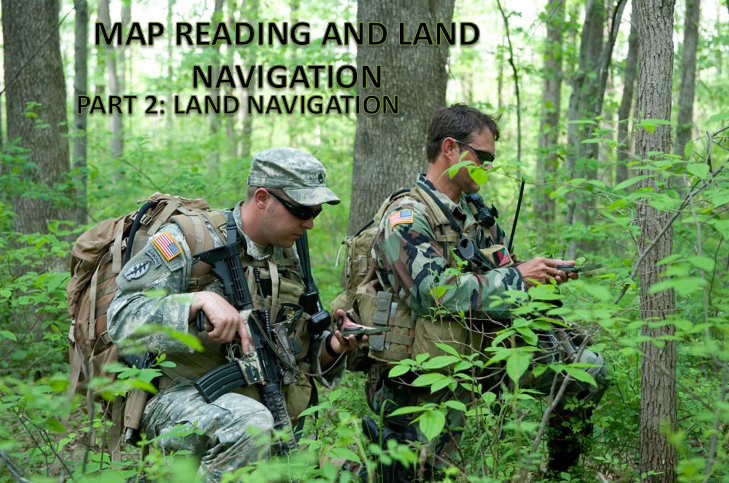
Land navigation is a critical skill in various fields, including military operations, outdoor recreation, and emergency response. Mastering land navigation requires consistent practice, and fortunately, there are many resources and tools available to help you hone your skills.
Training Materials and Courses
Finding additional training materials and courses is essential for continuous learning and improvement in land navigation. Numerous organizations and institutions offer specialized land navigation training programs, workshops, and courses.
- Military Training:The United States military provides comprehensive land navigation training to its personnel, covering various techniques and equipment.
- Outdoor Recreation Organizations:Organizations like the Boy Scouts of America, the Girl Scouts of the USA, and the National Outdoor Leadership School (NOLS) offer land navigation courses for various age groups and skill levels.
- Colleges and Universities:Many colleges and universities, particularly those with outdoor recreation programs, offer land navigation courses as part of their curriculum or as extracurricular activities.
Online Land Navigation Simulators and Apps
Online land navigation simulators and apps provide a convenient and accessible way to practice land navigation skills without needing to be in the field. These tools offer realistic simulations of terrain, map reading, and compass use, allowing you to refine your techniques and gain confidence.
- Land Navigation Apps:Several mobile applications, such as “Avenza Maps,” “Gaia GPS,” and “Topo Maps,” provide digital map access, GPS tracking, and other features that enhance land navigation.
- Online Simulators:Websites like “LandNav.com” and “MapMaster” offer interactive land navigation simulations that allow you to practice map reading, compass use, and other essential skills in a virtual environment.
Books, Articles, and Websites
A vast collection of books, articles, and websites dedicated to land navigation provides detailed information, practical tips, and advanced concepts. These resources offer valuable insights into the history, theory, and practice of land navigation.
- Books:Classic land navigation books like “The Complete Guide to Land Navigation” by John D. McManners and “The Handbook of Land Navigation” by the United States Army provide comprehensive guidance on all aspects of land navigation.
- Articles:Magazines like “Backpacker,” “Outdoor Life,” and “National Geographic Adventure” frequently publish articles on land navigation, offering practical advice and tips for various terrains and situations.
- Websites:Websites like “Adventure.com,” “Backpacker.com,” and “OutdoorProject.com” feature articles, forums, and resources related to land navigation, providing a platform for sharing knowledge and experiences.
Essential Questionnaire
What are some common mistakes made during land navigation?
Common mistakes include misinterpreting map symbols, neglecting terrain association, failing to properly orient the compass, and relying solely on GPS without verifying location using other methods.
How can I practice land navigation without access to a large training area?
You can practice basic map reading and compass skills in your local area. Utilize parks, trails, or even your own neighborhood to familiarize yourself with map features and compass usage.
What are some essential tools for land navigation besides a map and compass?
Essential tools include a protractor, ruler, pencil, and a GPS device. A good quality compass and map are crucial for accurate navigation.
What are some tips for navigating in challenging weather conditions?
In adverse weather, prioritize safety. Use waterproof maps and compasses, dress appropriately for the conditions, and consider postponing navigation if visibility is severely limited.

Welcome to my website! Here’s a brief introduction about me.
I am Charles Pham, a passionate individual with a diverse range of interests and experiences. Throughout my life, I have pursued my curiosity and embraced various opportunities that have shaped me into the person I am today.
