The Army Promotion Points List is a critical roadmap for soldiers seeking to advance their careers within the ranks. It’s a complex system, intricately woven with performance, time in service, leadership, and specialized skills. Understanding how promotion points are earned and calculated is paramount for those aspiring to higher ranks, as it shapes the trajectory of their military journey.
From the initial enlistment to the highest echelons of leadership, every soldier navigates the promotion point system. It’s a silent but powerful force, influencing decisions, shaping opportunities, and driving ambition.
Understanding Army Promotion Points
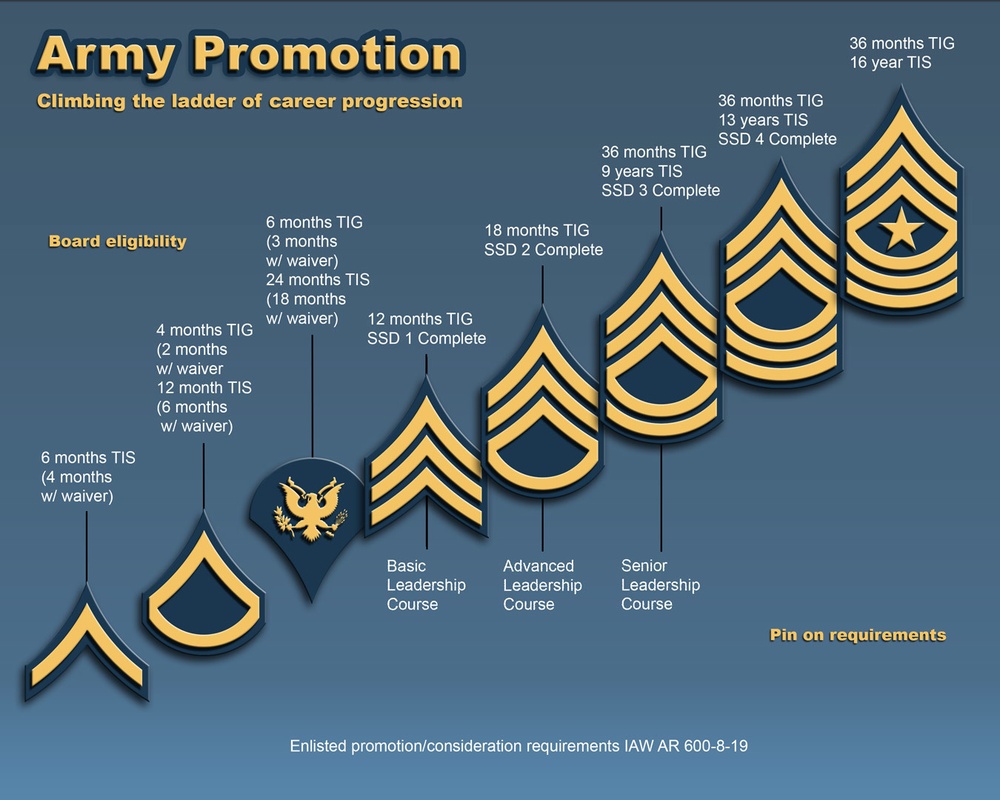
The Army promotion point system is a vital mechanism for determining a soldier’s eligibility for advancement in rank. This system provides a standardized method for evaluating a soldier’s performance, qualifications, and contributions, ensuring that promotions are based on merit and potential.
Purpose of Promotion Points
The promotion point system aims to objectively assess a soldier’s overall suitability for promotion by quantifying their accomplishments and qualifications. It provides a structured framework for evaluating various aspects of a soldier’s career, including their performance, training, education, and leadership experiences. Promotion points play a crucial role in a soldier’s career advancement by providing a clear measure of their progress and potential.
Types of Promotion Points
Promotion points are awarded in various categories, each representing a different aspect of a soldier’s career.
- Performance Points: These points are awarded based on a soldier’s performance evaluations, reflecting their overall proficiency and effectiveness in their assigned duties. The maximum number of points achievable in this category depends on the soldier’s rank and the specific criteria used for evaluation.
- Training Points: These points are awarded for completing various military training courses and certifications. Points are assigned based on the difficulty and relevance of the training, encouraging soldiers to continuously enhance their skills and knowledge. The maximum number of points achievable in this category depends on the specific training programs undertaken.
- Education Points: These points are awarded for achieving educational qualifications, such as degrees and certifications. Points are assigned based on the level of education attained and its relevance to the soldier’s military career. The maximum number of points achievable in this category depends on the specific educational qualifications obtained.
- Leadership Points: These points are awarded for demonstrating leadership qualities and responsibilities. Points are assigned based on the level of leadership positions held, the duration of service in those positions, and the effectiveness of leadership displayed. The maximum number of points achievable in this category depends on the specific leadership roles assumed and the achievements attained.
- Award Points: These points are awarded for receiving military awards and decorations. Points are assigned based on the prestige and significance of the award, recognizing exceptional achievements and contributions. The maximum number of points achievable in this category depends on the specific awards received.
- Volunteer Points: These points are awarded for participating in volunteer activities and community service initiatives. Points are assigned based on the duration and nature of the volunteer work, encouraging soldiers to contribute to their communities and demonstrate their commitment to service. The maximum number of points achievable in this category depends on the specific volunteer activities undertaken.
Weighting of Promotion Points
Each category of promotion points is assigned a specific weight, reflecting its relative importance in the overall promotion process.
| Category | Weight |
|---|---|
| Performance Points | 50% |
| Training Points | 20% |
| Education Points | 15% |
| Leadership Points | 10% |
| Award Points | 3% |
| Volunteer Points | 2% |
This weighting system ensures that promotion decisions are based on a holistic assessment of a soldier’s qualifications and contributions. For example, while performance points carry the highest weight, education and training points are also considered crucial for career advancement.
Promotion Point Calculation Example, Army promotion points list
Imagine a soldier named Sergeant Smith, who has been serving for five years. He has consistently received high performance evaluations, earning 90 out of 100 possible performance points. He has completed several advanced training courses, earning 70 out of 100 possible training points. Sergeant Smith also holds a bachelor’s degree, earning 60 out of 100 possible education points. He has served as a squad leader for two years, earning 50 out of 100 possible leadership points.
He has received a commendation medal for his exceptional service, earning 10 out of 100 possible award points. He has also volunteered for community service initiatives, earning 15 out of 100 possible volunteer points.To calculate Sergeant Smith’s total promotion points, we multiply the points earned in each category by its respective weight and then sum the results:
Total Promotion Points = (Performance Points x 50%) + (Training Points x 20%) + (Education Points x 15%) + (Leadership Points x 10%) + (Award Points x 3%) + (Volunteer Points x 2%)
Total Promotion Points = (90 x 0.5) + (70 x 0.2) + (60 x 0.15) + (50 x 0.1) + (10 x 0.03) + (15 x 0.02)
Total Promotion Points = 45 + 14 + 9 + 5 + 0.3 + 0.3
Total Promotion Points = 73.6
Therefore, Sergeant Smith’s total promotion points are 73.6. This score reflects his strong performance, training, education, and leadership experience.
Promotion Point System for New Recruits
As a new recruit, understanding the promotion point system is crucial for your career progression in the Army. It’s like a roadmap for your career, guiding you towards advancement. The system rewards you for excelling in your duties, pursuing additional training, and contributing to the unit and community. Remember, every point you earn brings you closer to promotion, so strive to maximize your potential in all aspects of your military career.
4. Points Earned Through Leadership Roles
/enlisted-promotions-made-simple-3331909_final3-5b9ffb81c9e77c002ce9c9cf-2e3ef94b1c12446a8caee76815d9b55b.jpg "Promoted faster")
Leadership roles play a crucial part in the Army promotion system. They provide opportunities to demonstrate leadership skills and gain valuable experience that contributes to career advancement. Points awarded for leadership positions reflect the importance of these roles in shaping a soldier’s development and readiness for higher responsibilities.
4.1 Identify Leadership Positions
The Army recognizes various leadership positions that award points. These positions offer opportunities to develop and demonstrate leadership skills, which are essential for promotion considerations. Here’s a table outlining some common leadership positions and the corresponding points awarded:| Leadership Position | Responsibilities | Points Awarded | Duration (Months) ||—|—|—|—|| Squad Leader | Supervises a squad of soldiers, responsible for training, discipline, and mission execution.
| 5 | 6 || Platoon Leader | Leads a platoon of soldiers, responsible for planning, executing, and evaluating tactical operations. | 10 | 12 || Company Commander | Commands a company of soldiers, responsible for overall unit operations, training, and administration. | 15 | 18 || Battalion Commander | Commands a battalion of soldiers, responsible for coordinating and directing multiple companies.
| 20 | 24 |The number of points awarded for each leadership position varies depending on the level of responsibility and the duration of the role. For example, a Squad Leader may earn 5 points for serving in the role for at least 6 months, while a Battalion Commander can earn 20 points for serving for a minimum of 24 months.
4.2 Importance of Leadership Experience
Leadership experience is crucial for promotion considerations. It provides valuable opportunities to develop essential skills and qualities that are highly valued in the Army. Through leadership roles, soldiers gain experience in:* Decision-making: Leaders are constantly faced with decisions that impact their team. This experience hones their ability to analyze situations, weigh options, and make sound judgments.
Communication
Effective communication is essential for motivating, directing, and coordinating with team members. Leadership roles provide ample opportunities to practice and refine communication skills.
Teamwork
Leadership involves fostering collaboration and teamwork. Leaders must build strong relationships, delegate tasks effectively, and ensure everyone works towards a common goal.
Problem-solving
Leaders encounter challenges and must find solutions. They develop problem-solving skills by analyzing situations, identifying root causes, and implementing effective solutions.These skills and qualities are essential for success at higher ranks, and leadership experience demonstrates a soldier’s ability to handle responsibility, collaborate effectively, and drive results.
4.3 Criteria for Earning Points
The criteria for earning points in leadership roles are based on performance and demonstration of leadership skills. Performance is evaluated based on:* Mission accomplishment: Leaders are assessed on their ability to successfully complete assigned missions. This includes planning, execution, and achieving desired outcomes.
Training and development
Leaders are responsible for training and developing their team members. This includes ensuring soldiers are proficient in their duties and prepared for future challenges.
Discipline and morale
Leaders are responsible for maintaining discipline within their unit and fostering high morale. This includes enforcing regulations, promoting teamwork, and recognizing individual achievements.
The army promotion points list is a complex system that considers various factors, including performance, education, and experience. One of the most important factors is the individual’s rank, which can be achieved through promotion. For those seeking to understand the nuances of military ranks and promotions, a helpful resource is this crossword clue that specifically focuses on military officers who gain their rank through promotion.
Understanding the promotion process, as reflected in the army promotion points list, is essential for those seeking to advance their military careers.
Leadership qualities
Leaders are evaluated on their ability to demonstrate the qualities of a good leader, such as integrity, initiative, decisiveness, and empathy.To earn maximum points in their leadership roles, individuals can:* Exceed expectations in mission accomplishment: Go above and beyond in planning, executing, and achieving mission objectives.
Develop innovative training programs
Create engaging and effective training programs that enhance the skills and knowledge of team members.
Foster a positive and productive work environment
Promote teamwork, collaboration, and high morale within the unit.
Seek opportunities to demonstrate leadership qualities
Take initiative, make sound decisions, and show empathy and concern for team members.
4.4 Importance of Leadership Experience
Leadership experience is not just about gaining points for promotion. It’s a fundamental aspect of professional development and career advancement. Leadership roles provide opportunities for growth, skill development, and recognition within the organization. They challenge soldiers to step outside their comfort zones, take on new responsibilities, and develop their leadership potential. Through these experiences, soldiers gain valuable knowledge, build confidence, and prepare themselves for future leadership roles, ultimately contributing to their career progression and success within the Army.
5. Promotion Points for Specific MOS
Promotion points aren’t just about how long you’ve served; they also consider the specific skills and demands of your Military Occupational Specialty (MOS). The Army recognizes that different roles require different levels of expertise and responsibility, so the promotion point system is designed to reflect that.
Variation in Promotion Point Requirements Based on MOS
The variation in promotion point requirements for different MOSs is influenced by several factors:
- Demand for the MOS: MOSs in high demand, like cyber security or medical specialties, often have lower promotion point requirements. The Army needs to incentivize soldiers to pursue these critical roles, making it easier for them to advance.
- Training and Education: Some MOSs require extensive training and education, like becoming a pilot or a combat engineer. These MOSs might have higher promotion point requirements to acknowledge the specialized skills and knowledge involved.
- Deployment Frequency: MOSs with higher deployment rates, like infantry or combat medics, may have slightly adjusted promotion point systems. The Army might offer faster promotions to compensate for the increased risk and demands associated with these roles.
- Performance Standards: Specific performance metrics, like exceeding training standards or earning awards, can influence promotion points for different MOSs. The Army wants to reward excellence, and this is reflected in the promotion point system.
Common MOS and Their Associated Point Requirements
Here’s a table showcasing some common MOSs and their associated promotion point requirements:
| MOS Code | MOS Description | Promotion Points Required for E-4 | Promotion Points Required for E-5 | Promotion Points Required for E-6 |
|---|---|---|---|---|
| 11B | Infantryman | 40 | 60 | 80 |
| 19D | Cavalry Scout | 40 | 60 | 80 |
| 68W | Combat Medic | 40 | 60 | 80 |
| 13F | Fire Support Specialist | 40 | 60 | 80 |
| 25B | Information Technology Specialist | 35 | 55 | 75 |
| 92G | Human Intelligence Collector | 35 | 55 | 75 |
| 31B | Military Police | 35 | 55 | 75 |
| 42A | Paralegal Specialist | 35 | 55 | 75 |
| 91B | Wheeled Vehicle Mechanic | 35 | 55 | 75 |
| 68C | Emergency Medical Technician | 35 | 55 | 75 |
Comparison of Promotion Point Systems for Different MOS Categories
Let’s compare and contrast the promotion point systems for three different MOS categories:
- Combat Arms: These MOSs, like Infantry (11B) and Cavalry Scout (19D), typically have higher promotion point requirements. This reflects the demanding nature of combat roles, the need for strong leadership, and the importance of experience in these specialties.
- Technical: Technical MOSs, like Information Technology Specialist (25B) and Wheeled Vehicle Mechanic (91B), often have lower promotion point requirements. The Army needs to incentivize soldiers to pursue these critical technical roles, making it easier for them to advance.
- Medical: Medical MOSs, like Combat Medic (68W) and Emergency Medical Technician (68C), typically have a balanced approach to promotion points. They recognize the importance of specialized skills and knowledge but also the need for experienced medical professionals.
Promotion Points for Enlisted Soldiers
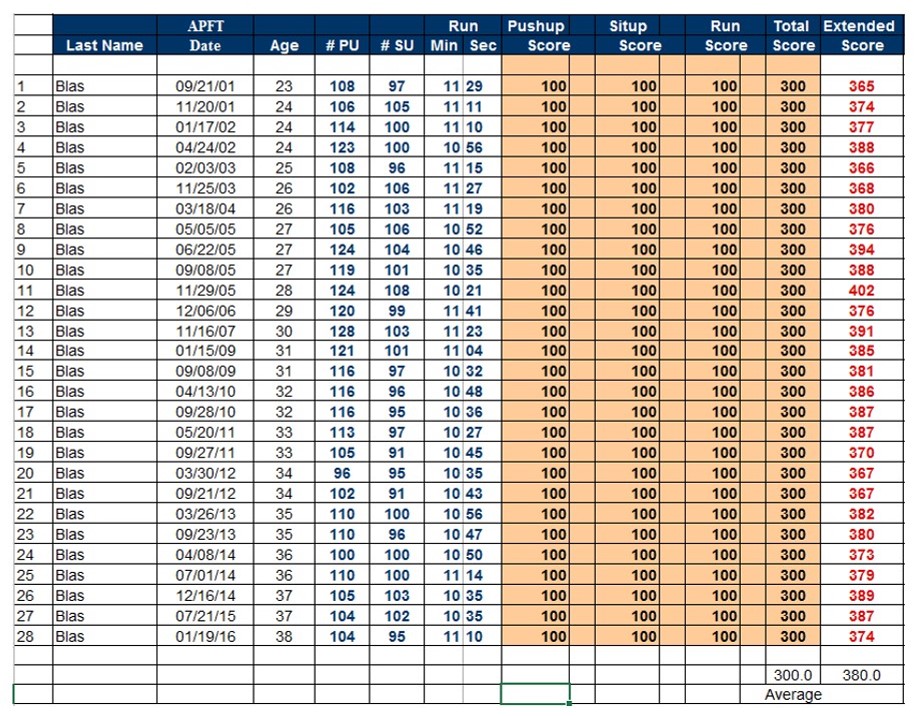
The Army promotion point system is a crucial component of an enlisted soldier’s career progression. It Artikels the criteria and methods for earning points that contribute to their advancement to higher ranks. This system provides a structured and transparent framework for evaluating an enlisted soldier’s potential and readiness for leadership responsibilities.
Promotion Point Requirements for Enlisted Soldiers
The promotion point requirements vary based on the rank an enlisted soldier is seeking. These requirements are designed to ensure that soldiers have the necessary experience, training, and leadership skills to perform effectively at each rank.
- Private (PV1-PV2): Soldiers in these initial ranks typically require a minimum number of points, often earned through basic training and initial MOS training.
- Specialist (SPC): The point requirements increase for Specialist, reflecting the need for greater experience and skills.
- Corporal (CPL): Corporals are expected to have significant experience and leadership capabilities, leading to higher point requirements.
- Sergeant (SGT): Sergeants are considered junior leaders, requiring a substantial number of points to demonstrate their readiness for increased responsibilities.
- Staff Sergeant (SSG): Staff Sergeants are mid-level leaders, and the promotion point requirements reflect their expanded roles and responsibilities.
- Sergeant First Class (SFC): SFCs are senior non-commissioned officers, requiring a high number of points to signify their experience, leadership skills, and ability to mentor and train junior soldiers.
- Master Sergeant (MSG): Master Sergeants are highly experienced leaders, often with specialized expertise and a deep understanding of their MOS.
- Sergeant Major (SGM): Sergeant Majors are the highest-ranking enlisted soldiers, requiring the highest number of points to reflect their extensive experience, leadership skills, and ability to command and manage large units.
Maximizing Promotion Point Accumulation
Enlisted soldiers can maximize their point accumulation by actively pursuing opportunities that earn promotion points.
- Leadership Roles: Active participation in leadership positions, such as squad leader, platoon sergeant, or first sergeant, earns significant points.
- Training and Education: Completing advanced training courses, attending military schools, and earning college degrees can significantly contribute to promotion point accumulation.
- Performance Evaluations: Consistently receiving high performance evaluations from superiors demonstrates a soldier’s competence and potential for promotion.
- Awards and Decorations: Earning awards and decorations, such as the Army Commendation Medal or the Army Achievement Medal, can boost promotion point totals.
- Volunteer Work: Participating in volunteer activities and community service can demonstrate a soldier’s commitment to service and leadership qualities, contributing to their promotion point accumulation.
- Deployment: Deployments to combat zones or high-risk areas can earn significant promotion points.
7. Promotion Points for Officers
The promotion point system for officers is a critical component of career progression within the military. This system is designed to objectively assess an officer’s qualifications and contributions, ensuring that those who demonstrate exceptional performance, leadership, and professional development are recognized and advanced.
System Overview
The promotion point system for officers is a structured framework that assigns numerical values to various aspects of an officer’s career. These points are accumulated over time and are used to determine an officer’s eligibility for promotion to the next higher rank. The system typically includes categories such as performance evaluations, education and training, leadership positions, awards and decorations, and time in service.
Each category is assigned a specific weighting, reflecting its relative importance in the overall promotion process.
| Category | Weighting | Criteria |
|---|---|---|
| Performance Evaluations | 30% | Officer Evaluation Reports (OERs) reflecting performance, leadership, and potential |
| Education and Training | 20% | Completion of required military schools, advanced degrees, and professional certifications |
| Leadership Positions | 25% | Holding command or staff positions, demonstrating leadership skills and responsibilities |
| Awards and Decorations | 15% | Receipt of medals, ribbons, and citations for exceptional performance or service |
| Time in Service | 10% | Years of service in the military, reflecting experience and maturity |
Influencing Factors
Several factors can influence the allocation of promotion points for officers. These factors can be categorized as follows:
- Performance: This includes the officer’s overall job performance, as reflected in their OERs, and their ability to consistently meet or exceed expectations.
- Leadership: This encompasses the officer’s demonstrated leadership skills, ability to motivate and inspire others, and effectiveness in leading teams and units.
- Education and Training: This refers to the officer’s pursuit of professional development, including completion of military schools, advanced degrees, and relevant certifications.
- Awards and Decorations: This category recognizes officers who have received awards or decorations for exceptional performance, bravery, or service.
- Time in Service: This factor reflects the officer’s experience and maturity, with longer periods of service generally indicating a greater understanding of the military and its operations.
- Branch of Service: Different branches of the military may have slightly different promotion point systems, reflecting the specific demands and requirements of their respective roles.
- Specialty: Certain military specialties may have higher or lower promotion point requirements, depending on the perceived importance or scarcity of the skill set.
Challenges and Opportunities
The officer promotion system presents both challenges and opportunities.
“One of the biggest challenges facing the officer promotion system is ensuring that it remains fair and transparent, while also incentivizing officers to pursue professional development and leadership opportunities.”
[Source
Name of Source]
The challenges associated with the system can include potential biases, lack of transparency, and difficulty in accurately assessing an officer’s potential. However, the system also presents opportunities for officers to demonstrate their skills and qualifications, compete for promotion, and advance their careers.
Comparison
While the specific details of the promotion point system may vary, most militaries around the world utilize similar systems to assess and promote their officers. The key features of these systems typically include:
| Feature | U.S. Army | U.K. Royal Army | Canadian Armed Forces |
|---|---|---|---|
| Performance Evaluations | OERs | Officer Performance Reports | Performance Evaluation Reports |
| Education and Training | Military schools, degrees | Military courses, qualifications | Military courses, degrees |
| Leadership Positions | Command and staff roles | Command and staff appointments | Command and staff appointments |
| Awards and Decorations | Medals, ribbons, citations | Medals, decorations, commendations | Medals, decorations, citations |
| Time in Service | Years of service | Years of service | Years of service |
Recommendations
To improve the officer promotion system, several recommendations can be considered:
- Increase Transparency: Ensure that the promotion point system is clearly communicated to all officers, including the criteria for awarding points and the weighting of each category.
- Enhance Training: Provide officers with training on the promotion point system, including strategies for maximizing their points and understanding the importance of professional development.
- Reduce Bias: Implement measures to mitigate potential biases in the evaluation process, such as using standardized evaluation tools and providing training on unconscious bias.
- Promote Diversity: Encourage diversity in the officer corps by creating programs and initiatives that support the recruitment and retention of officers from underrepresented groups.
- Focus on Leadership: Emphasize the importance of leadership skills and experience in the promotion process, recognizing that effective leaders are essential for the success of the military.
Factors Influencing Promotion Point Calculations
The Army’s promotion point system is a complex system designed to evaluate a Soldier’s overall performance and potential for advancement. It considers various factors, including leadership, experience, education, and awards, to determine a Soldier’s eligibility for promotion. This section delves into the intricacies of how promotion points are calculated, providing a comprehensive understanding of the factors that influence this critical aspect of a Soldier’s career.
Army Promotion Board Evaluation
The Army promotion board plays a crucial role in evaluating a Soldier’s promotion points. It is comprised of senior officers who carefully assess each Soldier’s record, including their performance evaluations, awards, and other relevant documentation. The board evaluates each Soldier against specific criteria, using a standardized scoring system to determine their promotion point total.
- Performance Evaluation Scores: Performance evaluations, also known as Officer Evaluation Reports (OERs) or Noncommissioned Officer Evaluation Reports (NCOERs), are a significant factor in promotion point calculations. The board assigns points based on the overall rating and specific performance attributes Artikeld in the evaluation. For example, a “Highly Effective” rating generally earns more points than a “Effective” rating.
- Awards and Decorations: Awards and decorations, such as the Army Commendation Medal or the Meritorious Service Medal, are also factored into the promotion point calculation. The board assigns points based on the type and significance of the award. For example, a Bronze Star Medal earns more points than a Good Conduct Medal.
- Education and Training: Educational achievements and training courses completed are also considered. The board assigns points based on the level of education and the relevance of the training to the Soldier’s current MOS. For instance, a Master’s degree in a relevant field earns more points than a Bachelor’s degree.
- Leadership Experience: The board assigns points based on the Soldier’s leadership experience, including the number of years served in leadership positions, the level of responsibility held, and the effectiveness of their leadership. For example, a Soldier who has served as a platoon leader for three years would earn more points than a Soldier who has only served as a squad leader for one year.
The board assigns weights to each criterion, indicating its relative importance in the overall promotion point calculation. For example, performance evaluation scores may carry a higher weight than awards and decorations. The board may also adjust points based on individual circumstances, such as deployment or other extenuating factors.
Promotion Point Submission Review and Validation
Once a Soldier submits their promotion point calculations, the unit must review and validate the information provided. This process ensures the accuracy and completeness of the submitted data.
- Unit Review: The Soldier’s unit is responsible for reviewing the promotion point submission, ensuring that all information is accurate and complete. The unit verifies the accuracy of the submitted data, including performance evaluations, awards, education, and training records.
- Verification of Information: The unit may request additional documentation to verify the accuracy of the submitted information. For example, if a Soldier claims to have completed a specific training course, the unit may request a copy of the certificate of completion.
- Discrepancy Resolution: If discrepancies or errors are found in the submitted information, the unit works with the Soldier to resolve them. This may involve updating records, requesting corrections from higher headquarters, or submitting a waiver for missing documentation.
The unit’s role in validating promotion point submissions is critical in ensuring a fair and accurate evaluation process. It helps to prevent errors and ensure that all Soldiers are evaluated on an equal basis.
Extenuating Circumstances and Point Adjustments
In some cases, Soldiers may experience extenuating circumstances that warrant point adjustments. These circumstances may include deployments, medical conditions, or family emergencies.
- Documentation of Extenuating Circumstances: Extenuating circumstances must be documented and supported with appropriate evidence. For example, a Soldier requesting a point adjustment for deployment may need to provide copies of their deployment orders.
- Evaluation of Extenuating Circumstances: The promotion board reviews the documentation and evaluates the impact of the extenuating circumstances on the Soldier’s performance and potential. The board may adjust points based on the severity and duration of the circumstances.
- Requesting a Point Adjustment: Soldiers who believe they are entitled to a point adjustment due to extenuating circumstances must submit a formal request to their unit. The request must be supported by appropriate documentation and justification.
Point adjustments are granted on a case-by-case basis, and the board carefully considers the circumstances and their impact on the Soldier’s career.
Impact of Promotion Points on Overall Selection
Promotion points are a critical factor in the overall selection process for promotion. They are used to rank Soldiers in order of merit, with those who have the highest promotion point totals generally being selected first.
- Overall Evaluation: Promotion points are just one factor considered in the overall evaluation of a Soldier’s potential. The board also considers the Soldier’s performance, leadership qualities, and potential for future success.
- Order of Selection: Promotion points play a significant role in determining the order of selection for promotion. Soldiers with higher promotion point totals are generally selected for promotion before those with lower totals.
While promotion points are an important factor, they are not the sole determinant of promotion. The board considers a range of factors to ensure that the most qualified and deserving Soldiers are selected for advancement.
Impact of Promotion Points on Career Advancement
Promotion points play a pivotal role in shaping an Army soldier’s career trajectory, influencing opportunities for advancement and leadership roles. Earning a high number of promotion points opens doors to a wider range of career possibilities, potentially leading to prestigious assignments and faster progression through the ranks.
Career Advancement Opportunities
A soldier’s promotion point total significantly impacts their career path. High promotion points demonstrate dedication, competence, and leadership potential, making them more competitive for coveted positions and promotions. Here are some potential career paths for soldiers with high promotion point totals:
- Command Positions: Soldiers with consistently high promotion points are often considered for command positions, such as platoon leader, company commander, and battalion commander. These roles offer significant leadership experience and opportunities for professional growth.
- Special Forces and Ranger Units: Elite units like Special Forces and Ranger battalions require exceptional physical and mental fitness, as well as a strong record of achievement. Soldiers with high promotion points are more likely to be selected for these demanding roles, further enhancing their career prospects.
- Staff Positions: High promotion points demonstrate a soldier’s ability to handle complex tasks and work effectively in a team environment. This makes them attractive candidates for staff positions at various levels, including battalion, brigade, and division headquarters.
- Advanced Education and Training: Soldiers with high promotion points are often chosen for advanced education and training opportunities, such as the Army War College or the Command and General Staff College. These programs equip them with the skills and knowledge necessary for senior leadership roles.
“Promotion points are a key indicator of a soldier’s potential and their ability to contribute to the Army’s mission.”General Mark A. Milley, Chief of Staff of the Army
Historical Evolution of Army Promotion Points
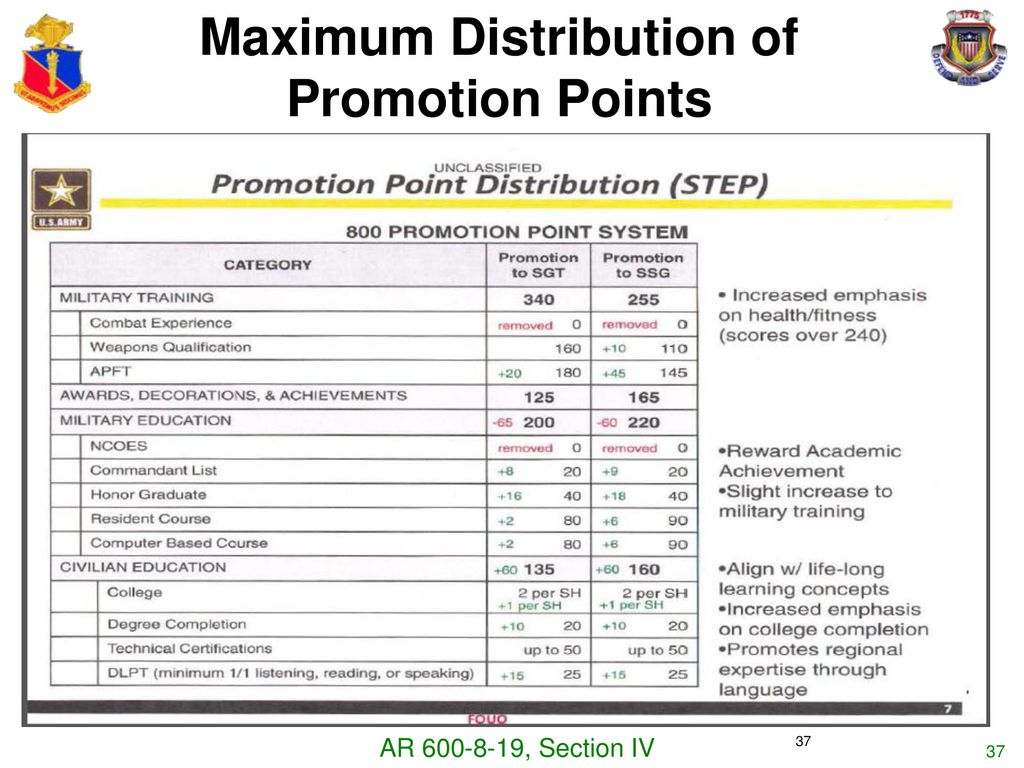
The Army’s promotion point system has undergone significant changes throughout its history, reflecting evolving needs, policies, and priorities. Understanding this historical evolution is crucial for appreciating the current system and its impact on soldier career advancement.
Changes in the Promotion Point System Over Time
The Army’s promotion point system has been refined over the years, with notable changes influencing how promotion opportunities are allocated.
- Early 20th Century: The initial system focused primarily on length of service and performance evaluations, with limited emphasis on specific skills or training.
- Post-World War II: The system evolved to incorporate factors like education, training, and combat experience, reflecting the changing nature of warfare and the need for specialized skills.
- 1970s: The Army introduced the “Total Army Personnel Management System (TAPMS),” which aimed to create a more equitable and merit-based system, with increased emphasis on objective performance metrics and standardized promotion criteria.
- 1990s: Further refinements to the system included the introduction of “Promotion Points” and the “Promotion Point System,” providing a more structured and transparent framework for evaluating promotion eligibility.
- 21st Century: The system continues to evolve, incorporating advancements in technology, data analytics, and the changing demands of modern warfare, with a focus on leadership development, professional military education, and deployment experience.
Rationale Behind Past Modifications to the Point System
The rationale behind past modifications to the promotion point system was multifaceted, reflecting a desire to:
- Improve Fairness and Equity: The system has been adjusted to ensure that promotions are based on merit and objective criteria, minimizing bias and subjectivity.
- Promote Professionalism: The system has been designed to encourage soldiers to pursue education, training, and professional development, fostering a more highly skilled and competent force.
- Address Changing Needs: The system has evolved to reflect the changing nature of warfare and the need for specialized skills, ensuring that the Army can effectively recruit and retain the talent needed to meet its operational requirements.
- Enhance Career Advancement: The system has been designed to provide soldiers with clear and transparent pathways for career advancement, encouraging them to strive for higher levels of responsibility and leadership.
Impact of Historical Changes on Soldier Promotion Practices
The historical changes to the promotion point system have had a significant impact on soldier promotion practices, leading to:
- Increased Emphasis on Merit: Promotions are now based on a more objective and merit-based system, reducing the influence of subjective factors and fostering a more equitable environment.
- Greater Focus on Professional Development: The system incentivizes soldiers to pursue education, training, and professional development, contributing to a more highly skilled and competent force.
- Enhanced Career Planning: Soldiers have a clearer understanding of the requirements for promotion, enabling them to plan their careers effectively and pursue the necessary qualifications.
- Greater Transparency: The system is more transparent, allowing soldiers to understand how their performance and achievements are evaluated and how they can improve their promotion prospects.
Future Trends in Army Promotion Points: Army Promotion Points List
The Army’s promotion point system is constantly evolving to reflect the changing needs of the force. Several factors, including technological advancements, the evolving nature of warfare, and the increasing importance of specific skills, are driving these changes. These adjustments aim to ensure that the promotion system remains fair and effective in identifying and rewarding the most qualified soldiers for leadership roles.
Potential Changes to the Promotion Point System
The Army may consider several changes to its promotion point system in the future. These changes aim to ensure the system remains relevant and effectively identifies and rewards the most qualified soldiers.
- Increased Emphasis on Technical Skills: The Army is increasingly reliant on technology, requiring soldiers with specialized technical skills. The promotion point system may adjust to reflect this need, potentially awarding more points for proficiency in specific technical areas. For instance, soldiers proficient in cybersecurity, artificial intelligence, or data analysis may receive more points than those without these skills.
- Greater Recognition for Leadership Experience: The Army recognizes the importance of leadership experience in developing effective soldiers. The promotion point system may emphasize leadership roles, potentially assigning more points for leadership positions or specific leadership achievements. This could involve awarding more points for successfully leading a team, completing a leadership development program, or demonstrating exceptional leadership qualities.
- Integration of Performance Data: The Army may integrate performance data from various sources into the promotion point system. This could involve incorporating data from training exercises, deployments, or performance evaluations into the calculation of promotion points. This approach aims to provide a more holistic assessment of a soldier’s capabilities and potential for leadership.
- Adoption of Continuous Evaluation Systems: The Army might explore adopting continuous evaluation systems that track a soldier’s performance and progress over time. This could involve incorporating data from various sources, such as training records, performance evaluations, and even social media interactions, to provide a comprehensive picture of a soldier’s development and suitability for promotion.
FAQs
How often are promotion points updated?
Promotion points are typically updated annually, though specific timelines may vary depending on the branch of service and rank.
Are promotion points ever revoked?
Yes, promotion points can be revoked in cases of misconduct, disciplinary actions, or if it’s determined that points were awarded in error.
What are the consequences of having low promotion points?
Low promotion points can make it more challenging to advance in rank and may limit access to certain opportunities and assignments.
Can I appeal a promotion point decision?
Yes, soldiers can appeal promotion point decisions through established channels within their branch of service.

Whitney Morris is a renowned author with a passion for military history and strategic analysis. Born in Jakarta, Indonesia, Defense developed a deep fascination for warfare and national defense from a young age. His unwavering interest in military strategy, combined with his natural storytelling ability, has earned him a reputation as an engaging and insightful writer in the field.
