What is insanity defence – What is insanity defense? This question has perplexed legal scholars, mental health professionals, and the general public for centuries. The insanity defense is a legal concept that allows a defendant to avoid criminal responsibility for their actions if they were insane at the time of the offense.
In this article, we will explore the definition, history, types, evaluation, and ethical implications of the insanity defense, providing a comprehensive overview of this complex and fascinating topic.
The insanity defense has a long and storied history, dating back to ancient Greece. In the early days of the common law, the insanity defense was based on the idea that a person who was insane could not be held responsible for their actions because they lacked the capacity to understand the nature and consequences of their conduct.
Over time, the insanity defense has evolved to become more complex and nuanced, with different jurisdictions adopting different tests for determining insanity.
Definition of Insanity Defense
The insanity defense is a legal strategy used to absolve a defendant of criminal responsibility for an offense due to mental illness or defect.
In most jurisdictions, the insanity defense is based on the concept of diminished capacity, which holds that a person cannot be held fully responsible for their actions if their mental capacity is significantly impaired at the time of the offense.
Historical Evolution of the Insanity Defense
The insanity defense has a long and complex history, dating back to ancient times.
In the early days of common law, the insanity defense was rarely used, as most people believed that mental illness was a sign of demonic possession or divine punishment.
In the 18th century, the Enlightenment brought about a new understanding of mental illness, and the insanity defense began to be used more frequently.
The first major test for the insanity defense was established in the 1843 case of M’Naghten’s Case.
History of Insanity Defense
The insanity defense has a long and complex history, dating back to ancient times. In early legal systems, such as those of ancient Greece and Rome, individuals who were considered to be insane were not held criminally responsible for their actions.
This view was based on the belief that insanity deprived individuals of their ability to understand the nature of their actions or to control their behavior.
In the Middle Ages, the insanity defense was largely abandoned in favor of a more retributive approach to crime. Individuals who were found to be insane were often punished severely, as their insanity was seen as an aggravating factor rather than a mitigating one.
M’Naghten’s Case
In 1843, the case of M’Naghten’s Case established the “right and wrong” test for insanity in England. This test held that an individual was not criminally responsible for their actions if they did not know the nature and quality of their actions or if they did not know that their actions were wrong.
Durham v. United States
In 1954, the case of Durham v. United States established a more liberal test for insanity in the United States. This test held that an individual was not criminally responsible for their actions if their actions were the product of a mental disease or defect.
Insanity Defense Reform Act of 1984
In 1984, the Insanity Defense Reform Act (IDRA) was passed in the United States. This act narrowed the insanity defense by requiring that individuals who wish to use the defense must prove that they were unable to appreciate the nature and consequences of their actions or to conform their conduct to the requirements of the law due to a severe mental disease or defect.
Changing Definitions of Insanity
The definition of insanity has changed over time, as has the criteria used to determine criminal responsibility. In the past, insanity was often defined as a lack of reason or understanding. Today, insanity is more commonly defined as a mental disease or defect that impairs an individual’s ability to appreciate the nature and consequences of their actions or to conform their conduct to the requirements of the law.
Role of Mental Health Professionals
Mental health professionals play a critical role in insanity defense cases. They are responsible for evaluating the defendant’s mental state and determining whether they meet the criteria for insanity. Mental health professionals also provide testimony at trial to help the jury understand the defendant’s mental condition and its impact on their behavior.
Ethical and Policy Implications
The insanity defense has a number of ethical and policy implications. One of the main concerns is that the insanity defense may be used by individuals who are not truly insane to avoid criminal responsibility for their actions. Another concern is that the insanity defense may stigmatize individuals with mental illness and lead to discrimination against them.
Timeline of Key Events
- 1843: M’Naghten’s Case establishes the “right and wrong” test for insanity in England.
- 1954: Durham v. United States establishes a more liberal test for insanity in the United States.
- 1984: The Insanity Defense Reform Act (IDRA) is passed in the United States.
Table of Tests for Insanity
| Jurisdiction | Test for Insanity |
|---|---|
| England and Wales | M’Naghten’s Case |
| United States | Insanity Defense Reform Act (IDRA) |
| Canada | Mental Disorder Defense |
| Australia | Mental Impairment Defense |
Quotes
“The insanity defense is a necessary safeguard against the possibility of convicting and punishing individuals who are not morally responsible for their actions.”
Judge David Bazelon
“The insanity defense is a dangerous loophole that allows criminals to escape punishment for their crimes.”
Senator Orrin Hatch
Tests for Insanity
The insanity defense is a legal doctrine that allows a defendant to avoid criminal responsibility for their actions if they were insane at the time of the offense. There are a number of different legal tests that can be used to determine whether a defendant is insane, and these tests vary from jurisdiction to jurisdiction.
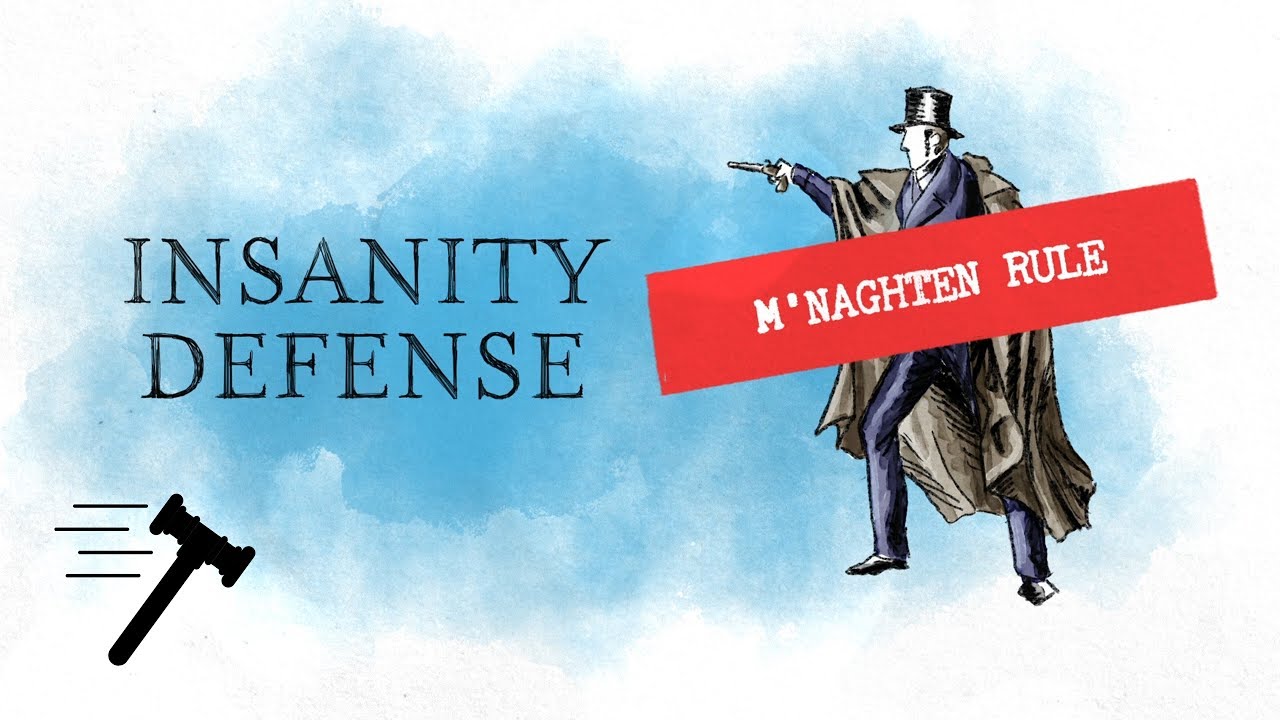
The most common insanity test is the M’Naghten Rule, which was established in England in 1843. The M’Naghten Rule states that a person is insane if they do not know the nature and quality of their actions or do not know that what they are doing is wrong.
Another common insanity test is the Irresistible Impulse Test, which was established in the United States in 1871. The Irresistible Impulse Test states that a person is insane if they cannot control their actions due to a mental disorder.
Criticisms and Limitations of Insanity Tests
There are a number of criticisms and limitations of the insanity defense. One criticism is that the tests are too narrow and do not take into account all of the factors that can contribute to insanity. For example, the M’Naghten Rule does not take into account the fact that a person may be insane even if they know the nature and quality of their actions and know that what they are doing is wrong.
Another criticism of the insanity defense is that it is difficult to prove. In order to prove insanity, the defendant must present evidence that they were insane at the time of the offense. This can be difficult to do, especially if the defendant does not have a history of mental illness.
Role of Expert Witnesses in Insanity Evaluations
Expert witnesses play an important role in insanity evaluations. Expert witnesses are mental health professionals who can provide testimony about the defendant’s mental state at the time of the offense. Expert witnesses can help the jury to understand the defendant’s mental illness and how it may have affected their behavior.
Impact of the Insanity Defense on the Criminal Justice System
The insanity defense has a significant impact on the criminal justice system. The insanity defense can result in a defendant being found not guilty by reason of insanity (NGRI). A defendant who is found NGRI is not punished for their crime, but they may be committed to a mental hospital for treatment.
The insanity defense can also result in a defendant being found guilty but mentally ill (GBMI). A defendant who is found GBMI is punished for their crime, but they may receive a reduced sentence or be placed in a mental health facility instead of prison.
Burden of Proof
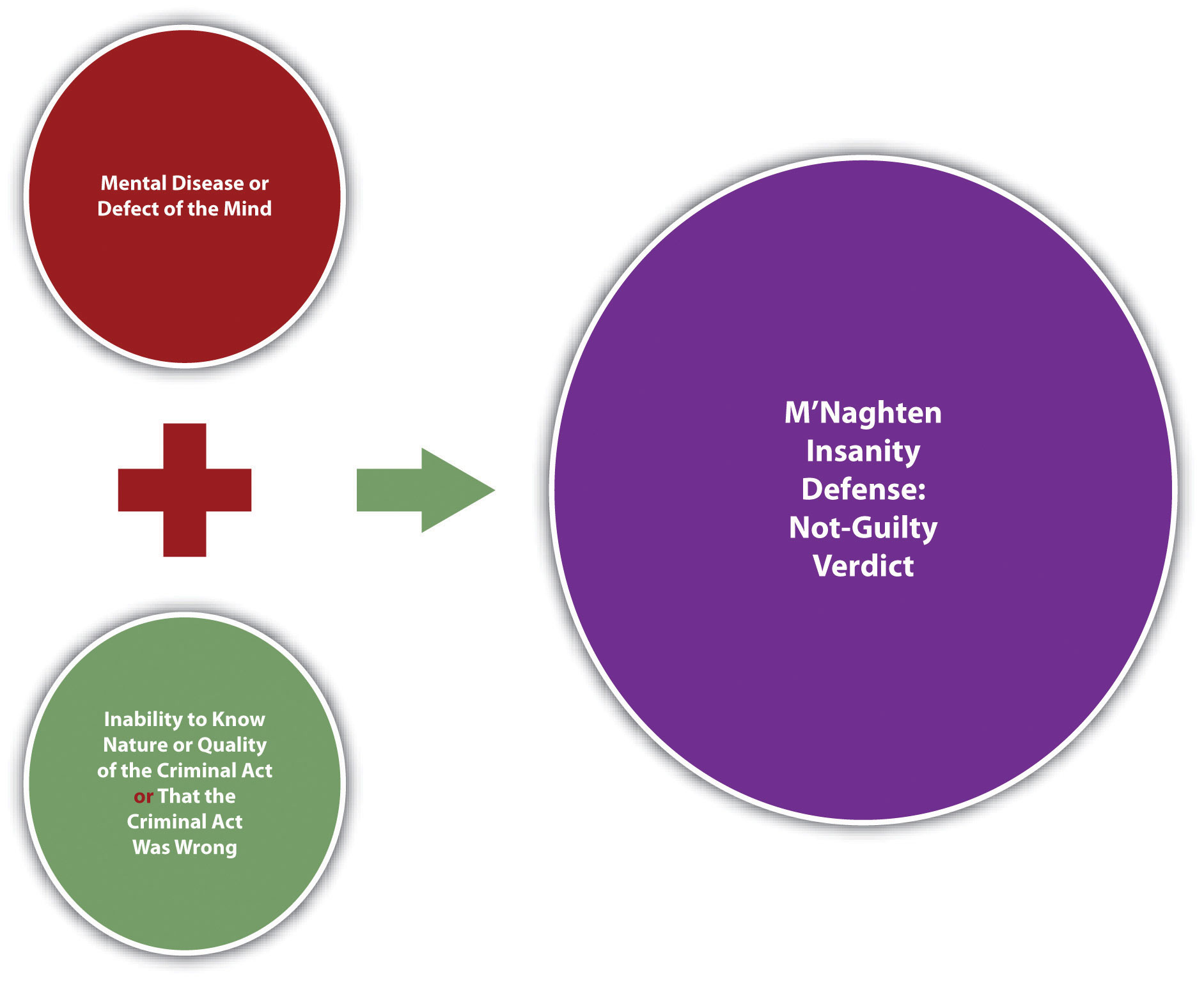
In insanity cases, the burden of proof is on the defendant to establish that they were insane at the time of the crime. This means that the defendant must present evidence to support their claim of insanity. The prosecution does not have to prove that the defendant was sane.There are different standards of proof used in insanity cases.
In most jurisdictions, the defendant must prove insanity by a preponderance of the evidence. This means that the defendant must present evidence that is more convincing than the evidence presented by the prosecution. In some jurisdictions, the defendant must prove insanity by clear and convincing evidence.
This is a higher standard of proof than a preponderance of the evidence.The burden of proof in insanity cases is a complex issue. There are many factors that can affect the outcome of an insanity defense, including the jurisdiction in which the case is being tried, the evidence that is presented, and the jury’s instructions.
Expert Testimony
In insanity defense cases, expert witnesses play a crucial role in providing professional opinions and evaluations regarding the defendant’s mental state.
Insanity defence is a legal defence that seeks to absolve a defendant from criminal responsibility by reason of mental illness. The defence is based on the premise that a person who is insane is not capable of forming the necessary intent to commit a crime.
In the context of Belize, the Belize Defence Force is responsible for maintaining national security and defending the country against external threats. However, the insanity defence remains a relevant legal concept in Belize, as it ensures that individuals who are not mentally capable of understanding the nature of their actions are not held criminally responsible.
Psychiatric and psychological evaluations are essential components of an insanity defense. These evaluations involve thorough assessments of the defendant’s mental health history, behavior, and psychological functioning. Expert witnesses use standardized tests, interviews, and observations to gather data and form opinions about the defendant’s mental state at the time of the alleged offense.
Psychiatric Evaluations
- Psychiatrists are medical doctors who specialize in the diagnosis and treatment of mental disorders. They conduct psychiatric evaluations to assess the defendant’s mental health history, symptoms, and overall functioning.
- Psychiatric evaluations may include interviews with the defendant, family members, and other relevant individuals; a review of medical records; and psychological testing.
Psychological Evaluations
- Psychologists are mental health professionals who specialize in the assessment and treatment of psychological disorders. They conduct psychological evaluations to assess the defendant’s cognitive abilities, personality traits, and emotional functioning.
- Psychological evaluations may include interviews with the defendant, psychological testing, and observations of the defendant’s behavior.
Guilty but Insane
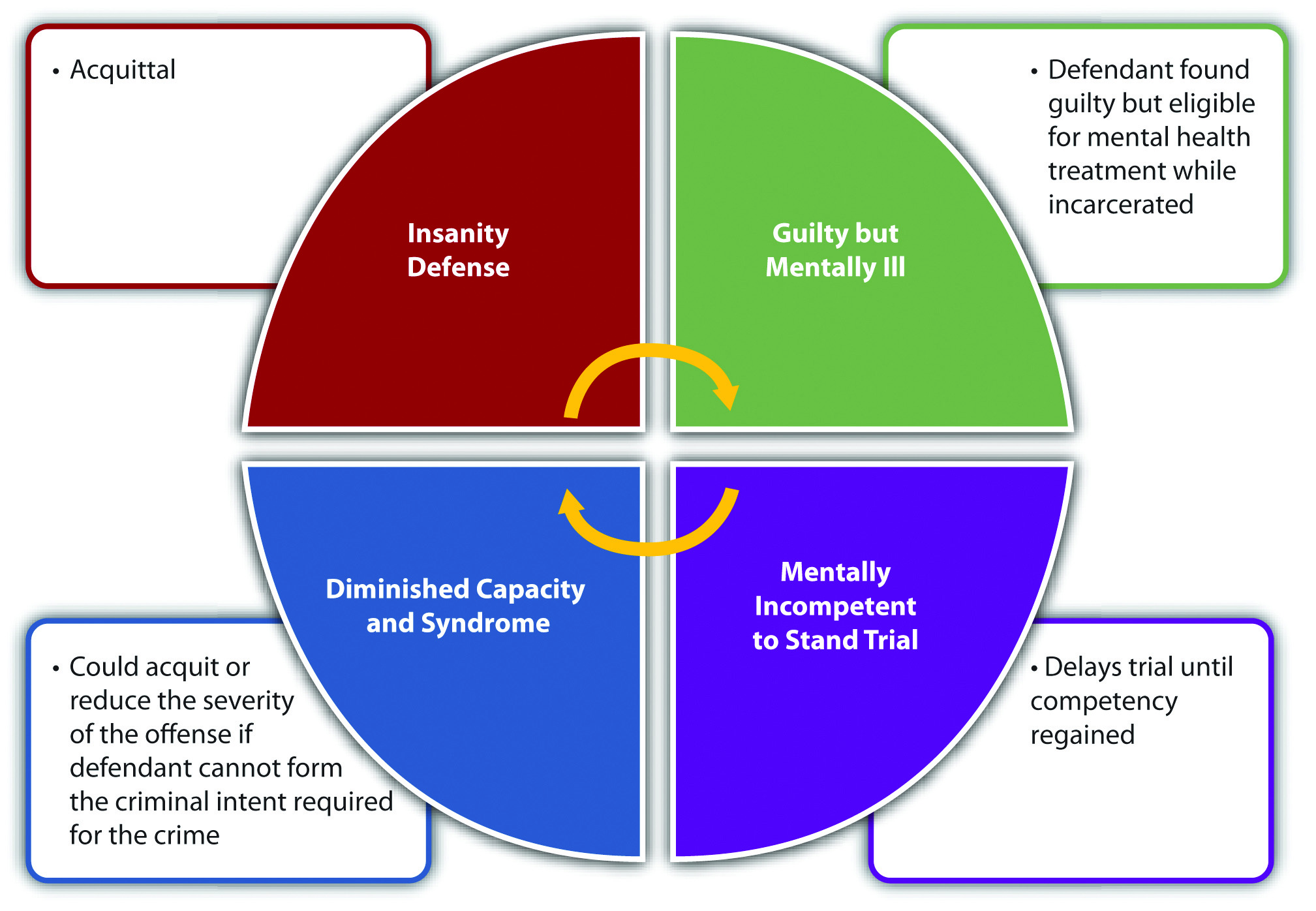
The verdict of “guilty but insane” is a legal finding that a defendant committed a crime but was mentally ill at the time of the offense. This verdict is distinct from “not guilty by reason of insanity” (NGRI), in which the defendant is found to have been so mentally ill that they did not understand the nature and consequences of their actions.
In contrast, a defendant who is found guilty but insane is considered to have understood their actions but was unable to control them due to their mental illness.
The consequences of a guilty but insane verdict can vary depending on the jurisdiction. In some cases, defendants who are found guilty but insane may be sentenced to a mental health facility for treatment. In other cases, they may be sentenced to prison, but their mental illness may be taken into account when determining the length of their sentence.
Examples of Guilty but Insane Verdicts
There have been a number of high-profile cases in which defendants have been found guilty but insane. One example is the case of John Hinckley Jr., who attempted to assassinate President Ronald Reagan in 1981. Hinckley was found guilty but insane and was sentenced to a mental health facility.
He was released from the facility in 2016.
Another example is the case of Andrea Yates, who drowned her five children in a bathtub in 2001. Yates was found guilty but insane and was sentenced to life in prison. She is currently receiving treatment in a mental health facility.
Ethical and Legal Implications of the Guilty but Insane Verdict
The guilty but insane verdict has been the subject of much debate. Some critics argue that it is unfair to hold defendants criminally responsible for actions that they were unable to control due to their mental illness. Others argue that the verdict is necessary to protect society from dangerous individuals who may not be able to control their behavior.
The legal and ethical implications of the guilty but insane verdict are complex. In some cases, the verdict may be used to ensure that defendants receive the treatment they need. In other cases, it may be used to punish defendants who have committed serious crimes.
Role of Mental Health Experts
Mental health experts play a critical role in determining whether a defendant is guilty but insane. These experts can evaluate the defendant’s mental state at the time of the offense and provide testimony about the defendant’s ability to understand their actions and control their behavior.
The testimony of mental health experts can be crucial in helping the jury to reach a verdict. However, it is important to note that mental health experts are not always able to provide a definitive answer as to whether a defendant is guilty but insane.
Comparison to Other Verdicts
The guilty but insane verdict is similar to the verdict of NGRI in that both verdicts require the defendant to have been mentally ill at the time of the offense. However, the guilty but insane verdict is distinct from NGRI in that the defendant is found to have understood their actions but was unable to control them due to their mental illness.
The guilty but insane verdict is also similar to the verdict of guilty in that both verdicts result in the defendant being punished for their crime. However, the guilty but insane verdict is distinct from the verdict of guilty in that the defendant’s mental illness may be taken into account when determining the length of their sentence.
Persuasive Essay
The guilty but insane verdict is a complex and controversial issue. There are strong arguments both for and against the use of this verdict. Ultimately, the decision of whether or not to use the guilty but insane verdict is a matter of public policy that must be made by each individual jurisdiction.
In my opinion, the guilty but insane verdict is a valuable tool that can be used to ensure that defendants who are mentally ill receive the treatment they need while also protecting society from dangerous individuals.
Insanity and Diminished Capacity
The insanity defense and the defense of diminished capacity are two distinct legal defenses that can be used to excuse or mitigate criminal behavior. While both defenses involve mental illness, they differ in several key respects.
Insanity defense, a legal doctrine, allows defendants to avoid criminal liability if they were mentally ill at the time of the alleged crime. The concept of insanity defense is closely intertwined with self-defense, particularly in cases involving the use of firearms.
For instance, the 22lr self defense case highlights the complexities of assessing mental capacity and the role of self-defense in determining criminal culpability. Thus, understanding insanity defense requires consideration of the broader legal framework surrounding self-defense and the interplay between mental health and criminal justice.
Distinguishing Features
- Insanity Defense:Focuses on the defendant’s inability to appreciate the nature and quality of their actions or to understand the wrongfulness of their conduct due to severe mental illness.
- Diminished Capacity Defense:Acknowledges that the defendant had a mental illness that impaired their capacity to form the specific intent required for the crime, but not to the extent of rendering them legally insane.
Legal and Practical Differences
| Characteristic | Insanity Defense | Diminished Capacity Defense |
|---|---|---|
| Mental State | Unable to appreciate the nature and quality of their actions or to understand their wrongfulness | Mental illness impaired their capacity to form the specific intent required for the crime |
| Legal Standard | M’Naghten Rule or Irresistible Impulse Test | Not clearly defined, varies by jurisdiction |
| Burden of Proof | Prosecution (in most jurisdictions) | Defendant |
| Verdict | Not guilty by reason of insanity | Guilty but insane |
| Consequences | Commitment to a mental health facility | Reduced sentence or alternative sentencing |
Examples of Successful Defenses
- Insanity Defense:John Hinckley Jr. was found not guilty by reason of insanity in the assassination attempt on President Ronald Reagan.
- Diminished Capacity Defense:Andrea Yates was found guilty but insane in the drowning deaths of her five children.
Ethical Implications
The use of these defenses raises ethical concerns, such as:
- Potential for Malingering:Defendants may feign mental illness to avoid punishment.
- Stigmatization of Mental Illness:Defenses can perpetuate stereotypes and contribute to the stigma associated with mental illness.
Reforms to the Legal Framework
Suggested reforms to address these concerns include:
- Clarifying the legal standards for both defenses.
- Establishing stricter criteria for expert testimony.
- Providing more resources for mental health evaluations.
- Considering alternative sentencing options for defendants found guilty but insane.
Public Perception of Insanity Defense
.jpg "Insanity plea cartoons defense cartoon trials comics criminal funny insane legal cartoonstock test plead pleaded continues justice states many system")
The insanity defense is a legal doctrine that allows a defendant to avoid criminal responsibility for their actions if they were mentally ill at the time of the offense. The public perception of the insanity defense is often negative, with many people believing that it is used by criminals to escape punishment.
However, the reality is that the insanity defense is rarely successful, and those who use it are often severely mentally ill.
There are a number of common misconceptions and biases surrounding the insanity defense. One common misconception is that the insanity defense is a “get out of jail free” card for criminals. However, this is not true. In order to be found not guilty by reason of insanity, a defendant must prove that they were unable to appreciate the wrongfulness of their actions due to a mental illness.
This is a very difficult standard to meet, and most defendants who use the insanity defense are unsuccessful.
Another common misconception is that people who use the insanity defense are faking their mental illness. However, this is also not true. Most people who use the insanity defense are genuinely mentally ill. They may have a history of mental illness, or they may have been diagnosed with a mental illness after the offense was committed.
The misconceptions and biases surrounding the insanity defense can have a number of negative consequences. One consequence is that people who are genuinely mentally ill may be reluctant to seek help for fear of being labeled as “crazy” or being found not guilty by reason of insanity.
This can lead to untreated mental illness, which can have serious consequences for both the individual and society as a whole.
Another consequence of the negative public perception of the insanity defense is that it can make it difficult for defendants who are genuinely mentally ill to receive a fair trial. Jurors may be biased against defendants who use the insanity defense, and they may be more likely to convict them even if the evidence supports a finding of not guilty by reason of insanity.
It is important to remember that the insanity defense is a legal doctrine that is designed to protect the rights of people who are mentally ill. It is not a “get out of jail free” card, and it is not used by people who are faking their mental illness.
The misconceptions and biases surrounding the insanity defense can have a number of negative consequences, and it is important to be aware of these misconceptions and biases so that they do not interfere with the fair administration of justice.
Provide Examples of Cases Where the Insanity Defense Has Been Successfully Used
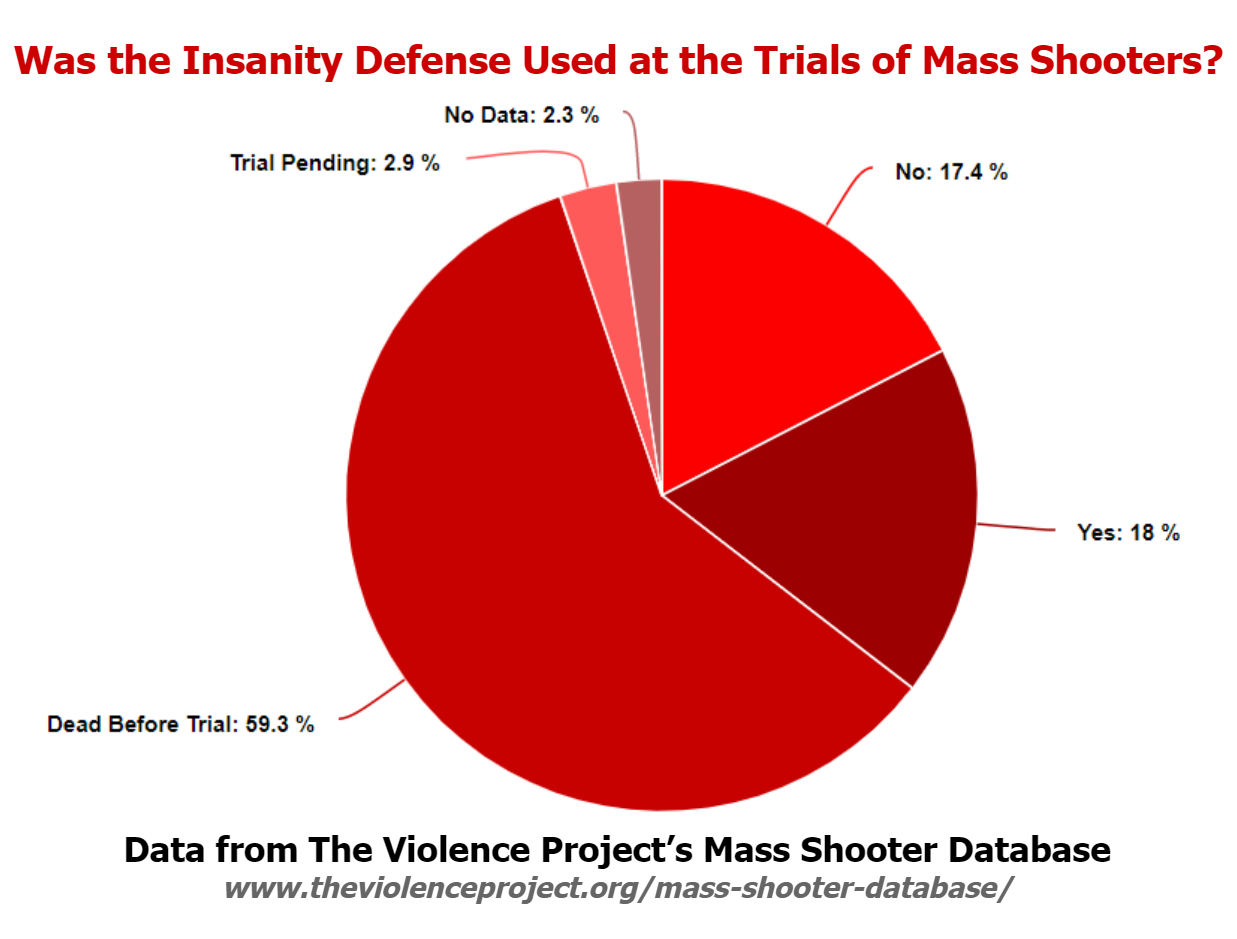
The insanity defense has been used successfully in a number of high-profile cases. Some of the most famous examples include:
- John Hinckley Jr.was found not guilty by reason of insanity in the 1981 attempted assassination of President Ronald Reagan.
- Andrea Yateswas found not guilty by reason of insanity in the 2001 drowning deaths of her five children.
- Jared Loughnerwas found not guilty by reason of insanity in the 2011 shooting of Representative Gabby Giffords.
International Perspectives
The insanity defense is recognized in many legal systems worldwide, but its application varies significantly across jurisdictions. Cultural and legal differences influence how the defense is defined, evaluated, and applied in different countries.
Variations in Definition
- In the United States, the insanity defense is typically defined as a mental disorder that prevents a person from understanding the nature and consequences of their actions or from conforming their conduct to the requirements of the law.
- In England and Wales, the insanity defense is defined as a mental disorder that makes a person incapable of knowing that their actions were wrong or of controlling their behavior.
- In Canada, the insanity defense is defined as a mental disorder that renders a person incapable of appreciating the nature and quality of their actions or of knowing that their actions were wrong.
Cultural Influences
Cultural beliefs and values can influence the application of the insanity defense. For example, in some cultures, mental illness is viewed as a mitigating factor that should be taken into account when determining a person’s culpability for a crime. In other cultures, mental illness may be viewed as a sign of weakness or moral failing, and therefore not considered a valid excuse for criminal behavior.
Legal Influences
The legal framework of a country can also influence the application of the insanity defense. In some countries, the insanity defense is a statutory defense that is explicitly defined in the law. In other countries, the insanity defense is a common law defense that has been developed through judicial precedent.
The specific legal tests and procedures for evaluating the insanity defense can vary significantly across jurisdictions.
Recent Developments
The insanity defense has undergone significant legal developments and trends in recent years. These include changes in the burden of proof, the introduction of new tests for insanity, and the increasing use of expert testimony.
One of the most significant developments has been the shift in the burden of proof in insanity cases. In the past, the defendant was required to prove insanity by a preponderance of the evidence. However, in recent years, many jurisdictions have adopted the rule that the prosecution must prove sanity beyond a reasonable doubt.
Another important development has been the introduction of new tests for insanity. The traditional M’Naghten test, which requires the defendant to lack the capacity to distinguish right from wrong, has been criticized for being too narrow. In recent years, many jurisdictions have adopted the more lenient American Law Institute (ALI) test, which allows for a finding of insanity if the defendant’s mental illness prevented them from conforming their conduct to the requirements of the law.
Finally, there has been an increasing use of expert testimony in insanity cases. Experts can provide valuable insights into the defendant’s mental state and help the jury to understand the complex issues involved in insanity defense.
Impact of New Research and Case Law
New research and case law have also had a significant impact on the insanity defense. Research has shown that mental illness is more common than previously thought, and that it can have a profound impact on a person’s ability to control their behavior.
Case law has also expanded the scope of the insanity defense. In recent years, courts have held that insanity can be a defense to a wide range of crimes, including murder and sexual assault.
Create a table summarizing the key differences between the M’Naghten Rule and the Irresistible Impulse Test.
The M’Naghten Rule and the Irresistible Impulse Test are two different legal tests that are used to determine whether a defendant was insane at the time of committing a crime.
The M’Naghten Rule is the older of the two tests, and it was established in England in 1843. The rule states that a defendant is not criminally responsible for his actions if he was “laboring under such a defect of reason, from disease of the mind, as not to know the nature and quality of the act he was doing; or if he did know it, that he did not know he was doing what was wrong.”
The Irresistible Impulse Test is a more modern test, and it was developed in the United States in the late 19th century. The test states that a defendant is not criminally responsible for his actions if he was “unable to resist the impulse to commit the crime due to a mental disease or defect.”
The following table summarizes the key differences between the M’Naghten Rule and the Irresistible Impulse Test:
| M’Naghten Rule | Irresistible Impulse Test |
|---|---|
| Defendant must not know the nature and quality of the act he was doing, or he must not know that he was doing what was wrong. | Defendant must be unable to resist the impulse to commit the crime due to a mental disease or defect. |
| Focuses on the defendant’s cognitive abilities. | Focuses on the defendant’s volitional abilities. |
| More restrictive than the Irresistible Impulse Test. | Less restrictive than the M’Naghten Rule. |
Provide a detailed illustration of the process of evaluating a defendant’s mental state in an insanity defense case.: What Is Insanity Defence
Evaluating a defendant’s mental state in an insanity defense case is a complex and multi-faceted process that involves a thorough examination of the defendant’s psychological history, current mental state, and understanding of the charges against them. The process typically begins with a psychological evaluation, which may include interviews, psychological testing, and a review of the defendant’s medical and psychiatric records.
The psychologist or psychiatrist conducting the evaluation will assess the defendant’s cognitive abilities, emotional state, and capacity to understand the nature and consequences of their actions. They will also consider the defendant’s history of mental illness, any substance abuse issues, and any other factors that may have contributed to their behavior at the time of the alleged crime.
Psychological Evaluation
The psychological evaluation is a critical component of the insanity defense process. It allows the psychologist or psychiatrist to gather information about the defendant’s mental state and to form an opinion about whether the defendant meets the criteria for insanity.
The evaluation typically includes the following components:
- Interviews:The psychologist or psychiatrist will conduct interviews with the defendant to gather information about their personal history, current mental state, and understanding of the charges against them.
- Psychological testing:The psychologist or psychiatrist may administer psychological tests to assess the defendant’s cognitive abilities, emotional state, and personality traits.
- Review of medical and psychiatric records:The psychologist or psychiatrist will review the defendant’s medical and psychiatric records to gather information about their past and present mental health.
The results of the psychological evaluation will be used to determine whether the defendant meets the criteria for insanity. The psychologist or psychiatrist will consider the following factors when making this determination:
- The defendant’s ability to understand the nature and consequences of their actions
- The defendant’s ability to control their behavior
- The defendant’s mental state at the time of the alleged crime
If the psychologist or psychiatrist determines that the defendant does not meet the criteria for insanity, the defendant will be found competent to stand trial. If the psychologist or psychiatrist determines that the defendant does meet the criteria for insanity, the defendant will be found not guilty by reason of insanity.
Design a hypothetical case study involving an insanity defense and discuss the potential legal and ethical issues.
Intro:
The insanity defense is a legal concept that allows a defendant to avoid criminal liability for their actions if they can prove that they were insane at the time of the crime. The insanity defense is a complex and controversial issue, and there are many different legal and ethical issues that can arise in these cases.
Hypothetical Case Study
Intro:
Consider the following hypothetical case study:
- A defendant is charged with murder. The defendant admits to killing the victim, but claims that they were insane at the time of the crime.
- The defendant’s attorney presents evidence that the defendant has a long history of mental illness, and that they were experiencing a psychotic episode at the time of the crime.
- The prosecution argues that the defendant was not insane at the time of the crime, and that they are simply trying to avoid responsibility for their actions.
Potential Legal and Ethical Issues, What is insanity defence
Intro:
There are a number of potential legal and ethical issues that can arise in this case:
- The definition of insanity:There is no single, universally accepted definition of insanity. Different jurisdictions have different tests for insanity, and this can lead to different outcomes in similar cases.
- The burden of proof:In most jurisdictions, the defendant has the burden of proving that they were insane at the time of the crime. This can be a difficult burden to meet, especially in cases where the defendant’s mental illness is not well-documented.
- The role of expert testimony:Expert testimony can play a significant role in insanity defense cases. Psychiatrists and psychologists can testify about the defendant’s mental state at the time of the crime, and their opinions can be very influential in the jury’s decision.
- The ethical implications of the insanity defense:The insanity defense raises a number of ethical questions. Some people argue that the insanity defense is unfair to victims of crime, as it allows defendants to escape punishment for their actions. Others argue that the insanity defense is necessary to protect the rights of the mentally ill.
Key Questions Answered
What are the different types of insanity defenses?
There are a number of different insanity defenses, including the M’Naghten Rule, the Irresistible Impulse Test, and the Durham Rule.
How is insanity evaluated in court?
Insanity is typically evaluated by a mental health professional, such as a psychiatrist or psychologist. The expert will conduct a thorough evaluation of the defendant’s mental state at the time of the offense and will provide an opinion on whether or not the defendant was insane.
What are the consequences of being found insane?
If a defendant is found insane, they will typically be sent to a mental health facility for treatment. They will be released from the facility when they are no longer considered to be a danger to themselves or others.

Welcome to my website! Here’s a brief introduction about me.
I am Charles Pham, a passionate individual with a diverse range of interests and experiences. Throughout my life, I have pursued my curiosity and embraced various opportunities that have shaped me into the person I am today.
