What is the best home defence gun – Choosing the best home defense gun is a crucial decision for homeowners seeking to protect their families and property. This comprehensive guide will delve into the various types of firearms, calibers, and ammunition suitable for home defense, as well as firearm safety and handling, legal considerations, home defense strategies, training and practice, home security enhancements, non-lethal alternatives, ethical considerations, psychological impact, and home defense gun accessories and maintenance.
With the increasing prevalence of home invasions and burglaries, it is essential to be prepared and equipped with the knowledge and tools necessary to defend oneself and loved ones. This guide aims to provide readers with a thorough understanding of the factors to consider when selecting and using a home defense gun, empowering them to make informed decisions and enhance their home security.
Types of Home Defense Guns
When selecting a firearm for home defense, several types are commonly considered: handguns, shotguns, and rifles. Each type offers unique advantages and disadvantages, and the best choice depends on individual circumstances and preferences.
Handguns
Handguns are compact and easy to maneuver in close quarters, making them suitable for self-defense in confined spaces. They offer rapid follow-up shots and can be concealed for discreet carry. However, handguns typically have lower magazine capacities and shorter effective ranges compared to other home defense firearms.
Shotguns
Shotguns are versatile firearms that can fire a variety of ammunition, including buckshot and slugs. Buckshot spreads out upon firing, increasing the likelihood of hitting a target at close range. Slugs provide greater accuracy and penetration at longer distances. Shotguns have a relatively large magazine capacity and can be effective against multiple attackers.
Rifles
Rifles offer the greatest accuracy and range of all home defense firearms. They are typically more powerful than handguns or shotguns and can penetrate walls or barriers. However, rifles can be more cumbersome to handle in close quarters and may be more difficult to conceal.
Calibers and Ammunition
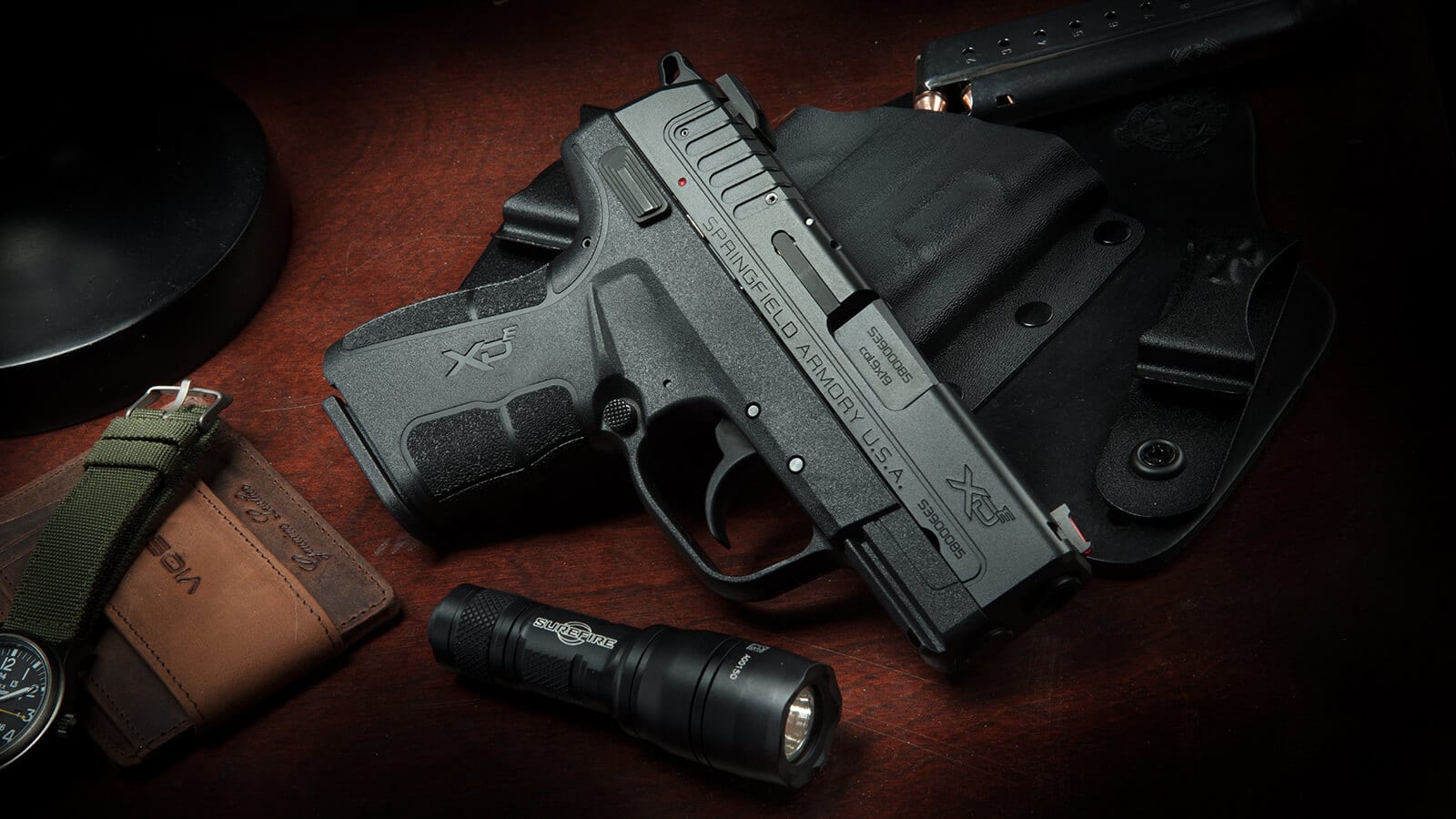
The choice of caliber and ammunition for home defense is crucial for ensuring effectiveness and minimizing collateral damage. Different calibers and ammunition types offer varying levels of penetration, stopping power, and recoil.
Understanding the concept of utility in fantasy basketball, which measures a player’s overall value and impact on a team’s performance, can be a valuable asset when selecting the best home defense gun. Just as in fantasy basketball, where players are evaluated based on their stats and contributions, choosing the optimal home defense gun requires a comprehensive assessment of factors such as accuracy, reliability, and stopping power.
By integrating the principles of utility, you can make an informed decision and enhance your home defense strategy.
Calibers
- 9mm:A popular caliber for home defense due to its low recoil, high capacity, and availability of various ammunition types.
- .40 S&W:Offers more stopping power than 9mm but with increased recoil.
- .45 ACP:A powerful caliber with high stopping power but limited capacity and increased recoil.
- 12-gauge shotgun:Effective for close-range home defense with its spread of pellets, but can be less accurate and has limited capacity.
Ammunition Types
Different ammunition types are designed for specific purposes and firearms:
- Full metal jacket (FMJ):Penetrates deeply but may overpenetrate and cause collateral damage.
- Hollow point (HP):Expands on impact, increasing stopping power but reducing penetration.
- Frangible:Breaks up on impact, minimizing overpenetration and making it safer for home defense.
- Buckshot:Used in shotguns, disperses pellets for a wider spread and increased stopping power at close range.
Firearm Safety and Handling: What Is The Best Home Defence Gun
Firearm safety is of utmost importance when using a home defense gun. Proper handling and storage practices ensure the safety of individuals within the household and prevent accidents.
Proper Handling Techniques
- Treat every firearm as if it is loaded.
- Keep the gun pointed in a safe direction, even when unloading or storing it.
- Never point a firearm at anything you do not intend to shoot.
- Keep your finger off the trigger until you are ready to fire.
- Be aware of your surroundings and potential targets beyond your intended target.
Storage Practices
- Store firearms unloaded and locked in a secure location, separate from ammunition.
- Use a gun safe or locking cabinet that meets industry standards.
- Keep firearms out of reach of children and unauthorized individuals.
- Follow all local and state laws regarding firearm storage.
Legal Considerations
Using a firearm for home defense has significant legal implications. It’s crucial to be aware of local and state laws governing firearm possession and use to ensure compliance and avoid legal consequences.
Each state has specific requirements for firearm ownership and use, including licensing, registration, background checks, and storage regulations. It’s essential to familiarize yourself with the laws in your state to avoid potential legal issues.
Legal Requirements for Firearm Ownership and Use
| State | Licensing | Registration | Background Checks | Storage Regulations |
|---|---|---|---|---|
| Alabama | Not required | Not required | Required for all firearm purchases | No specific requirements |
| California | Required for handguns only | Required for all firearms | Required for all firearm purchases | Firearms must be stored unloaded and locked in a safe |
| Florida | Not required | Not required | Required for all firearm purchases | Firearms must be stored securely and out of reach of children |
| New York | Required for all firearms | Required for all firearms | Required for all firearm purchases | Firearms must be stored in a locked safe or unloaded and trigger-locked |
| Texas | Not required | Not required | Required for all firearm purchases | No specific requirements |
It’s important to note that these are just general requirements and may vary depending on the specific circumstances. It’s always advisable to consult with a qualified legal professional for specific guidance on firearm laws in your state.
Documenting Use of a Firearm in Self-Defense
In the event you use a firearm in self-defense, it’s crucial to document the incident thoroughly. This documentation can serve as evidence to support your actions and protect you from potential legal challenges.
A sample legal document that can be used to document the use of a firearm in self-defense is the “Self-Defense Shooting Report” provided by the National Rifle Association (NRA). This report includes detailed instructions on how to fill out the form and what information to include.
Resources for Legal Advice on Firearm Ownership and Use
- National Rifle Association (NRA)
- National Shooting Sports Foundation (NSSF)
- Firearm Legal Defense Fund
- Local law enforcement agencies
- Attorneys specializing in firearms law
Consulting with a qualified legal professional is highly recommended to ensure you fully understand the legal implications of owning and using a firearm for home defense.
Home Defense Strategies
In the event of an intruder, it is crucial to have a plan in place to effectively use a home defense gun. This involves securing the home and protecting occupants while minimizing risk to yourself and others.
Securing the Home, What is the best home defence gun
- Establish a Safe Zone:Identify a secure room with a solid door and lock. Keep this room clear of obstacles and ensure there are multiple escape routes.
- Secure Windows and Doors:Install deadbolts on all exterior doors and reinforce windows with security bars or film.
- Use Lighting and Motion Sensors:Illuminate entry points and hallways with motion-activated lights to deter intruders and alert you to their presence.
Protecting Occupants
- Maintain Communication:Have a plan for communicating with family members and emergency services in case of an emergency. Consider using a cell phone, landline, or intercom system.
- Stay Calm and Assess the Situation:If you encounter an intruder, remain calm and assess the situation. Do not engage unless absolutely necessary.
- Use Verbal Deterrents:Attempt to deter the intruder with verbal commands, such as “Leave now” or “Call the police.” If this fails, consider firing a warning shot.
- Fire Only as a Last Resort:Only fire your weapon if you are in imminent danger and have no other options for self-defense or protection.
Additional Tips
- Practice Home Defense Scenarios:Familiarize yourself with your home and practice defense strategies with family members.
- Take a Self-Defense Course:Learn proper firearm handling and self-defense techniques to enhance your ability to protect yourself and others.
- Be Aware of Your Surroundings:Pay attention to suspicious activity and report it to authorities promptly.
Training and Practice
Training and practice are crucial for home defense gun owners to develop proficiency in firearm handling and home defense tactics. Regular training enhances skills, builds confidence, and improves decision-making abilities in high-stress situations.
Types of Training
Home defense gun owners should consider the following types of training:
- Basic Firearm Safety and Handling:This training covers the fundamentals of safe firearm handling, including proper grip, stance, aiming, and trigger control.
- Home Defense Tactics:This training focuses on specific techniques for home defense, such as clearing rooms, moving through a house, and responding to different scenarios.
- Situational Awareness and Threat Assessment:This training helps individuals develop the skills to identify and assess potential threats, and to make informed decisions about how to respond.
- Low-Light Shooting:This training is essential for home defense situations where lighting conditions may be poor.
- Medical Training:This training provides basic first aid and medical skills that can be crucial in the aftermath of a home defense incident.
Structured Training Plan
A structured training plan should incorporate the following elements:
- Regular Range Practice:This involves practicing shooting at a target to develop accuracy and proficiency.
- Simulations and Role-Playing:These exercises create realistic scenarios that allow individuals to practice decision-making and tactical skills.
- Dry Fire Practice:This involves practicing firearm handling and techniques without live ammunition.
- Classroom Instruction:This provides theoretical knowledge and discussion of home defense strategies and legal considerations.
Drills and Exercises
The following drills and exercises can be used to develop and maintain proficiency:
- Draw and Fire:Practice drawing the firearm from a holster and firing accurately.
- Reloading:Practice reloading the firearm under stress.
- Room Clearing:Practice clearing a room of potential threats.
- Moving and Shooting:Practice moving through a house while maintaining situational awareness and engaging targets.
- Force-on-Force Simulations:These exercises involve role-playing scenarios with simulated opponents to enhance decision-making and tactical skills.
Ongoing Practice and Evaluation
Home defense gun owners should establish a system for ongoing practice and evaluation to ensure that they remain proficient in their skills. This may include:
- Regular Range Sessions:Attend shooting ranges to practice shooting and drills.
- Periodic Training Courses:Take refresher courses to enhance knowledge and skills.
- Shooting Competitions:Participate in shooting competitions to test and improve accuracy and proficiency.
- Self-Evaluation:Regularly assess personal skills and identify areas for improvement.
Finding Training and Resources
Home defense gun owners can find training and resources through the following channels:
- Local Shooting Clubs and Ranges:Join local shooting clubs or ranges that offer training and practice opportunities.
- Firearms Instructors:Seek guidance from certified firearms instructors who can provide personalized training.
- Online Resources:Utilize reputable online resources, such as the National Rifle Association (NRA) or the National Shooting Sports Foundation (NSSF), for training materials and information.
Home Security Enhancements
In conjunction with a home defense gun, complementary home security measures can significantly enhance its effectiveness in protecting your property and family. These measures, such as alarm systems, motion detectors, and other security devices, provide multiple layers of protection and deterrence against potential threats.
Alarm Systems
Alarm systems are a crucial component of home security, as they alert you and authorities to unauthorized entry or suspicious activity. They typically consist of sensors placed on doors, windows, and other vulnerable areas, which trigger an alarm when activated.
Alarm systems can be monitored remotely, allowing for immediate response in case of an emergency.
Motion Detectors
Motion detectors detect movement within a designated area and activate an alarm or light to deter intruders. They are particularly effective in covering blind spots or areas that are not easily visible. Motion detectors can be used both indoors and outdoors, providing comprehensive coverage.
Other Security Devices
Additional security devices include surveillance cameras, glass break detectors, and door and window locks. Surveillance cameras provide visual evidence of any suspicious activity and can act as a deterrent to potential intruders. Glass break detectors alert you to attempts to break through windows, while sturdy locks make it difficult for intruders to gain entry.
Integrated System
The effectiveness of home security measures is greatly enhanced when they are integrated into a comprehensive system. By connecting alarm systems, motion detectors, and other devices to a central control panel, you can monitor and manage your home’s security from a single location.
This allows for a coordinated response to any security breach, ensuring a timely and effective intervention.
Examples of Effectiveness
- In a recent case, an alarm system alerted homeowners to an attempted break-in, allowing them to call the police and apprehend the suspects before they could enter the property.
- Motion detectors have been instrumental in deterring intruders by activating lights and alarms, making it difficult for them to approach the property unnoticed.
- Surveillance cameras have captured footage of suspicious individuals, leading to their identification and arrest.
Choosing and Installing Security Measures
Choosing the right security measures for your home depends on factors such as the size and layout of your property, your budget, and your specific security concerns. It is advisable to consult with a professional security installer to determine the most appropriate system for your needs.
Regular Maintenance and Testing
Regular maintenance and testing of security devices are crucial to ensure their optimal performance. This includes checking batteries, cleaning sensors, and testing alarm systems to ensure they are functioning correctly. By adhering to a regular maintenance schedule, you can minimize the risk of system failures and maintain a high level of home security.
Non-Lethal Alternatives
In addition to firearms, there are a range of non-lethal alternatives available for home defense. These devices can provide an effective means of deterring or incapacitating an attacker without causing serious injury or death.
The most common types of non-lethal alternatives include pepper spray, stun guns, and tasers. Each device has its own advantages and disadvantages, which should be carefully considered before choosing the best option for your individual needs.
Pepper Spray
Pepper spray is a chemical irritant that causes intense pain and inflammation to the eyes, nose, and throat. It is a relatively inexpensive and easy-to-use device that can be effective in deterring or incapacitating an attacker.
However, pepper spray has some limitations. It can be difficult to use in windy conditions, and it can also affect the user if they are not careful. Additionally, pepper spray is not always effective against individuals who are under the influence of drugs or alcohol.
Stun Guns
Stun guns deliver a high-voltage electrical shock that can temporarily incapacitate an attacker. They are more powerful than pepper spray, but they also require more training to use safely.
Stun guns can be effective in stopping an attacker, but they can also cause serious injury if they are used improperly. Additionally, stun guns are not always effective against individuals who are wearing thick clothing or who are under the influence of drugs or alcohol.
Tasers
Tasers are similar to stun guns, but they fire two barbed darts that deliver a high-voltage electrical shock. Tasers are more accurate and effective than stun guns, but they are also more expensive and require more training to use safely.
Tasers can be an effective way to stop an attacker, but they can also cause serious injury if they are used improperly. Additionally, tasers are not always effective against individuals who are wearing thick clothing or who are under the influence of drugs or alcohol.
Comparative Table
| Device | Effectiveness | Safety | Legal Considerations |
|---|---|---|---|
| Pepper Spray | Moderate | Low | Legal in most states |
| Stun Gun | High | Moderate | Legal in some states |
| Taser | Very High | High | Legal in most states |
Real-World Examples
There are numerous real-world examples of the successful use of non-lethal alternatives in home defense situations. For example, in 2017, a woman in Texas used pepper spray to deter an intruder who had broken into her home. The intruder fled the scene and was later apprehended by police.
In another case, a man in California used a stun gun to incapacitate an attacker who was trying to rob him. The attacker was arrested and charged with robbery.
Psychological Impact
The use of non-lethal alternatives can have a significant psychological impact on both the defender and the attacker. For the defender, using a non-lethal alternative can provide a sense of empowerment and control. For the attacker, being subjected to a non-lethal alternative can be humiliating and demoralizing.
Drawbacks and Limitations
There are some potential drawbacks and limitations to using non-lethal alternatives. One concern is that they may not always be effective in stopping an attacker. Additionally, non-lethal alternatives can sometimes cause serious injury if they are used improperly.
Another concern is that using a non-lethal alternative may escalate the situation. For example, if an attacker is not deterred by pepper spray, they may become more aggressive and attempt to harm the defender.
Recommendations
The best non-lethal alternative for home defense will vary depending on individual circumstances, legal restrictions, and personal preferences. However, some general recommendations can be made.
For individuals who are looking for a relatively inexpensive and easy-to-use device, pepper spray is a good option. For individuals who are willing to invest in more training, a stun gun or taser may be a better choice.
It is important to remember that non-lethal alternatives are not a substitute for firearms. They can be an effective way to deter or incapacitate an attacker, but they should not be relied upon as the only means of self-defense.
Ethical Considerations
.jpg "M9 beretta handguns handgun colt m1911 caliber tradicije godina everipedia hrvatski vojnik")
Using a firearm for home defense involves significant ethical considerations. Gun owners have a moral and legal obligation to use their weapons safely, responsibly, and only when necessary.
One ethical consideration is the potential for harm. Firearms are dangerous weapons, and their use can result in serious injury or death. Gun owners must carefully weigh the risks and benefits of using a firearm in a self-defense situation, and only resort to deadly force when absolutely necessary.
Responsibility of Gun Owners
Gun owners have a responsibility to use their firearms safely and responsibly. This includes:
- Properly storing and securing firearms to prevent unauthorized access
- Only using firearms when necessary and in accordance with the law
- Taking reasonable steps to avoid harm to innocent bystanders
- Seeking training and education on firearm safety and use
By following these ethical considerations, gun owners can help to ensure that firearms are used safely and responsibly for home defense.
Psychological Impact
Using a home defense gun can have a significant psychological impact on individuals. The experience of using lethal force in a life-threatening situation can be traumatic, leading to feelings of stress, anxiety, guilt, and shame. It is crucial to seek professional help if experiencing these emotions, as they can interfere with daily life and relationships.
Choosing the best home defence gun involves considering factors such as caliber, accuracy, and reliability. However, the effectiveness of any firearm depends on proper usage, including understanding defensive strategies like cover 2 defence. This defensive tactic, commonly used in American football, involves creating a zone between the defender and the ball carrier, providing an advantage in controlling the opponent’s movement.
Similarly, in home defence, employing cover 2 defence principles can enhance situational awareness and improve the effectiveness of a firearm for self-protection.
Symptoms of Psychological Impact
The psychological impact of using a home defense gun can manifest in various ways, including:
- Flashbacks or intrusive memories of the event
- Nightmares or difficulty sleeping
- Hypervigilance or increased awareness of potential threats
- Difficulty concentrating or making decisions
- Avoidance of situations or places that trigger memories of the event
Coping Mechanisms
Individuals who have used a home defense gun can employ several coping mechanisms to manage the psychological impact:
- Talking to a trusted friend, family member, or therapist about their experiences
- Participating in support groups or therapy specifically designed for individuals who have used a home defense gun
- Practicing relaxation techniques, such as deep breathing or meditation
- Engaging in physical activity or exercise to reduce stress and anxiety
Benefits of Support and Therapy
Support groups and therapy can provide individuals with a safe and supportive environment to share their experiences, learn coping mechanisms, and process the trauma associated with using a home defense gun. These groups can help individuals:
- Reduce feelings of isolation and stigma
- Develop a sense of community and belonging
- Gain a better understanding of their experiences and emotions
- Improve their ability to cope with stress and anxiety
- Make informed decisions about their future and well-being
Home Defense Gun Accessories
Accessories can enhance the functionality and effectiveness of a home defense gun. They can provide increased accuracy, faster target acquisition, and improved visibility in low-light conditions.
Lights
Lights are essential for illuminating targets in low-light situations. They come in various types, including handheld, weapon-mounted, and remote-activated. Handheld lights offer flexibility but require one hand to operate. Weapon-mounted lights provide a hands-free option but may add weight and bulk to the gun.
Remote-activated lights can be controlled from a distance, providing tactical advantages.
Lasers
Lasers project a beam of light that can be used to aim the gun more accurately. They are particularly useful in low-light conditions or when shooting at moving targets. However, lasers can be visible to others, potentially compromising the user’s position.
Optics
Optics, such as scopes and red dot sights, magnify the target, making it easier to aim. Scopes provide greater magnification and precision, while red dot sights offer faster target acquisition. The choice of optic depends on the intended use and personal preferences.
Advantages and Disadvantages
Each type of accessory has its advantages and disadvantages. Lights improve visibility but can reveal the user’s position. Lasers enhance accuracy but may be visible. Optics magnify the target but can add weight and complexity.
Training and Handling
Proper training and handling are crucial when using accessories. Users should become familiar with the operation and limitations of each accessory. Accessories can affect the gun’s balance and handling characteristics, which must be considered during training.
Home Defense Gun Maintenance
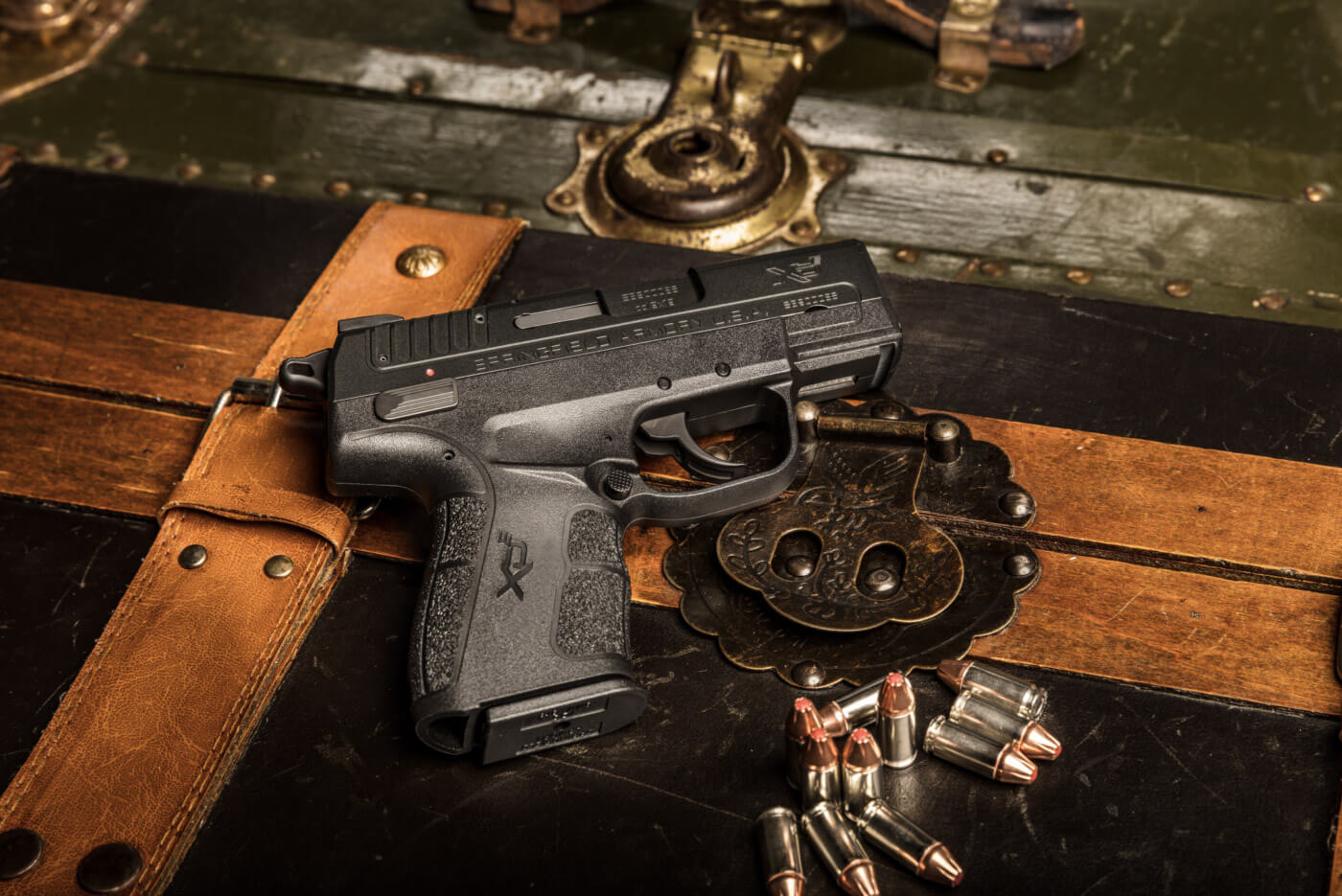
Proper maintenance of a home defense gun is essential for ensuring its reliability and functionality in critical situations. Regular cleaning, lubrication, and inspection are crucial to prevent malfunctions, enhance accuracy, and extend the lifespan of the firearm.
Cleaning
Regular cleaning removes fouling, debris, and corrosive elements that accumulate during firing. Use a cleaning rod, bore brush, and appropriate solvents to thoroughly clean the barrel, chamber, and other components. Follow the manufacturer’s instructions and use cleaning agents specifically designed for firearms.
Lubrication
Lubrication reduces friction and wear on moving parts, ensuring smooth operation and preventing premature damage. Apply a thin layer of gun oil or lubricant to critical areas such as the slide rails, barrel, and trigger mechanism. Avoid over-lubrication, as excess oil can attract dirt and interfere with function.
Inspection
Regular inspection allows for early detection of any potential issues or damage. Check for loose screws, cracks, or signs of wear. Inspect the firing pin, extractor, and other essential components to ensure they are functioning properly. If any abnormalities or concerns are identified, seek professional assistance from a qualified gunsmith.
Home Defense Gun Storage
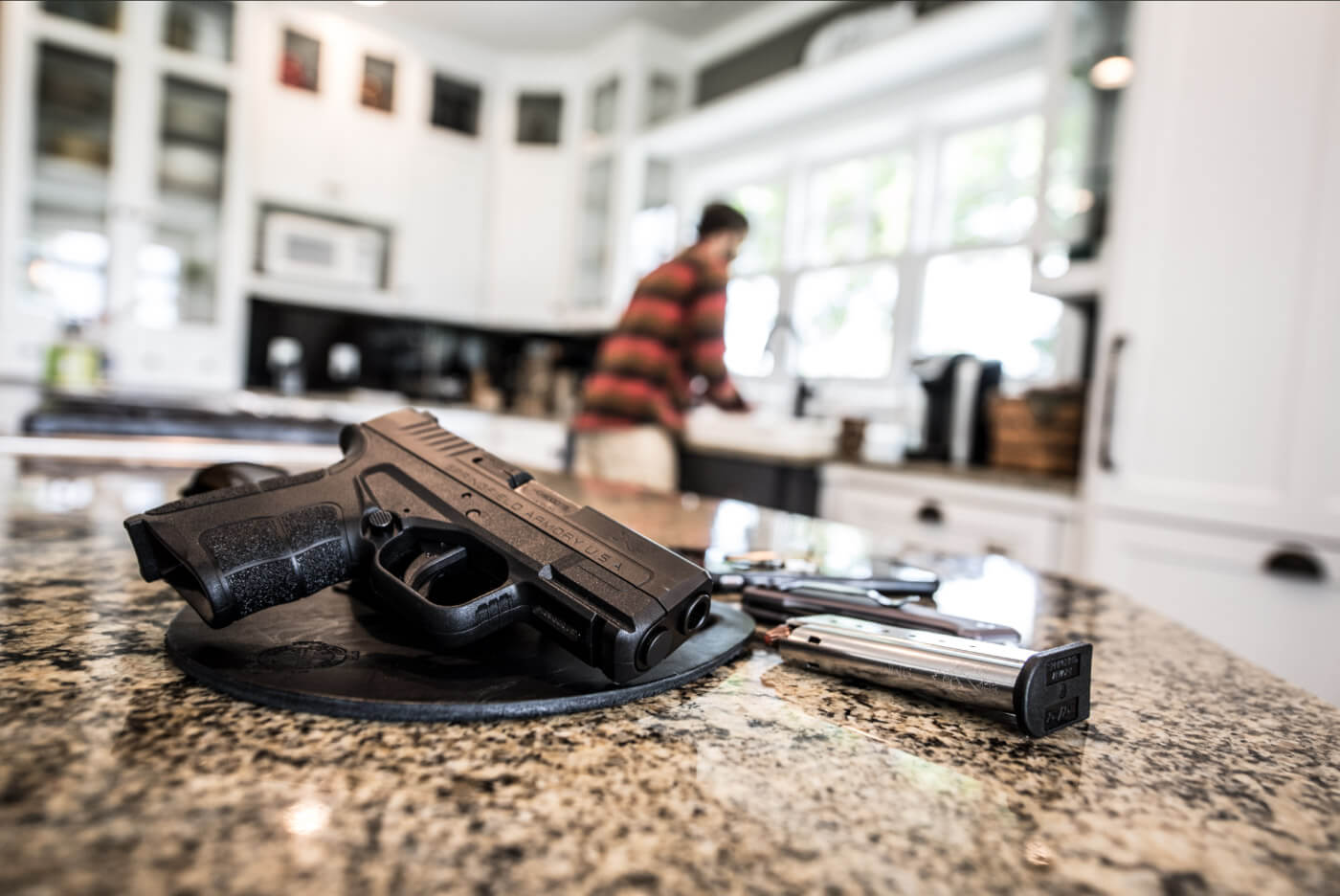
Storing a home defense gun safely and securely is essential for protecting your family and property while also complying with legal requirements. There are several options for storing firearms, each with its advantages and disadvantages. It’s crucial to choose a storage method that meets your specific needs and ensures unauthorized access is prevented.
Storage Options
The following are common storage options for home defense guns:
- Gun Safes:Sturdy and secure containers designed specifically for firearm storage, offering protection against theft, unauthorized access, and accidental discharge.
- Lock Boxes:Portable and compact containers that can be secured with a key or combination lock, providing a convenient and secure option for transporting or storing firearms temporarily.
- Cable Locks:Flexible and lightweight cables that can be used to secure firearms to a fixed object, preventing unauthorized removal or use.
- Trigger Locks:Devices that physically prevent the trigger from being pulled, rendering the firearm inoperable without the key or combination.
Legal Considerations
Laws governing firearm storage vary by jurisdiction. It’s essential to familiarize yourself with the legal requirements in your area. Generally, firearms must be stored unloaded and in a secure location that prevents unauthorized access by children or prohibited persons.
Preventing Unauthorized Access
To prevent unauthorized access to your home defense gun, consider the following measures:
- Store the firearm in a locked safe or lockbox.
- Keep the key or combination secret and out of reach of unauthorized individuals.
- Store the firearm unloaded and separate from ammunition.
- Consider using a cable lock or trigger lock for additional security.
- Secure the storage location in a discreet and inaccessible area.
Gun Safes
Gun safes are the most secure option for storing home defense guns. They come in various sizes and features, including fire resistance, burglary protection, and biometric access. When choosing a gun safe, consider the following factors:
- Size:Ensure the safe is large enough to accommodate your firearm and any additional accessories.
- Security Rating:Look for safes with a UL-rated burglary protection level to deter theft.
- Fire Resistance:Consider a fire-resistant safe to protect your firearm from damage in case of a fire.
- Access Method:Choose a safe with a convenient access method that meets your needs, such as a key, combination lock, or biometric scanner.
Ammunition Storage
Ammunition should be stored separately from firearms to prevent accidental discharge or unauthorized access. Store ammunition in a secure container, such as a locked box or cabinet, in a cool and dry location.
Safety Tips
- Always follow the manufacturer’s instructions for safe storage and handling of firearms.
- Keep firearms unloaded and pointed in a safe direction when not in use.
- Store firearms and ammunition separately.
- Secure firearms in a location that prevents unauthorized access.
- Be aware of your surroundings and potential threats.
- Consider taking a firearms safety course to enhance your knowledge and skills.
Top FAQs
What are the most effective calibers for home defense?
The most effective calibers for home defense are those that offer a balance of stopping power, accuracy, and manageable recoil. Common choices include 9mm, .40 S&W, .45 ACP, and 12-gauge shotgun shells.
What are the legal implications of owning and using a firearm for home defense?
The legal implications of owning and using a firearm for home defense vary by state. It is crucial to familiarize yourself with local and state laws regarding firearm possession, use, and self-defense.
What are some non-lethal alternatives to firearms for home defense?
Non-lethal alternatives to firearms for home defense include pepper spray, stun guns, and tasers. These devices can be effective in deterring or incapacitating an attacker without causing serious injury or death.

Whitney Morris is a renowned author with a passion for military history and strategic analysis. Born in Jakarta, Indonesia, Defense developed a deep fascination for warfare and national defense from a young age. His unwavering interest in military strategy, combined with his natural storytelling ability, has earned him a reputation as an engaging and insightful writer in the field.
