Is e12 a rank in the military – Ever heard someone mention “E12” and wondered if it’s a legit military rank? It’s a question that pops up more often than you’d think. While the military is all about hierarchy and ranks, the truth is, there’s no official “E12” rank in any branch. It’s a bit of a mystery, but one that sparks curiosity. Let’s dive into the world of military ranks and see why “E12” might be a bit of a head-scratcher.
The military uses a system of ranks to organize its personnel, showing who’s in charge and who reports to whom. These ranks are based on experience, leadership skills, and the level of responsibility a soldier or officer has. Each branch, like the Army, Navy, and Air Force, has its own set of ranks, but the basic idea is the same: the higher the rank, the more authority and responsibility.
Understanding Military Ranks
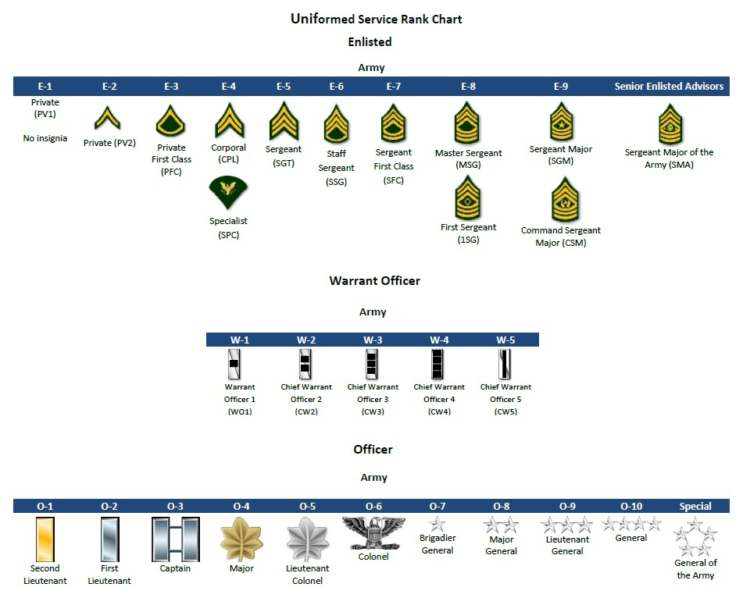
Military ranks are a fundamental aspect of military organization, establishing a clear chain of command and ensuring efficient operation. This hierarchical structure plays a crucial role in maintaining order, discipline, and effective communication within the armed forces.
Hierarchical Structure of Military Ranks
The hierarchical structure of military ranks is designed to create a clear chain of command, ensuring efficient decision-making and coordination of operations. Each rank carries specific responsibilities and authority, reflecting the level of experience and expertise required for that position. For example, in the US Army, the rank structure is organized into enlisted and officer ranks, each with its own hierarchy.
Enlisted ranks, ranging from Private to Sergeant Major of the Army, primarily focus on operational tasks and technical expertise. Officer ranks, from Second Lieutenant to General of the Army, are responsible for leadership, strategy, and command. Here’s a table illustrating the rank structure of the US Army:| Rank Name | Abbreviation | Insignia | Responsibilities and Authority ||—|—|—|—|| Private (E-1) | Pvt | | Entry-level enlisted rank, performs basic tasks under supervision.
|| Specialist (E-4) | SPC | | Skilled in a specific technical area, provides support to higher-ranking personnel. || Sergeant (E-5) | SGT | | Leads small teams, supervises junior enlisted personnel. || Staff Sergeant (E-6) | SSG | | Supervises larger teams, responsible for training and mentoring junior enlisted personnel. || Sergeant First Class (E-7) | SFC | | Leads platoons or companies, responsible for planning and executing operations.
|| Master Sergeant (E-8) | MSG | | Senior non-commissioned officer, provides expert advice and guidance to commanders. || Sergeant Major of the Army (E-9) | SMA | | The highest-ranking enlisted member, advises the Chief of Staff of the Army on enlisted matters. || Second Lieutenant (O-1) | 2LT | | Entry-level officer rank, responsible for leading small units and executing orders.
|| First Lieutenant (O-2) | 1LT | | Leads larger units, responsible for planning and executing operations. || Captain (O-3) | CPT | | Commands companies or battalions, responsible for overall unit operations. || Major (O-4) | MAJ | | Commands battalions or brigades, responsible for strategic planning and coordination. || Lieutenant Colonel (O-5) | LTC | | Commands brigades or divisions, responsible for leading large-scale operations.
|| Colonel (O-6) | COL | | Commands divisions or corps, responsible for strategic planning and execution. || Brigadier General (O-7) | BG | | Commands divisions or corps, responsible for overseeing multiple units and operations. || Major General (O-8) | MG | | Commands corps or armies, responsible for leading large-scale military operations. || Lieutenant General (O-9) | LTG | | Commands armies or commands, responsible for strategic planning and execution.
|| General (O-10) | GEN | | The highest-ranking officer, responsible for overall military strategy and operations. |The rank structure of the US Navy is similar to the Army, with enlisted ranks ranging from Seaman Recruit to Master Chief Petty Officer of the Navy, and officer ranks from Ensign to Admiral. However, the Navy uses different terms for some ranks, such as “Petty Officer” instead of “Sergeant” for enlisted ranks.
The US Air Force and US Marines also have their own unique rank structures, reflecting the specific missions and requirements of each branch.
Purpose and Significance of Military Ranks
Military ranks serve a critical purpose in maintaining order and discipline within the armed forces. They establish a clear chain of command, ensuring that orders are effectively communicated and followed. This hierarchy allows for efficient decision-making, coordination of operations, and accountability for actions.Ranks also contribute to effective communication within the military. They provide a common language and understanding of roles and responsibilities, facilitating clear communication and coordination among personnel.
This is particularly important in high-stress situations where clear and concise communication is essential for mission success.Furthermore, military ranks play a significant role in fostering a sense of hierarchy and responsibility among personnel. They create a system of rewards and recognition, motivating individuals to strive for excellence and advancement. This sense of hierarchy also promotes discipline and respect for authority, ensuring that orders are followed and that the chain of command is maintained.Throughout history, military ranks have played a crucial role in shaping the course of events.
From the ancient Roman legions to modern warfare, ranks have provided the framework for organizing and leading armies. They have been essential for coordinating large-scale operations, maintaining discipline, and achieving victory in battle.
Examples of Different Rank Designations
Military rank designations vary across different branches of the military, reflecting historical influences, cultural norms, and specific mission requirements. Here are examples of different rank designations across the US Army, Navy, Air Force, and Marines:| Branch | Highest Rank | Lowest Rank | Intermediate Ranks ||—|—|—|—|| US Army | General | Private | Specialist, Sergeant, Staff Sergeant, Sergeant First Class || US Navy | Admiral | Seaman Recruit | Petty Officer Third Class, Petty Officer Second Class, Petty Officer First Class || US Air Force | Chief Master Sergeant of the Air Force | Airman Basic | Airman First Class, Senior Airman, Staff Sergeant || US Marines | Sergeant Major of the Marine Corps | Private First Class | Corporal, Sergeant, Gunnery Sergeant |As you can see, the naming conventions for ranks can differ significantly across branches.
For example, the Army uses the term “Sergeant” for enlisted ranks, while the Navy uses “Petty Officer.” These differences reflect the unique history and culture of each branch.
Fictional Scenario
Captain Smith, a seasoned officer in the US Army, was leading a patrol through a dense jungle. The mission was to secure a critical supply route, but they had encountered heavy resistance from enemy forces. As the patrol came under fire, Captain Smith quickly assessed the situation. He knew that their position was vulnerable, and they needed to evacuate immediately.
However, one of his soldiers, Private Jones, was injured and unable to walk. Captain Smith faced a difficult decision. He could order the patrol to leave Private Jones behind, risking his life but ensuring the safety of the rest of the unit. Or, he could risk their own safety by staying to evacuate Private Jones. Captain Smith, using his years of experience and leadership skills, knew that he had to make a decision based on his duty to his men and his responsibility to protect all lives.
He knew that as the officer in command, his decision would have a significant impact on the outcome of the situation. He made the difficult decision to stay and evacuate Private Jones, even though it meant putting his own life and the lives of his men at risk. His rank and authority gave him the power to make that decision, and his leadership inspired his men to follow his orders.Captain Smith’s decision was a testament to the importance of military ranks in shaping the course of events.
His rank gave him the authority to make critical decisions, and his leadership inspired his men to follow his orders, ultimately saving the life of Private Jones and ensuring the success of the mission.
Exploring the “E” Designation
The “E” designation in military ranks is a fundamental element of the military structure, denoting enlisted personnel. Understanding this designation is crucial for grasping the hierarchy and roles within the armed forces.
The Meaning of “E”
The “E” in military rank designations stands for “Enlisted.” This designation differentiates enlisted personnel from officers, who are typically designated with the letter “O.” Enlisted personnel are responsible for carrying out the day-to-day operations of the military, ranging from combat roles to support functions.
Enlisted Personnel and the “E” Designation
The “E” designation is directly linked to enlisted personnel, who make up the majority of the military workforce. Enlisted ranks are structured in a hierarchical system, with higher “E” numbers indicating greater experience, responsibility, and leadership roles. For example, an “E-1” is a new recruit, while an “E-9” is a highly experienced and respected senior enlisted leader.
Comparing “E” with “O” and “W”
The “E” designation distinguishes enlisted personnel from officers (“O”) and warrant officers (“W”). Officers are responsible for leading and managing military units, while warrant officers hold specialized technical roles. The “E” designation reflects the unique roles and responsibilities of enlisted personnel within the military structure.
The Significance of Numerical Rank
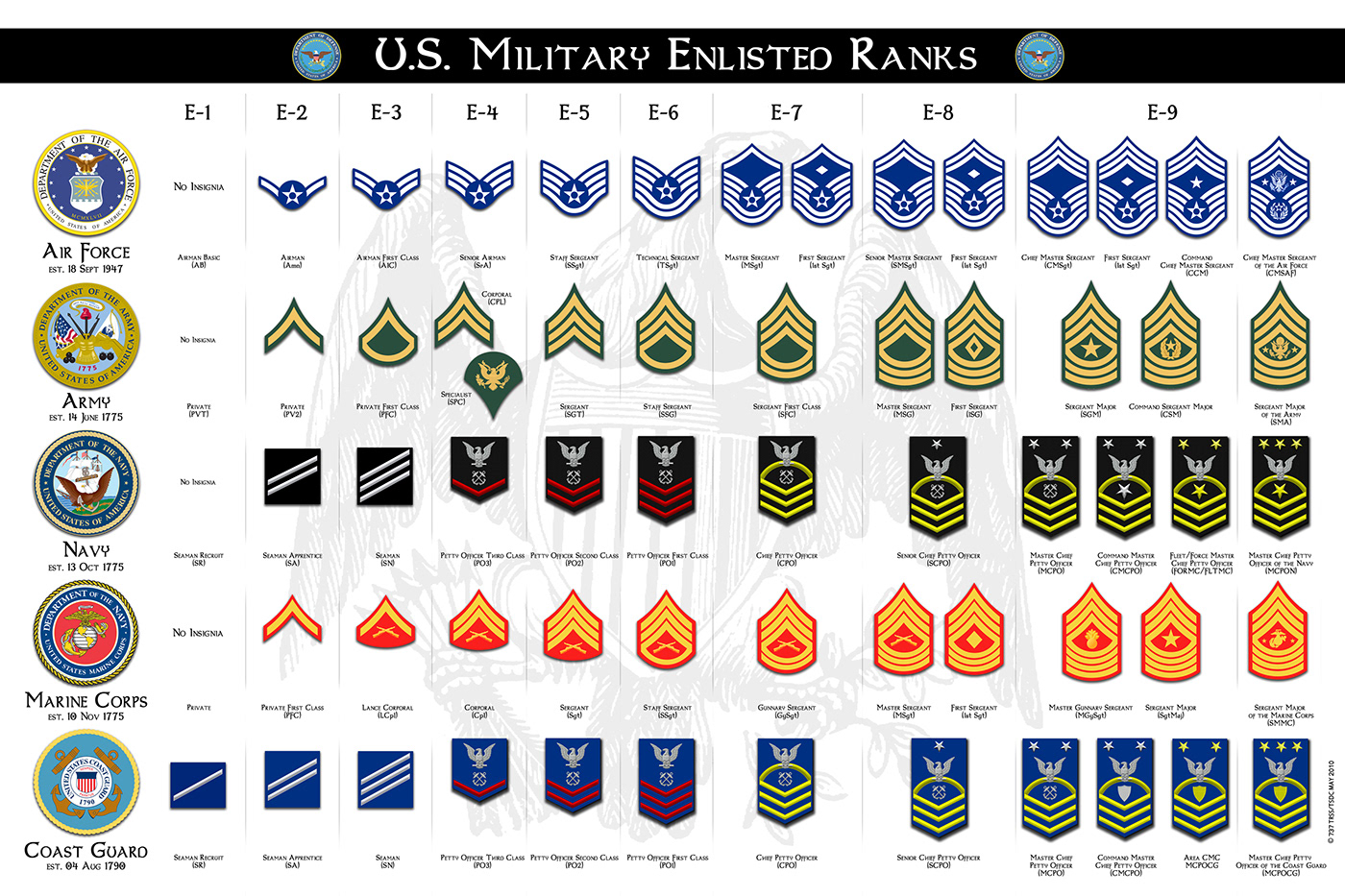
The numerical component of enlisted ranks in the military serves as a vital indicator of experience, responsibility, and leadership potential. It signifies the level of training and expertise an individual has attained, ultimately influencing their role and responsibilities within the military structure.
Factors Influencing Numerical Rank Assignment
The numerical rank assigned to enlisted personnel is not arbitrary. It reflects a combination of factors that determine their progression through the ranks.
- Time in Service: The length of time an individual has served in the military is a primary factor in determining their numerical rank. The longer the service, the higher the numerical rank typically attained. This reflects the accumulation of experience and knowledge.
- Performance and Training: Exceptional performance, completion of specialized training courses, and demonstrated leadership qualities contribute to faster rank advancement. The military values individuals who actively seek opportunities to improve their skills and knowledge.
- Vacancies and Availability: The availability of positions at higher numerical ranks also plays a role. Advancement is not always a linear process, and individuals may need to wait for opportunities to become available.
Numerical Rank Progression, Is e12 a rank in the military
Numerical rank progression within the military is a structured system that reflects the hierarchical nature of the armed forces.
- Incremental Advancement: Enlisted personnel typically progress through numerical ranks in a step-by-step manner, advancing from lower to higher ranks. This system ensures a gradual increase in responsibility and leadership roles.
- Promotion Boards: Promotion boards evaluate the qualifications and suitability of individuals for advancement. Factors considered include performance evaluations, training records, and demonstrated leadership abilities.
- Merit-Based System: The military emphasizes a merit-based system for promotion, meaning that advancement is based on individual achievement and performance rather than seniority alone.
Examining “E12” in the Military Context
The existence of an “E12” rank in the United States military is a topic of much debate and speculation. While the Enlisted Pay Grade (E) system ranges from E1 to E9, there is no official recognition of an E12. This leads to questions about the potential meaning of this designation and whether it holds any significance in the military hierarchy.
The Absence of an E12 Rank
The United States military has a well-defined and structured rank system. Each branch, including the Army, Navy, Air Force, Marines, and Coast Guard, adheres to a specific set of ranks. These ranks are carefully established and are not subject to arbitrary additions or modifications. The absence of an E12 rank across all branches strongly suggests that it is not a recognized or legitimate designation.
Historical Records and Evidence
A comprehensive review of military records, including historical documents, official regulations, and pay scales, does not reveal any evidence of an E12 rank. The highest enlisted rank in the United States military is E9, which represents the Sergeant Major of the Army, Master Chief Petty Officer of the Navy, Chief Master Sergeant of the Air Force, Sergeant Major of the Marine Corps, and Master Chief Petty Officer of the Coast Guard.
Potential Interpretations of “E12”
While there is no official E12 rank, the term has been used in some unofficial contexts, often as a hypothetical or aspirational concept. Some individuals may use it to refer to a theoretical rank beyond E9, representing a level of experience or expertise not currently recognized within the military structure. Others may use it to express a desire for greater recognition or advancement opportunities for senior enlisted personnel.
It is important to note that the use of “E12” in these contexts is purely speculative and does not reflect any official recognition or standing within the military.
5. Exploring Potential Misinterpretations
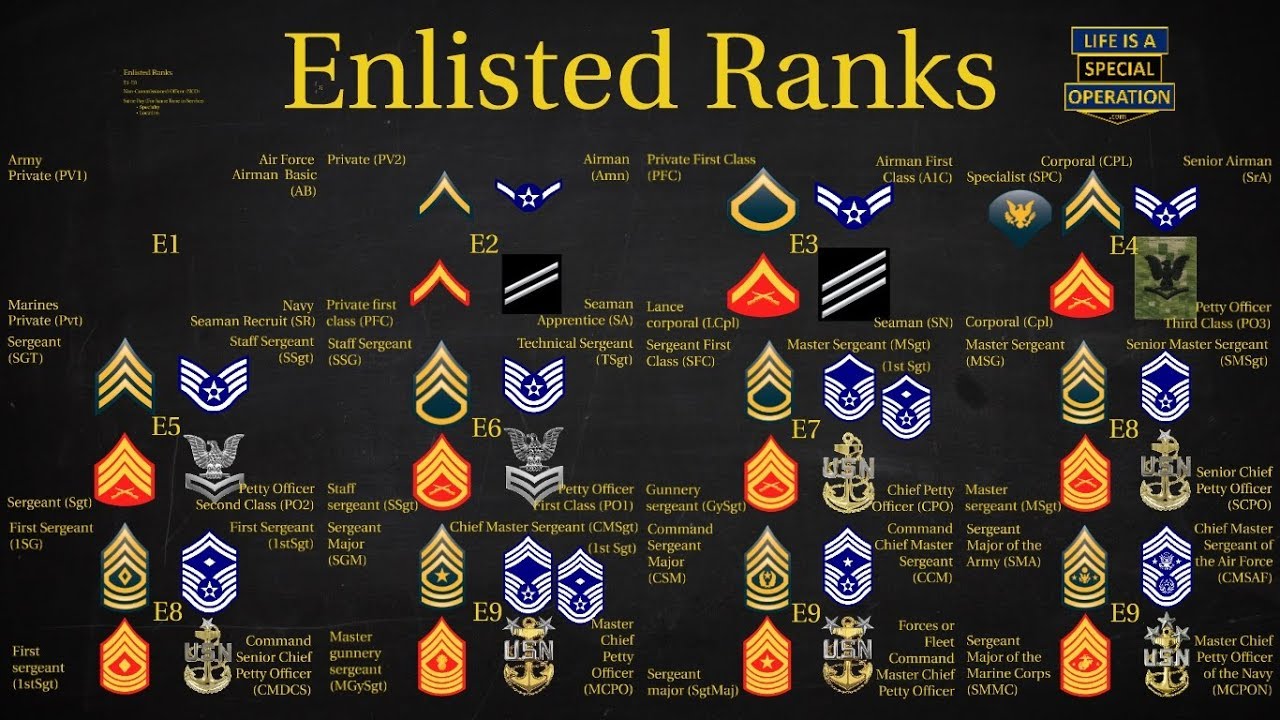
The notion of an “E12” rank in the military can be confusing, leading some to believe it exists due to a misunderstanding of the ranking system. This misconception likely stems from the familiarity with the numerical progression of enlisted ranks (E1 through E9) and the potential for misinterpreting the “E” designation.
Common Misconceptions about Military Ranks
Misunderstandings about military ranks are common, often fueled by a lack of familiarity with the intricate details of the system. Here are a few common misconceptions:
| Misconception | Likely Origin | Correction |
|---|---|---|
| “E12” is a valid rank. | Misinterpretation of the “E” designation and the numerical progression of enlisted ranks. | The highest enlisted rank in the US military is E9, with no rank higher than that. |
| All branches of the military have the same ranking system. | Lack of awareness of branch-specific variations in rank titles and structures. | Each branch of the military has its own unique ranking system, though there are similarities in structure and function. |
| Higher numerical rank always signifies higher authority. | Simplification of the ranking system, ignoring factors like experience, leadership roles, and command structure. | While numerical rank is a key factor, other factors like experience, leadership roles, and command structure can influence an individual’s authority and responsibilities. |
Informal Terms and Potential for Confusion
Slang or informal terms are often used within the military community to refer to ranks, which can lead to confusion for those unfamiliar with these terms. For instance, “E-4” might be referred to as “Corporal,” “Spec 4,” or even “Spec.” These informal terms, while commonly understood within the military, can be confusing for outsiders or those unfamiliar with the nuances of military jargon.
Dialogue Illustrating Misinterpretation
“Hey, did you hear about that new E-12 who just got promoted?” “E-12? There’s no such rank. The highest enlisted rank is E-9.””What are you talking about? I heard it straight from Sergeant Jones.””Sergeant Jones might be using slang. ‘E-12’ could refer to a senior NCO with a lot of experience, but it’s not an official rank.”
6. Analyzing the Impact of Rank
Military rank is a fundamental aspect of the military experience, shaping everything from daily duties to leadership roles and social dynamics. Understanding its influence is crucial for comprehending the complexities of military life and the intricate web of responsibilities and relationships that govern it.
Military Duties, Responsibilities, and Privileges
Military rank directly dictates the duties, responsibilities, and privileges assigned to individuals. These vary significantly across branches and specialties, reflecting the unique demands of each service and the specialized roles within them. For instance, a junior enlisted soldier in the Army may be tasked with basic infantry duties, while a senior enlisted sailor in the Navy might be responsible for leading a crew on a complex naval vessel.
| Rank | Branch | Duties | Responsibilities | Privileges |
|---|---|---|---|---|
| Junior Enlisted | All Branches | Basic tasks, following orders | Personal performance, unit cohesion | Basic pay, benefits |
| Senior Enlisted | All Branches | Leading teams, training, supervision | Unit performance, mentoring juniors | Increased pay, leadership opportunities |
| Junior Officer | All Branches | Leading platoons, strategic planning | Mission success, subordinate development | Command authority, higher pay |
| Senior Officer | All Branches | Commanding units, strategic decision-making | Unit readiness, national defense | Significant authority, high pay, benefits |
Leadership Roles, Decision-Making, and Authority
Rank plays a pivotal role in shaping leadership roles within the military. Higher ranks inherently carry greater decision-making authority, responsibility, and influence over subordinates. Junior officers, for example, may be responsible for leading a platoon in combat, while senior officers might command entire battalions or even larger units. This hierarchical structure ensures a chain of command, facilitating efficient decision-making and operational effectiveness.
“Rank is not about power; it is about responsibility. It is about the trust placed in you to lead and make decisions that affect the lives of those under your command.”General George S. Patton
Cultural Significance within the Military Community
Rank permeates the cultural fabric of the military community, influencing social interactions, respect, and hierarchy. It establishes a clear chain of command, fostering discipline and order. However, it also creates a distinct social divide, where individuals of different ranks often occupy separate social spheres. This can lead to challenges in fostering camaraderie and building trust between ranks.
“The military is a hierarchical organization, and rank is a fundamental element of its structure. It provides a framework for order, discipline, and accountability, but it also presents challenges in fostering a truly egalitarian culture.”Dr. Susan E. Allen, Military Sociologist
7. Comparing Military Rank Systems: Is E12 A Rank In The Military
Understanding the nuances of military rank systems across different branches is crucial for comprehending the intricate structure and hierarchy of the armed forces. Comparing these systems allows us to appreciate the historical evolution, unique characteristics, and the impact of rank on military operations.
Comparing Rank Systems: Army and Navy
To illustrate the diversity of rank systems, let’s delve into the Army and Navy, two branches with distinct historical backgrounds and operational contexts.
Historical Context
- Army: The Army’s rank structure has its roots in the Continental Army, established during the American Revolutionary War. The early ranks were largely based on British military tradition, with modifications to suit the needs of the newly formed nation. Over time, the Army’s rank system evolved, reflecting changes in military technology, organizational structure, and warfare doctrines.
- Navy: The Navy’s rank system, on the other hand, developed alongside the growth of the maritime power of the United States. It borrowed heavily from British naval traditions, incorporating ranks such as “Admiral” and “Captain,” which were associated with command at sea. The Navy’s rank structure has undergone adjustments over the years, driven by advancements in naval technology and the changing nature of naval warfare.
Rank Structure and Hierarchy
| Rank | Army Insignia | Army Responsibilities | Navy Insignia | Navy Responsibilities | Equivalent Rank |
|---|---|---|---|---|---|
| General of the Army | Five stars | Highest-ranking officer in the Army, responsible for strategic planning and overall command. | Admiral of the Navy | Highest-ranking officer in the Navy, responsible for strategic planning and overall command. | General of the Army |
| General | Four stars | Commands large military formations, such as corps or armies. | Admiral | Commands large naval formations, such as fleets or task forces. | General |
| Lieutenant General | Three stars | Commands divisions or corps, responsible for operational planning and execution. | Vice Admiral | Commands numbered fleets or task forces, responsible for operational planning and execution. | Lieutenant General |
| Major General | Two stars | Commands brigades or divisions, responsible for tactical planning and execution. | Rear Admiral (Upper Half) | Commands carrier strike groups or numbered fleets, responsible for tactical planning and execution. | Major General |
| Brigadier General | One star | Commands brigades or task forces, responsible for tactical planning and execution. | Rear Admiral (Lower Half) | Commands destroyer squadrons or amphibious ready groups, responsible for tactical planning and execution. | Brigadier General |
| Colonel | Silver eagle | Commands regiments or battalions, responsible for unit training and operations. | Captain | Commands warships or aircraft carriers, responsible for ship operations and crew management. | Colonel |
| Lieutenant Colonel | Silver oak leaf | Commands battalions or companies, responsible for unit training and operations. | Commander | Commands destroyers or submarines, responsible for ship operations and crew management. | Lieutenant Colonel |
| Major | Gold oak leaf | Commands companies or platoons, responsible for unit training and operations. | Lieutenant Commander | Commands frigates or submarines, responsible for ship operations and crew management. | Major |
| Captain | Silver bar | Commands companies or platoons, responsible for unit training and operations. | Lieutenant | Commands divisions or departments on board ships, responsible for specific tasks and operations. | Captain |
| First Lieutenant | Gold bar | Leads platoons or sections, responsible for tactical execution and troop management. | Lieutenant Junior Grade | Commands divisions or departments on board ships, responsible for specific tasks and operations. | First Lieutenant |
| Second Lieutenant | Single silver bar | Leads platoons or sections, responsible for tactical execution and troop management. | Ensign | Commands divisions or departments on board ships, responsible for specific tasks and operations. | Second Lieutenant |
Rank Designations and Roles: Captain
The rank of “Captain” provides a valuable example of the differences in responsibilities and roles across branches.
- Army: In the Army, a Captain typically commands a company, which is a unit of around 100-200 soldiers. They are responsible for training, discipline, and leading their company in combat operations. Captains in the Army also often serve in staff positions, providing logistical support and planning for larger units.
- Navy: In the Navy, a Captain commands a warship, such as a destroyer or frigate. They are responsible for the ship’s operations, crew management, and mission execution. Navy Captains may also serve as commanding officers of aircraft carriers, submarines, or other specialized vessels. Their responsibilities extend to ensuring the safety and efficiency of the ship and its crew while executing missions at sea.
8. Illustrating Military Ranks
Military ranks are a hierarchical system that establishes order, authority, and responsibility within the armed forces. They serve as a visual representation of an individual’s position, experience, and expertise. The structure of these ranks varies across different branches of the military, reflecting their unique historical traditions, operational needs, and organizational structures. Visualizing this intricate system is essential for understanding the dynamics of military organization and the roles played by individuals at different levels.
To effectively illustrate the military rank structure, we will utilize a combination of tables and charts, highlighting the distinct characteristics of each branch.
Visual Representation of Military Rank Structure
- Table: This approach provides a clear and concise overview of the ranks, their titles, and associated responsibilities. It is particularly useful for presenting a comprehensive list of ranks within a specific branch.
- Chart: A hierarchical chart visually depicts the progression of ranks, showcasing the relationships and lines of authority within the structure. This representation effectively highlights the flow of command and the different levels of leadership within the military.
Branch Specificity in Military Rank Structure
- Army: The Army utilizes a rank system with distinct enlisted and officer ranks, reflecting its historical emphasis on ground combat operations. The enlisted ranks are denoted by “E” followed by a number, while officer ranks are designated by “O” followed by a number. The Army’s rank structure is organized in a hierarchical manner, with higher ranks signifying greater responsibility and authority.
- Navy: The Navy’s rank system is unique in its use of terms like “Chief” and “Master” for senior enlisted ranks, reflecting the maritime traditions of the service. The Navy also has a distinct rank structure for officers, with a focus on leadership roles in naval operations.
- Air Force: The Air Force rank system closely resembles that of the Army, with enlisted ranks denoted by “E” and officer ranks by “O.” However, the Air Force has its own unique rank structure for officers, reflecting the specialized nature of airpower operations.
- Marines: The Marines have a rank system that closely mirrors that of the Army, emphasizing the close combat and expeditionary nature of the service. The Marines’ rank structure is known for its emphasis on leadership and teamwork.
- Coast Guard: The Coast Guard’s rank structure is similar to that of the Navy, reflecting its maritime heritage and law enforcement responsibilities. The Coast Guard’s rank system is designed to support its diverse missions, from maritime security to search and rescue operations.
Historical Context and Evolution of Military Rank Systems
Military rank systems have evolved over centuries, reflecting the changing needs and demands of warfare. The origins of military ranks can be traced back to ancient civilizations, where social hierarchies and military organization were closely intertwined. As warfare became more complex and organized, the need for a clear system of ranks and responsibilities became increasingly evident.
Get the entire information you require about nikko ortiz military rank on this page.
Examining the Hierarchy of Rank
The military operates on a strict hierarchical structure, where rank dictates authority, responsibility, and communication flow. This system, built on a foundation of discipline and order, ensures efficient command and control in the face of complex and often dangerous situations. Understanding the chain of command, the roles of different ranks, and the influence of rank on various aspects of military life is crucial to comprehending the military’s unique organizational structure.
Chain of Command in Different Branches
The chain of command varies slightly across the different branches of the U.S. military. However, the fundamental principle remains the same: a clear hierarchy of authority that ensures orders are passed down efficiently and effectively.
- Army: The Army’s chain of command follows a traditional structure, with enlisted personnel reporting to their superiors, who in turn report to officers. For instance, a private (E-1) reports to a sergeant (E-5), who then reports to a captain (O-3). This hierarchical system ensures that orders flow smoothly from the top to the bottom of the organization.
- Navy: Similar to the Army, the Navy has a well-defined chain of command. A seaman recruit (E-1) reports to a petty officer third class (E-4), who reports to a chief petty officer (E-7), and so on. The Navy’s chain of command emphasizes the importance of experience and expertise, with senior enlisted personnel playing a critical role in training and mentoring junior sailors.
- Air Force: The Air Force utilizes a similar chain of command structure, with airmen (E-1) reporting to non-commissioned officers (NCOs), who then report to officers. The Air Force places a strong emphasis on technical skills and specialized knowledge, reflecting its focus on aviation and aerospace operations.
- Marines: The Marines have a highly centralized chain of command, with a strong emphasis on leadership and discipline. A private (E-1) reports to a lance corporal (E-3), who reports to a sergeant (E-5), and so on. The Marines’ chain of command emphasizes the importance of teamwork and camaraderie, fostering a strong sense of unity and purpose.
Impact of Rank on Communication, Decision-Making, and Accountability
Rank significantly influences how communication occurs, decisions are made, and accountability is enforced within the military.
Communication Styles and Decision-Making Processes
| Rank | Communication Style | Decision-Making Process |
|---|---|---|
| Junior Enlisted | Typically follow orders and provide information as requested. | Limited decision-making authority, often following instructions from superiors. |
| Senior Enlisted | Often provide guidance and mentorship to junior personnel, and communicate directly with officers. | Greater decision-making authority in specific areas of expertise, but ultimately accountable to superiors. |
| Officers | Communicate strategic direction and provide guidance to enlisted personnel. | Broader decision-making authority, responsible for overall mission success. |
The Role of Authority
Rank shapes the authority and accountability of individuals at different levels of the hierarchy.
“Rank is the foundation of military discipline. It ensures that orders are obeyed, responsibilities are fulfilled, and accountability is maintained.”
Impact of Rank on Leadership and Teamwork
Rank plays a crucial role in shaping the dynamics of military leadership and teamwork.
Challenges of Maintaining Effective Teamwork
The hierarchical structure can sometimes create challenges in fostering open communication and collaboration, particularly when individuals from different ranks are working together.
Positive Aspects of Rank
Rank provides a clear framework for decision-making, accountability, and discipline, contributing to a strong sense of order and efficiency.
Exploring Rank Advancement
In the military, rank advancement is a crucial aspect of an individual’s career progression. It signifies recognition of skills, experience, and leadership potential, opening doors to greater responsibilities, opportunities, and rewards. Understanding the pathways and criteria for promotion is essential for those seeking to advance within the military ranks.
Pathways and Criteria for Promotion
The military employs a structured system for rank advancement, with specific criteria and pathways for each service branch.
- Time in Service: A minimum amount of time in service is typically required before an individual can be considered for promotion. This ensures that service members have gained sufficient experience and knowledge.
- Performance Evaluation: Regular performance evaluations are conducted to assess an individual’s job performance, leadership skills, and overall contribution to the unit. These evaluations play a significant role in determining eligibility for promotion.
- Education and Training: The military places a strong emphasis on education and training. Completing required courses and certifications demonstrates commitment to professional development and enhances an individual’s qualifications for advancement.
- Leadership Potential: Demonstrating leadership qualities, such as initiative, decision-making, and the ability to motivate others, is crucial for promotion.
- Physical Fitness: Maintaining a high level of physical fitness is essential for military service. Regular physical fitness assessments ensure that service members meet the required standards for their rank.
Impact of Rank Advancement
Rank advancement has a profound impact on an individual’s military career.
- Increased Responsibilities: As an individual advances in rank, they assume greater responsibilities and leadership roles.
- Enhanced Opportunities: Higher ranks often open doors to specialized training, deployments, and opportunities for career growth within the military.
- Higher Pay and Benefits: Rank advancement typically comes with increased pay and benefits, including retirement benefits, medical coverage, and housing allowances.
- Greater Influence: Higher-ranking officers have greater influence within the military hierarchy, allowing them to contribute to strategic decision-making and policy development.
Exploring Rank-Related Terminology
Understanding the specific vocabulary used to describe military rank and hierarchy is crucial for comprehending the intricacies of military structure and operations. These terms provide a framework for defining roles, responsibilities, and lines of authority within the armed forces.
Common Military Terms Related to Rank
The military uses a unique set of terms to define and discuss rank. Understanding these terms is essential for grasping the nuances of military hierarchy and operations.
- Rank: A position or level of authority within a military organization, typically indicated by insignia and title. Rank determines an individual’s responsibilities, privileges, and place in the chain of command.
- Enlisted: Refers to members of the military who have joined through voluntary service and hold ranks designated by the letter “E.” Enlisted personnel typically perform operational and support roles, carrying out orders from officers.
- Officer: A commissioned member of the military who holds a rank designated by the letter “O.” Officers are responsible for leading and managing units, developing strategy, and making critical decisions.
- Chain of Command: The hierarchical structure of authority within the military, where each individual reports to a superior officer. This structure ensures clear lines of communication and accountability.
- NCO (Non-Commissioned Officer): An enlisted member who has received specialized training and holds a rank above the entry-level enlisted ranks. NCOs serve as leaders and mentors within their units, providing guidance and training to junior personnel.
- Warrant Officer: A specialized rank within the military, typically holding technical expertise in areas like aviation or medical services. Warrant officers bridge the gap between enlisted and officer ranks, often serving as technical advisors and specialists.
Examples of Military Terms in Context
- “Sergeant Jones is a highly respected NCO in his unit.” This statement illustrates the use of “NCO” to describe a non-commissioned officer, highlighting their leadership role and respect within their unit.
- “The captain reported directly to the colonel in the chain of command.” This example demonstrates how the term “chain of command” is used to describe the hierarchical structure of authority, emphasizing the flow of information and responsibility within a military organization.
- “The general’s orders were relayed down the chain of command to the soldiers in the field.” This example further illustrates how the “chain of command” functions in practical military operations, ensuring that orders and information are disseminated effectively.
Significance of Rank-Related Terminology in Military Culture
The use of specific terminology related to rank is deeply embedded in military culture. These terms serve to:
- Establish clear lines of authority and responsibility: The precise language used to define rank helps ensure clear understanding of roles and responsibilities within the military. This clarity is essential for maintaining order, discipline, and effective operations.
- Foster a sense of professionalism and respect: Using the correct terms for rank reflects a level of professionalism and respect for the military hierarchy. This formality helps maintain a sense of order and discipline within the ranks.
- Facilitate communication and coordination: The use of standardized terminology allows for efficient communication and coordination between individuals at different ranks. This clarity is essential for effective planning, execution, and success in military operations.
Analyzing the Role of Rank in History

Military rank systems, a cornerstone of organized warfare, have evolved alongside the development of armies and the changing nature of conflict. From ancient times to the modern era, rank has played a crucial role in structuring military organizations, dictating command and control, and influencing the course of history.
The Evolution of Military Rank Systems
The concept of military rank emerged in ancient civilizations, with rudimentary forms of hierarchy evident in armies like those of the Egyptians, Greeks, and Romans. These early systems were often based on social status, wealth, or family lineage. As armies grew larger and more complex, the need for a more formalized system of rank became apparent.
- In the Middle Ages, feudalism gave rise to a hierarchical system of military leadership, with knights and nobles holding positions of authority based on their social standing. This system, however, proved to be inflexible and inefficient in the face of increasingly complex warfare.
- The rise of professional armies in the Renaissance period saw the emergence of more meritocratic systems, where rank was awarded based on military skill and experience. This shift paved the way for the development of modern military rank structures.
- During the 18th and 19th centuries, the introduction of standardized military uniforms and insignia further solidified the concept of rank and provided a visual means of identifying officers and enlisted personnel.
- In the 20th century, the advent of modern warfare and the rise of large-scale mechanized armies led to the development of increasingly complex rank structures, with specialized roles and responsibilities.
Comparing Rank Systems Across Cultures
Military rank systems are not merely hierarchical structures; they are intricate reflections of cultural values, historical experiences, and societal norms. Understanding the diverse ways in which different cultures have organized their military forces offers a fascinating glimpse into the complexities of human organization and power dynamics.
Cultural Exploration
To delve into the fascinating world of diverse military rank systems, let’s embark on a journey through history and across cultures. The following table provides a snapshot of how different societies have structured their military ranks, showcasing the interplay of cultural influences and historical contexts:
| Culture/Nation | Rank System | Key Ranks | Symbols |
|---|---|---|---|
| Ancient Rome | Legions | Centurion, Tribune, Legatus | Eagle, Laurel Wreath, Helmet |
| Medieval Europe | Feudal Hierarchy | Knight, Baron, Duke | Coat of Arms, Sword, Crown |
| Modern Japan | Samurai | Shogun, Daimyo, Samurai | Katana, Helmet, Family Crest |
| Ancient Egypt | Pharaoh’s Army | General, Captain, Scribe | Ankh, Eye of Horus, Hieroglyphs |
| Ancient Greece | Hoplite Army | Strategos, Taxiarch, Hoplite | Helmet, Shield, Spear |
This table offers a starting point for understanding the vast array of military rank systems that have existed throughout history. Each culture’s unique historical context, societal values, and beliefs have shaped the design and evolution of its rank structure. For instance, the Roman Legions, renowned for their discipline and effectiveness, relied on a hierarchical system that emphasized order and obedience.
In contrast, the Japanese Samurai, bound by a code of honor and loyalty, valued personal prowess and martial skill, reflected in their rank system’s emphasis on individual achievement.
Comparative Analysis
While military rank systems across cultures exhibit remarkable diversity, they also share commonalities. Many systems utilize a hierarchical structure with clear distinctions between ranks, often symbolized by insignia or uniforms. The concept of seniority, experience, and competence often plays a significant role in determining rank progression. However, cultural nuances significantly impact the specific design and interpretation of rank systems.For example, in ancient Rome, the rank of Centurion held immense prestige and power.
Centurions were responsible for leading and disciplining their units, and their authority was absolute within their legions. This emphasis on strict discipline and obedience reflects the Roman value of order and control. In contrast, the Japanese Samurai, while bound by a code of honor, placed greater emphasis on individual prowess and loyalty. This cultural value is reflected in the samurai’s emphasis on martial skill and their personal relationship with their lord.
Similarities
- Hierarchical structure with clear distinctions between ranks.
- Emphasis on seniority, experience, and competence in rank progression.
- Use of insignia or uniforms to symbolize rank.
- Commonality of titles such as “General,” “Captain,” and “Sergeant” across various cultures.
Differences
- Specific titles and ranks vary significantly across cultures.
- Cultural values and beliefs influence the design and interpretation of rank systems.
- The role and importance of individual achievement versus collective discipline vary across cultures.
- Historical events and military traditions shape the evolution of rank systems.
Analyzing the Future of Military Rank
The evolution of military rank systems is a continuous process, driven by technological advancements, changing operational environments, and the need to adapt to new challenges. As we look towards the future, several trends and developments suggest potential shifts in how military ranks are structured, perceived, and utilized.
The Impact of Emerging Technologies
The rapid pace of technological innovation is profoundly impacting the nature of warfare and the roles of military personnel. The increasing reliance on automation, artificial intelligence, and advanced sensor systems is leading to a redefinition of traditional military roles and responsibilities. This shift is likely to influence the structure of military ranks in several ways:
- Increased Specialization: As technology becomes more sophisticated, the need for specialized skills and expertise will grow. This could lead to the development of new rank structures that reflect the increasing specialization within the military. For example, we might see the emergence of ranks specific to cyberwarfare, space operations, or artificial intelligence.
- Blurring of Traditional Roles: The increasing integration of technology into warfare is blurring the lines between traditional roles, such as those of officers and enlisted personnel. The emergence of “hybrid” roles that combine elements of both traditional categories may require new rank structures that reflect this evolving reality. For instance, we might see the rise of “technical officers” who possess both technical expertise and leadership skills.
- Increased Importance of Technical Skills: The increasing reliance on technology means that technical skills will become increasingly valuable in the military. This could lead to a greater emphasis on technical expertise when determining rank advancement. Military personnel with advanced technical skills may be given preferential treatment in promotions, potentially leading to a more meritocratic system.
FAQ Explained
What does the “E” in military ranks stand for?
The “E” stands for “Enlisted.” It’s used to identify ranks for soldiers, sailors, and airmen who have joined the military through enlistment.
Why are there numerical values in military ranks?
The numbers in military ranks indicate the level of experience and responsibility a soldier has. As they gain experience and move up the ranks, the numbers increase.
What’s the difference between “E” ranks and “O” ranks?
The “O” stands for “Officer.” Officers are commissioned members of the military who have received specialized training and hold leadership positions.

Emma Nehls is a military writer and historian with a passion for exploring the intricacies of warfare and the human experience within the military. With extensive knowledge and a deep understanding of military strategy, tactics, and historical contexts, Nehls brings a unique perspective to his writings.
