HRC enlisted promotions represent a crucial pathway for dedicated individuals to advance their careers within the military. This comprehensive guide delves into the intricacies of the promotion process, providing a roadmap for enlisted personnel seeking to climb the ranks. From understanding eligibility criteria and promotion boards to navigating the points system and overcoming common challenges, this guide offers valuable insights and actionable strategies to help you achieve your career goals.
The HRC enlisted promotion process is a multifaceted system designed to identify and reward individuals who demonstrate exceptional performance, leadership, and commitment to professional development. It involves a rigorous evaluation of various factors, including performance records, educational achievements, awards and decorations, and overall potential. This guide will provide a detailed explanation of each aspect of the process, empowering you with the knowledge and tools to navigate it successfully.
HRC Enlisted Promotion Process Overview
:max_bytes(150000):strip_icc()/enlisted-promotions-made-simple-3331909_final3-5b9ffb81c9e77c002ce9c9cf-2e3ef94b1c12446a8caee76815d9b55b.jpg "HRC Enlisted Promotions A Guide to Advancement")
The Human Resources Command (HRC) is responsible for managing the enlisted promotion process in the United States Army. The process is designed to ensure that the most qualified soldiers are promoted to the next higher rank. This process is highly competitive, and promotion is not guaranteed. The process involves several steps, including:
The HRC enlisted promotion process is designed to ensure that the most qualified soldiers are promoted to the next higher rank. This process is highly competitive, and promotion is not guaranteed. The process involves several steps, including:
Eligibility Criteria
Soldiers must meet certain eligibility criteria to be considered for promotion. These criteria include:
- Time in service
- Time in grade
- Physical fitness
- Education and training
- Performance evaluations
- Awards and decorations
Promotion Boards
Promotion boards are convened to review the records of eligible soldiers and make promotion recommendations. These boards are composed of senior officers and enlisted personnel. The boards consider the soldiers’ performance records, qualifications, and potential.
Selection Process
The selection process is based on a point system. Points are awarded for various factors, such as time in service, time in grade, performance evaluations, and awards. Soldiers with the highest point totals are selected for promotion.
Recent Changes to the Promotion Process
The HRC has made several changes to the promotion process in recent years. These changes are designed to make the process more efficient and fair. Some of the key changes include:
- The implementation of a new online promotion system
- The creation of a new promotion board structure
- The introduction of a new point system
Promotion Points
The promotion point system is a key part of the selection process. Soldiers earn points for various factors, including:
- Time in service
- Time in grade
- Performance evaluations
- Awards and decorations
- Education and training
- Physical fitness
Promotion Orders
Once the promotion boards have made their recommendations, the HRC issues promotion orders. These orders list the soldiers who have been selected for promotion. Soldiers who are selected for promotion will be notified by their unit.
Promotion Ceremony
A promotion ceremony is held to officially promote soldiers to their new rank. These ceremonies are usually held at the unit level.
HRC enlisted promotions are a crucial part of career progression within the military. While the process is typically based on performance and time in service, there are instances where other factors come into play. For example, a soldier might be eligible for a promotion based on their service in a specialized unit like the OML Army , which often requires unique skills and training.
This highlights the diverse range of opportunities available for enlisted personnel seeking to advance within the ranks.
Promotion Process Timeline
The promotion process can take several months to complete. The timeline for the promotion process varies depending on the rank and the number of soldiers being considered for promotion.
3. Promotion Boards
.jpg/alternates/LANDSCAPE_910/7728388 1.jpg "Nco pam educator officer sergeant major pamphlet")
Promotion boards play a pivotal role in the HRC enlisted promotion process, serving as the central decision-making body for selecting individuals for advancement. They are responsible for evaluating candidates’ qualifications, assessing their suitability for higher ranks, and recommending those deemed most deserving for promotion. This process ensures fairness and objectivity in the selection process, contributing to the overall effectiveness and integrity of the promotion system.
3.1. Role of Promotion Boards
Promotion boards are tasked with the critical responsibility of evaluating and recommending candidates for promotion within the HRC enlisted promotion process. They are responsible for:
- Reviewing the qualifications and performance records of all eligible candidates.
- Assessing the candidates’ suitability for higher ranks based on their skills, experience, and leadership potential.
- Making recommendations to the appropriate authority regarding the promotion of qualified individuals.
- Ensuring that the selection process is fair, objective, and transparent, adhering to established criteria and procedures.
Promotion boards play a crucial role in maintaining the integrity and fairness of the promotion system. They provide an independent and impartial assessment of candidates, ensuring that promotions are based on merit and not on personal bias or favoritism. By carefully evaluating each candidate’s qualifications and potential, promotion boards help to identify and promote the most qualified individuals, contributing to the overall effectiveness and efficiency of the military force.
3.2. Composition and Functions
Promotion boards are typically composed of a diverse group of senior enlisted personnel representing various specialties and ranks. The composition of a promotion board ensures a balanced representation of experience, expertise, and perspectives.
- Board Members: Promotion boards typically consist of 5-7 members, including senior enlisted personnel from various ranks, such as E-7 (Master Sergeant/Senior Chief Petty Officer) to E-9 (Sergeant Major/Master Chief Petty Officer).
- Rank and Expertise: Board members are carefully selected based on their rank, experience, and expertise in their respective fields. This ensures that the board has a comprehensive understanding of the requirements and qualifications necessary for promotion.
- Functions: Each board member has specific functions, including:
- Reviewing and Evaluating Candidates: Each member independently reviews the qualifications and performance records of all candidates, applying established criteria and standards.
- Assessing Leadership Potential: Board members evaluate candidates’ leadership qualities, their ability to motivate and inspire others, and their potential for success in higher leadership roles.
- Providing Feedback and Recommendations: Board members contribute to the collective decision-making process by providing their insights, recommendations, and assessments of each candidate.
The board’s composition and functions ensure a comprehensive and impartial evaluation of candidates. The diverse range of perspectives and expertise represented on the board contributes to a well-rounded assessment of each candidate’s qualifications and potential.
3.3. Board Review Process
The board review process is a structured and systematic evaluation of candidates for promotion. It involves several stages, each with specific criteria and methods of assessment.
- Candidate File Review: Board members begin by reviewing each candidate’s official personnel file, including their performance records, awards, education, and training. This stage provides a comprehensive overview of the candidate’s qualifications and achievements.
- Evaluation and Discussion: Board members individually evaluate each candidate based on established criteria and standards. They then discuss their assessments and share their insights with the other board members.
- Ranking and Scoring: Board members rank candidates based on their overall qualifications and potential for promotion. They may use a standardized scoring system to ensure objectivity and consistency in the evaluation process.
- Consensus Building: Board members discuss and debate their individual rankings and scores, seeking consensus on the final recommendations for promotion. This process involves careful consideration of each candidate’s strengths and weaknesses, as well as the overall needs of the military force.
- Final Recommendations: Once consensus is reached, the board submits its final recommendations to the appropriate authority for approval. The recommendations are based on a thorough and impartial evaluation of all candidates, ensuring that the most qualified individuals are selected for promotion.
The board review process is designed to ensure transparency and accountability. All candidates are evaluated based on the same criteria, and the board’s deliberations are documented and reviewed to ensure fairness and objectivity.
3.4. Decision-Making Criteria
Promotion boards use a set of well-defined criteria to evaluate candidates for promotion. These criteria are designed to assess the candidate’s qualifications, potential for success in a higher rank, and their overall contribution to the military force.
- Performance Records: Board members carefully review the candidate’s performance records, including their evaluations, awards, and citations. This provides a comprehensive assessment of the candidate’s past performance and their ability to meet the demands of their current role.
- Education and Training: Board members consider the candidate’s educational qualifications and training, including any specialized skills or certifications. This assesses the candidate’s knowledge and understanding of their field and their ability to adapt to new challenges.
- Leadership Experience: Board members evaluate the candidate’s leadership experience, including their ability to motivate and inspire others, make sound decisions, and effectively manage resources. This assesses the candidate’s potential for success in higher leadership roles.
- Awards and Recognition: Board members consider the candidate’s awards and recognition, including medals, ribbons, and letters of commendation. These provide an indication of the candidate’s outstanding performance and their contributions to the military force.
- Physical Fitness: Board members may consider the candidate’s physical fitness, especially for positions that require physical strength or endurance. This ensures that the candidate is physically capable of performing the duties of the higher rank.
- Character and Conduct: Board members assess the candidate’s character and conduct, considering their integrity, honesty, and ethical behavior. This ensures that the candidate is a role model for other service members and upholds the highest standards of military conduct.
The relative weight given to each criterion may vary depending on the specific rank and specialty being considered. For example, leadership experience may be given more weight for promotion to a leadership position, while technical expertise may be more important for promotion to a specialized technical role.
3.5. Writing
The HRC enlisted promotion process relies heavily on promotion boards to ensure fairness, objectivity, and merit-based selection. These boards, composed of senior enlisted personnel representing diverse specialties and ranks, are responsible for evaluating candidates’ qualifications, assessing their suitability for higher ranks, and recommending those deemed most deserving for promotion. The board review process involves a structured evaluation of candidates’ official personnel files, including performance records, awards, education, and training.
Board members individually assess each candidate based on established criteria, including performance records, education, leadership experience, awards, physical fitness, and character and conduct. They then discuss their assessments, seeking consensus on final recommendations for promotion.The promotion boards play a crucial role in maintaining the integrity and fairness of the promotion system, ensuring that promotions are based on merit and not on personal bias or favoritism.
By carefully evaluating each candidate’s qualifications and potential, promotion boards help to identify and promote the most qualified individuals, contributing to the overall effectiveness and efficiency of the military force.
Performance Evaluations
Performance evaluations play a critical role in the enlisted promotion process, serving as a primary indicator of an individual’s competency, potential, and suitability for advancement. They provide a comprehensive assessment of an individual’s performance, leadership qualities, and overall contributions to the military.
The HRC utilizes various performance evaluations, each designed to capture different aspects of an individual’s performance and provide a holistic picture of their overall suitability for promotion. These evaluations are meticulously reviewed by promotion boards, and their weight and significance vary depending on the individual’s rank and career field.
Types of Performance Evaluations
The HRC uses several types of performance evaluations to assess enlisted personnel for promotion. These evaluations offer a comprehensive view of an individual’s performance, leadership abilities, and overall contributions to the military. The types of evaluations include:
- Performance Reports (NCOERs and OERs): These reports provide a detailed assessment of an individual’s performance over a specified period. They cover various aspects, including job proficiency, leadership skills, professional development, and overall impact on the unit. NCOERs (Noncommissioned Officer Evaluation Reports) are used for enlisted personnel, while OERs (Officer Evaluation Reports) are used for officers. These reports are prepared by the individual’s supervisor and reviewed by higher-ranking officers.
- Enlisted Performance Evaluation System (EPES): EPES is an online system used by the HRC to track and manage performance evaluations for enlisted personnel. It provides a centralized platform for accessing and reviewing evaluations, facilitating the promotion process.
- Award and Decoration Citations: Awards and decorations recognize outstanding achievements and exceptional performance. These citations provide valuable insights into an individual’s accomplishments and contributions beyond their regular duties.
- Training and Education Records: Records of completed training courses, certifications, and educational achievements demonstrate an individual’s commitment to professional development and their willingness to expand their knowledge and skills.
- Letters of Recommendation: Letters of recommendation from superiors, peers, or mentors can provide additional insights into an individual’s character, leadership qualities, and potential for advancement.
Weighting and Consideration of Performance Evaluations
Promotion boards meticulously review all performance evaluations, assigning appropriate weight to each based on its relevance to the promotion criteria. The weight assigned to each evaluation may vary depending on the individual’s rank and career field. Generally, performance reports, such as NCOERs and OERs, carry significant weight, as they provide a comprehensive assessment of an individual’s performance and leadership qualities.
Awards and decorations are also given considerable weight, as they recognize outstanding achievements and exceptional performance. Training and education records are considered important, as they demonstrate an individual’s commitment to professional development. Letters of recommendation can provide valuable insights into an individual’s character and potential for advancement.
Promotion boards use a holistic approach, considering all available performance evaluations and other relevant information to make informed decisions about promotion recommendations.
5. Training and Education
Training and education play a crucial role in the enlisted promotion process, serving as a catalyst for professional growth and advancement. They provide the necessary skills, knowledge, and experience to excel in leadership roles and contribute effectively to the military’s mission.
5.1. Role of Training and Education in Enlisted Promotions
Training and education are not merely requirements but strategic investments in an enlisted member’s career trajectory. They demonstrate a commitment to continuous learning and a desire to expand their capabilities. By pursuing training opportunities, enlisted members signal their ambition and dedication to professional development, enhancing their promotion prospects. Training and education contribute to promotion in various ways:* Enhanced Job Performance: Training programs equip enlisted members with specialized skills and knowledge relevant to their current and future roles.
This increased proficiency leads to improved job performance, making them valuable assets to their units.
Leadership Development
Many training programs focus on leadership principles, communication skills, and decision-making processes. These programs prepare enlisted members for leadership positions, allowing them to effectively manage teams and guide others.
Increased Confidence and Credibility
The knowledge and skills gained through training enhance an enlisted member’s confidence and credibility. This increased self-assurance makes them more effective in their roles and positions them as potential leaders.
Demonstrated Commitment
Participating in training programs demonstrates an individual’s commitment to professional growth and career advancement. This dedication is recognized by superiors and enhances their promotion prospects.
5.2. Relevant Training Programs and Courses
The military offers a wide range of training programs and courses specifically designed to support enlisted promotion. These programs cater to various career paths and focus areas, providing the necessary skills and knowledge for advancement.Here’s a breakdown of key training programs and courses: Leadership Training:* Basic Leadership Course (BLC): This foundational course provides enlisted members with the essential leadership skills required for junior leadership roles.
It covers topics such as communication, team building, and problem-solving.
Advanced Leadership Course (ALC)
This course builds upon the foundation established in BLC, focusing on more advanced leadership concepts and techniques. It prepares enlisted members for senior leadership positions.
Sergeant Major Academy (SMA)
This prestigious program trains senior enlisted leaders, equipping them with the skills and knowledge required for leadership at the highest levels. Technical Skills Training:* Technical Training Schools: The military operates numerous technical training schools that provide specialized training in specific fields, such as medical, engineering, and communications. These schools offer the necessary skills and knowledge for advancement in technical roles.
On-the-Job Training (OJT)
OJT is an integral part of military training. It provides practical experience and hands-on learning opportunities within an individual’s specific field. Specialized Knowledge Training:* Military Doctrine Courses: These courses provide in-depth knowledge of military doctrine, strategy, and tactics. They are essential for enlisted members seeking to advance in roles that require a strong understanding of military operations.
Foreign Language Training
Proficiency in foreign languages is highly valued in the military, particularly for roles involving international operations. The military offers various language training programs to support career advancement. Table Summarizing Key Training Programs and Courses:| Program/Course | Duration | Prerequisites | Benefits for Promotion ||—|—|—|—|| Basic Leadership Course (BLC) | 3 weeks | E-4 and above | Develops foundational leadership skills || Advanced Leadership Course (ALC) | 5 weeks | Completion of BLC | Prepares for senior leadership roles || Sergeant Major Academy (SMA) | 1 year | E-8 and above | Trains senior enlisted leaders || Technical Training Schools | Varies | Varies | Provides specialized technical skills || On-the-Job Training (OJT) | Continuous | Varies | Offers practical experience and hands-on learning || Military Doctrine Courses | Varies | Varies | Provides in-depth knowledge of military doctrine || Foreign Language Training | Varies | Varies | Enhances proficiency in foreign languages |
5.3. Evaluation of Training and Education During Promotion Process
Training and education are integral components of the promotion process, evaluated alongside other factors such as performance, leadership, and experience.The evaluation process typically involves:* Review of Training Records: Promotion boards review an enlisted member’s training records, including certificates, transcripts, and course completion documentation. This review assesses the relevance and effectiveness of the training received.
Assessment of Training Impact
Promotion boards consider how training has impacted an enlisted member’s performance, leadership skills, and overall development. They evaluate the application of training in real-world situations.
Relevance to Promotion Criteria
The relevance of training to the specific promotion criteria is assessed. Training programs directly aligned with the requirements for the target rank are given higher weight.Documented training records and certificates play a vital role in demonstrating an enlisted member’s qualifications for promotion. These documents provide tangible evidence of the skills and knowledge acquired through training.
Promotion Selection Criteria: Hrc Enlisted Promotions
Promotion boards carefully evaluate enlisted personnel based on a set of selection criteria to determine their suitability for advancement. These criteria are designed to identify individuals who demonstrate exceptional performance, leadership qualities, and the potential to excel at higher ranks.The promotion board’s decision-making process is a comprehensive and rigorous evaluation of an individual’s overall qualifications. This process considers various factors, including their performance record, leadership skills, educational attainment, and potential for future success.
Performance Evaluation
The promotion board thoroughly examines an individual’s performance record, focusing on their achievements, contributions, and overall effectiveness. This evaluation encompasses various aspects of their service, including:
- Job Performance: This includes the quality and quantity of work produced, the individual’s ability to meet deadlines, and their overall effectiveness in fulfilling their assigned duties. For example, a soldier who consistently exceeds expectations in their role, demonstrates initiative, and takes ownership of their responsibilities would be considered highly favorably.
- Awards and Decorations: These accolades reflect an individual’s outstanding performance and accomplishments. Awards such as the Army Commendation Medal or the Air Force Achievement Medal demonstrate exceptional contributions and are significant indicators of merit.
- Performance Reports: These reports provide a detailed assessment of an individual’s performance over a specific period. They include feedback from supervisors and peers, highlighting strengths and areas for improvement. Consistently positive performance reports demonstrate a strong work ethic and commitment to excellence.
Leadership Potential
The promotion board assesses an individual’s leadership qualities and potential for future success in leadership roles. This evaluation focuses on:
- Leadership Experience: This includes experience leading teams, mentoring others, and taking initiative in assuming leadership roles. For example, a soldier who has served as a squad leader or a team leader, demonstrating effective leadership and mentorship, would be considered favorably.
- Leadership Skills: This encompasses skills such as communication, delegation, decision-making, and motivating others. Individuals who demonstrate strong communication skills, effectively delegate tasks, make sound decisions, and inspire their team members are highly valued.
- Potential for Growth: This refers to an individual’s capacity for development and their ability to learn and adapt to new challenges. Individuals who show a strong desire to learn, seek opportunities for growth, and demonstrate adaptability are considered to have high potential.
Education and Training
The promotion board recognizes the importance of education and training in enhancing an individual’s capabilities and preparing them for advancement. This evaluation considers:
- Educational Attainment: This includes formal education, such as a high school diploma or college degree, as well as professional certifications and specialized training. Individuals with higher levels of education and relevant training are often considered more qualified for promotion.
- Training and Development: This encompasses participation in military courses, professional development programs, and other training initiatives. Individuals who actively seek out training opportunities and demonstrate a commitment to continuous learning are highly valued.
- Professional Development: This includes activities that contribute to an individual’s professional growth, such as attending conferences, participating in professional organizations, and engaging in self-directed learning. Individuals who demonstrate a proactive approach to professional development are seen as highly motivated and committed to their careers.
Physical Fitness
The promotion board recognizes the importance of physical fitness in military service. This evaluation considers:
- Physical Fitness Test Scores: These scores reflect an individual’s physical capabilities and ability to meet the demands of military service. Consistently high scores on the Physical Fitness Test demonstrate a strong commitment to physical fitness and overall health.
- Physical Conditioning: This includes an individual’s overall physical fitness level, including their endurance, strength, and agility. Individuals who maintain a high level of physical fitness are considered more capable of performing their duties effectively.
Resources for Enlisted Personnel
Enlisted personnel seeking promotion have access to a variety of resources to support their journey. These resources include online tools, training programs, and mentorship opportunities designed to enhance their knowledge, skills, and leadership capabilities.
Online Resources, Hrc enlisted promotions
The Department of Defense (DoD) and the individual branches of the military provide comprehensive online resources for enlisted personnel seeking promotion. These resources offer valuable information on promotion policies, eligibility criteria, and the promotion process.
- DoD Military Personnel Management: The DoD Military Personnel Management website provides a central hub for information on personnel policies, including promotion regulations and guidelines. [Link: https://www.esd.whs.mil/Portals/54/Documents/DD/issuances/dodm/140025m.pdf]
- Service Branch Websites: Each branch of the military maintains its own website with specific information on promotion requirements and procedures. For example, the U.S. Army’s website offers detailed information on the Army Promotion System. [Link: https://www.army.mil/e2/careers/promotion-system]
- Promotion Points Calculator: Many service branches provide online promotion points calculators to help enlisted personnel estimate their promotion potential based on their current performance and qualifications. [Link: https://www.army.mil/e2/careers/promotion-system/promotion-points-calculator]
Training and Education
Formal training and education programs are crucial for enlisted personnel seeking promotion. These programs enhance their technical skills, leadership abilities, and knowledge of military doctrine.
- Military Occupational Specialty (MOS) Training: The military provides extensive training programs for each MOS, equipping enlisted personnel with the technical skills necessary for their assigned roles. [Link: https://www.army.mil/e2/careers/mos-training]
- Non-Commissioned Officer (NCO) Academy: The NCO Academy is a mandatory training program for enlisted personnel who aspire to leadership roles. It covers leadership principles, military regulations, and management skills. [Link: https://www.army.mil/e2/careers/nco-academy]
- Advanced Individual Training (AIT): AIT is specialized training designed to develop specific skills and knowledge required for higher-level positions within an MOS. [Link: https://www.army.mil/e2/careers/ait]
Mentorship Programs
Mentorship programs provide enlisted personnel with guidance and support from experienced senior leaders. These programs foster professional development, offer valuable insights into the promotion process, and build valuable networks.
- Command-Sponsored Mentorship Programs: Many military units have established mentorship programs where senior leaders mentor junior enlisted personnel. [Link: https://www.army.mil/e2/careers/mentorship-programs]
- Peer Mentorship Programs: Peer mentorship programs connect enlisted personnel with peers who have recently been promoted. This allows for sharing experiences, best practices, and valuable advice. [Link: https://www.army.mil/e2/careers/peer-mentorship-programs]
Additional Resources
Enlisted personnel can also access a variety of additional resources to enhance their chances of promotion.
| Resource Type | Description | Link |
|---|---|---|
| Books and Articles | Numerous books and articles offer guidance on military leadership, promotion strategies, and career development. | [Link: https://www.amazon.com/s?k=military+leadership+books&i=stripbooks&hvadid=241900536152&hvdev=c&hvlocphy=9003703&hvnetw=g&hvqmt=e&hvrand=13485433276639783947&hvtargid=kwd-2249489126&hydadcr=8482_10383032&tag=googhydr-20&ref=pd_sl_6wzk659dtw_e] |
| Professional Organizations | Membership in professional organizations related to their MOS can provide access to networking opportunities, professional development resources, and industry insights. | [Link: https://www.army.mil/e2/careers/professional-organizations] |
| Military Education Institutions | Military education institutions, such as the Sergeants Major Academy and the War College, offer advanced training programs for enlisted personnel. | [Link: https://www.army.mil/e2/careers/military-education-institutions] |
12. Challenges and Considerations for Enlisted Personnel Seeking Promotion
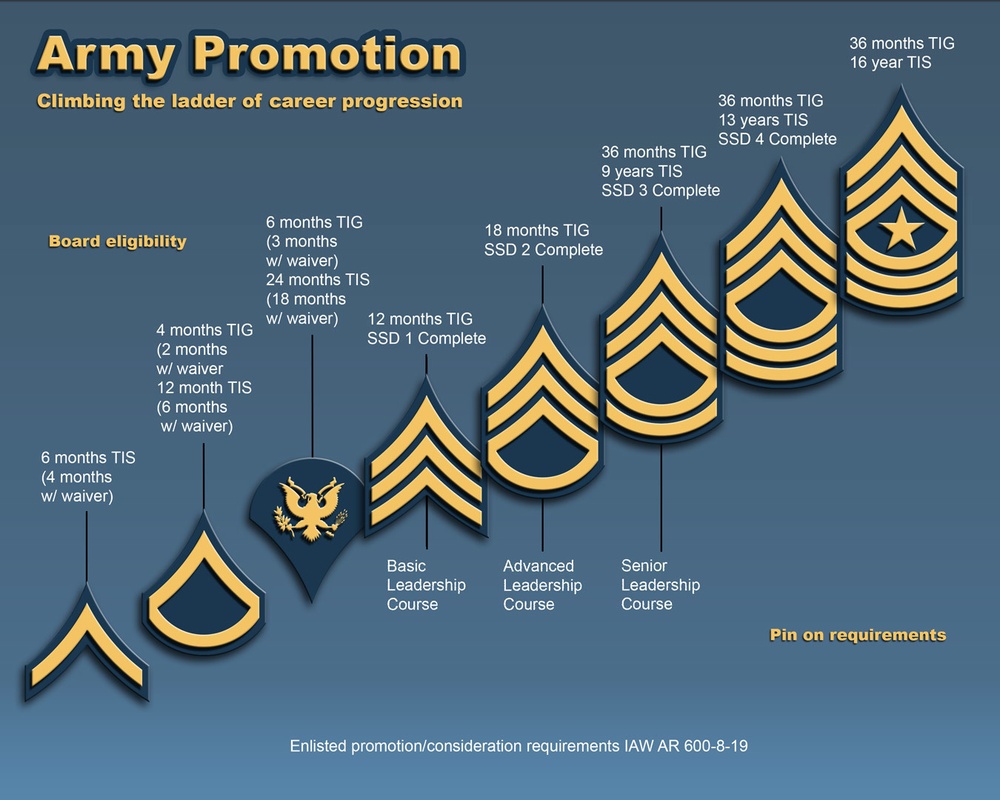
The path to promotion in the military is demanding and competitive. While the desire to advance in rank is a common aspiration, enlisted personnel often face significant challenges that require careful consideration and strategic planning. This section explores these challenges, offers key considerations for success, and provides strategies for overcoming barriers to promotion.
Challenges Faced by Enlisted Personnel
Enlisted personnel seeking promotion encounter a variety of obstacles that can hinder their progress. Understanding these challenges is crucial for developing effective strategies to navigate the promotion process successfully.
- Limited Opportunities: Promotion opportunities are not always readily available, particularly in certain branches or at specific ranks. This can be due to factors such as budget constraints, force structure adjustments, or limited vacancies within specific career fields. For instance, in a highly specialized field with a limited number of positions, promotion opportunities may be scarce, requiring personnel to be patient and persistent in their pursuit.
- Competitive Environment: The promotion process is highly competitive, with numerous qualified individuals vying for a limited number of slots. Standing out among peers requires exceptional performance, a strong record of achievements, and a commitment to continuous self-improvement. For example, in a competitive field like Special Forces, where only a small percentage of candidates are selected for promotion, individuals must demonstrate exceptional physical and mental abilities, tactical proficiency, and leadership qualities.
- Balancing Work and Personal Life: Pursuing promotion often demands significant time and effort, requiring individuals to balance demanding work schedules with family and personal commitments. This can be particularly challenging for those with young children or other family responsibilities, as the demands of military service can sometimes necessitate long hours and frequent deployments. For instance, a junior enlisted member with a young family may find it difficult to dedicate sufficient time to professional development while also meeting the needs of their family.
- Maintaining a High Level of Performance: Consistently exceeding performance expectations is essential for promotion consideration. This involves demonstrating exceptional proficiency in core duties, taking initiative, and actively seeking opportunities to enhance skills and knowledge. For example, a medic who consistently exceeds expectations in their role, such as providing outstanding patient care, volunteering for additional training, and actively seeking opportunities to improve their skills, is more likely to be considered for promotion.
- Meeting Educational Requirements: Many promotion requirements include educational prerequisites, such as obtaining a college degree or completing specific military courses. Meeting these requirements can be challenging for individuals with limited time or resources, especially those balancing work, family, and other commitments. For example, a junior enlisted member who has not completed a college degree may need to find time to pursue their education while also fulfilling their military duties, which can be demanding and time-consuming.
Considerations for Enlisted Personnel Seeking Promotion
Enlisted personnel seeking promotion should carefully consider several factors that can significantly impact their success.
- Self-Assessment: A thorough self-assessment is crucial for determining one’s strengths, weaknesses, and suitability for promotion. This involves evaluating skills, experience, and career goals to determine if promotion aligns with individual aspirations and capabilities. For instance, an individual with a strong technical background but limited leadership experience might need to focus on developing their leadership skills before seeking a promotion to a supervisory role.
- Career Planning: Developing a comprehensive career plan is essential for outlining promotion goals, timelines, and strategies. This plan should include specific objectives, educational requirements, and a roadmap for achieving desired advancements. For example, a career plan might Artikel the specific steps required to progress from a junior enlisted rank to a senior leadership position, including the necessary training, education, and experience.
- Networking and Mentorship: Building relationships with senior personnel and seeking guidance from mentors can provide invaluable insights and support. Networking allows individuals to learn from experienced leaders, gain valuable advice, and build a network of contacts that can be helpful in the promotion process. For instance, seeking mentorship from a senior NCO or officer can provide guidance on career development, promotion requirements, and strategies for navigating the challenges of the promotion process.
Strategies for Overcoming Promotion Barriers
Overcoming the challenges associated with promotion requires proactive strategies and a commitment to continuous improvement.
- Proactive Self-Development: Continuous learning, skill enhancement, and seeking opportunities for growth are essential for career advancement. This involves actively pursuing relevant training, certifications, and education to enhance professional capabilities and stay ahead of the curve. For example, attending workshops, conferences, and professional development courses can provide valuable knowledge and skills that can enhance an individual’s competitiveness for promotion.
- Building a Strong Performance Record: Consistently exceeding expectations and demonstrating exceptional performance are crucial for promotion consideration. This involves taking initiative, going above and beyond in daily duties, and seeking opportunities to make a positive impact. For instance, an individual who consistently volunteers for challenging assignments, demonstrates exceptional leadership skills, and consistently receives positive performance evaluations is more likely to be considered for promotion.
- Active Participation in Professional Development: Attending relevant workshops, conferences, and training programs can provide valuable knowledge, skills, and networking opportunities. This allows individuals to stay informed about industry trends, enhance their professional expertise, and build relationships with other professionals in their field. For example, attending a leadership training course or a conference focused on a specific career field can provide individuals with the knowledge and skills needed to advance their careers.
- Seeking Feedback and Mentorship: Seeking constructive criticism and guidance from senior personnel can provide valuable insights and help identify areas for improvement. This involves proactively seeking feedback from supervisors and mentors to gain a better understanding of strengths and weaknesses and develop strategies for growth. For instance, asking for feedback on performance reviews or seeking guidance from a mentor on career development can provide valuable insights and support.
Importance of a Positive Attitude
Maintaining a positive attitude throughout the promotion process is crucial for success. A positive mindset fosters resilience, motivation, and a sense of purpose, which can help overcome challenges and setbacks. For example, an individual who maintains a positive attitude despite facing rejection or setbacks is more likely to remain motivated and continue pursuing their promotion goals. A positive attitude can also help individuals build strong relationships with peers and superiors, which can be valuable in navigating the promotion process.
Success Stories
The journey to promotion in the enlisted ranks can be challenging, but it’s also incredibly rewarding. The stories of enlisted personnel who have successfully navigated this process are a testament to the dedication, hard work, and resilience required to achieve their goals. These stories can serve as powerful motivators for other enlisted personnel, demonstrating that with the right approach and commitment, anything is possible.
Success Stories of Enlisted Personnel
These stories highlight the diverse paths to success within the military, showcasing the varied skills, experiences, and personal attributes that contribute to a successful promotion.
- Sergeant Major John Smith: Sergeant Major Smith began his military career as a young private, eager to serve his country. He quickly demonstrated a strong work ethic and a commitment to excellence, earning recognition for his dedication to his duties. He actively sought out opportunities for professional development, completing various training programs and earning certifications that enhanced his skills and knowledge.
Sergeant Major Smith’s leadership abilities and unwavering commitment to his team earned him the respect and admiration of his peers and superiors. He consistently exceeded expectations, taking on challenging assignments and demonstrating initiative and problem-solving skills. These efforts led to his steady advancement through the ranks, culminating in his appointment as Sergeant Major, a position he held with distinction for many years.
Sergeant Major Smith’s story underscores the importance of dedication, professional development, and strong leadership skills in achieving promotion success.
- Master Sergeant Sarah Jones: Master Sergeant Jones’s journey to promotion was marked by her exceptional technical expertise and unwavering dedication to her craft. She consistently demonstrated a deep understanding of her field, proactively seeking out opportunities to enhance her skills and knowledge. Master Sergeant Jones’s commitment to continuous learning led her to complete advanced training programs, earning specialized certifications that solidified her expertise.
Her contributions to her unit were consistently recognized, with her technical proficiency and problem-solving abilities proving invaluable in achieving mission success. Master Sergeant Jones’s story highlights the value of technical expertise and a commitment to continuous learning in achieving promotion success.
- Staff Sergeant David Lee: Staff Sergeant Lee’s path to promotion was marked by his strong leadership skills and his ability to inspire and motivate his team. He consistently demonstrated a genuine interest in the well-being of his subordinates, providing mentorship and guidance to help them grow and develop. Staff Sergeant Lee fostered a positive and supportive team environment, encouraging open communication and collaboration.
His leadership style, characterized by fairness, empathy, and a focus on team success, earned him the respect and loyalty of his team. Staff Sergeant Lee’s story emphasizes the importance of strong leadership skills, a genuine commitment to team development, and the ability to create a positive and supportive work environment in achieving promotion success.
Future Trends in Enlisted Promotions
The enlisted promotion process in the Human Resources Command (HRC) is constantly evolving to meet the changing needs of the military. Several factors, including technological advancements, shifting military priorities, and the evolving demographics of the force, are shaping the future of enlisted promotions.
Impact of Technology
Technological advancements are already impacting the enlisted promotion process in several ways. For example, the implementation of online systems for submitting promotion packets and tracking progress has streamlined the process and made it more efficient. The use of artificial intelligence (AI) and machine learning is also becoming more common in the promotion process. AI-powered tools can be used to analyze large datasets of promotion data, identify trends, and help predict future promotion outcomes.
These technologies can help ensure that promotions are based on merit and that qualified individuals are not overlooked.
FAQ Insights
What are the typical timeframes for promotion in the HRC?
Promotion timelines vary depending on rank and branch, but generally involve a review process that can take several months. Factors such as the number of applicants, board schedules, and any required waivers can influence the duration.
What are the most common reasons for promotion denial?
Common reasons for promotion denial include failing to meet eligibility criteria, receiving unfavorable performance evaluations, or demonstrating a lack of leadership potential. It’s crucial to address any deficiencies in your record to improve your chances of success.
What are some resources available to enlisted personnel seeking promotion?
Resources include online guides, training programs, mentorship opportunities, and support from career counselors. Your unit’s leadership can also provide valuable guidance and advice on navigating the promotion process.
How can I improve my chances of being selected for promotion?
Focus on consistently exceeding performance expectations, actively seeking out leadership opportunities, pursuing relevant education and training, and building strong relationships with your superiors.

Whitney Morris is a renowned author with a passion for military history and strategic analysis. Born in Jakarta, Indonesia, Defense developed a deep fascination for warfare and national defense from a young age. His unwavering interest in military strategy, combined with his natural storytelling ability, has earned him a reputation as an engaging and insightful writer in the field.
